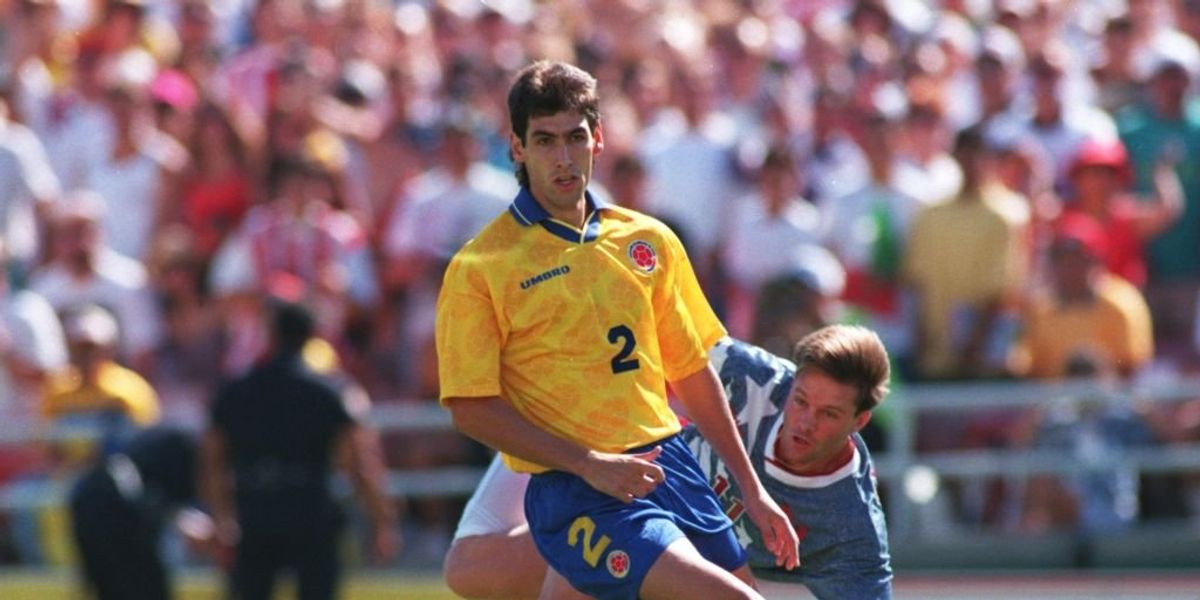
The tragic legacy of Andrés Escobar
The murder of Andrés Escobar in 1994 stands as one of the darkest chapters in the history of the FIFA World Cup, reports BritPanorama.
Days after Colombia’s elimination from the tournament, the defender for Club Atlético Nacional was shot six times, succumbing to his injuries at the age of 27.
Escobar played against the United States at the Rose Bowl in Pasadena, California, on June 22, where an accidental own goal led to a 2-1 defeat for Colombia. This result meant Colombia needed to beat Switzerland while hoping the US would lose to Romania.
Colombia did secure a 2-0 victory over Switzerland, but Romania’s 1-0 win over the US meant that the South American team finished last in their group. Following this disappointment, Escobar returned to Colombia instead of visiting relatives in Las Vegas.
On July 1, 1994, after a night out with friends, Escobar found himself alone in a car park at a nightclub. Three men confronted him, resulting in a heated argument that escalated when two of them brandished firearms.
Eyewitnesses reported that the attackers shouted “goal” with each shot fired. Despite being rushed to a hospital, Escobar was pronounced dead 45 minutes later. The motive behind his murder remains ambiguous, although it is widely linked to the time’s violent climate influenced by Colombia’s drug cartels, with many powerful figures reportedly losing substantial amounts on bets tied to Colombia’s World Cup performance.
Humberto Castro Munoz, a bodyguard for cartels, was arrested shortly after the incident and confessed to the killing. He was sentenced to 43 years but was released early for good behavior.
Escobar’s funeral drew over 120,000 mourners, reflecting his impact on the nation. In 2002, a statue was erected in Medellin in his honour, and the family established the Andrés Escobar Project to assist disadvantaged children in football.
Escobar’s story serves as a haunting reminder of how a simple mistake can have devastating consequences, showcasing the intersection of sport and tragedy. The defender, who played the bulk of his career with Atlético Nacional and scored only once for Colombia at Wembley Stadium in 1988 against England, remains a symbol of lost potential and the perils that can accompany fame.
In the world of sports, where the line between passion and peril can often blur, Escobar’s fate serves as a poignant cautionary tale of ambition and its sometimes overwhelming stakes.