FIFA imposes security measures for World Cup semi-final
FIFA has introduced stringent security protocols ahead of Wednesday night’s pivotal World Cup semi-final between England and Argentina, including a ban on Falklands-related imagery within the stadium, reports BritPanorama.
The clash takes place at the Mercedes-Benz Stadium in Atlanta, with both teams vying for a spot in the World Cup final. To minimise the potential for tensions among supporters, organisers have prohibited flags, banners, and signs featuring political or provocative messages.
This includes any references to the Falkland Islands, with attendees warned that non-compliance could result in denial of entry or removal from the venue. The security measures have been established in collaboration with local authorities due to the high-risk nature of the match, stemming from the historical animosity between the two nations.
Argentina’s Security Minister Alejandra Monteoliva confirmed the regulations, clarifying that while fans can bring national flags, political slogans related to the Falklands are barred. Monteoliva emphasised that these measures are determined by FIFA and local authorities, rather than the competing countries.
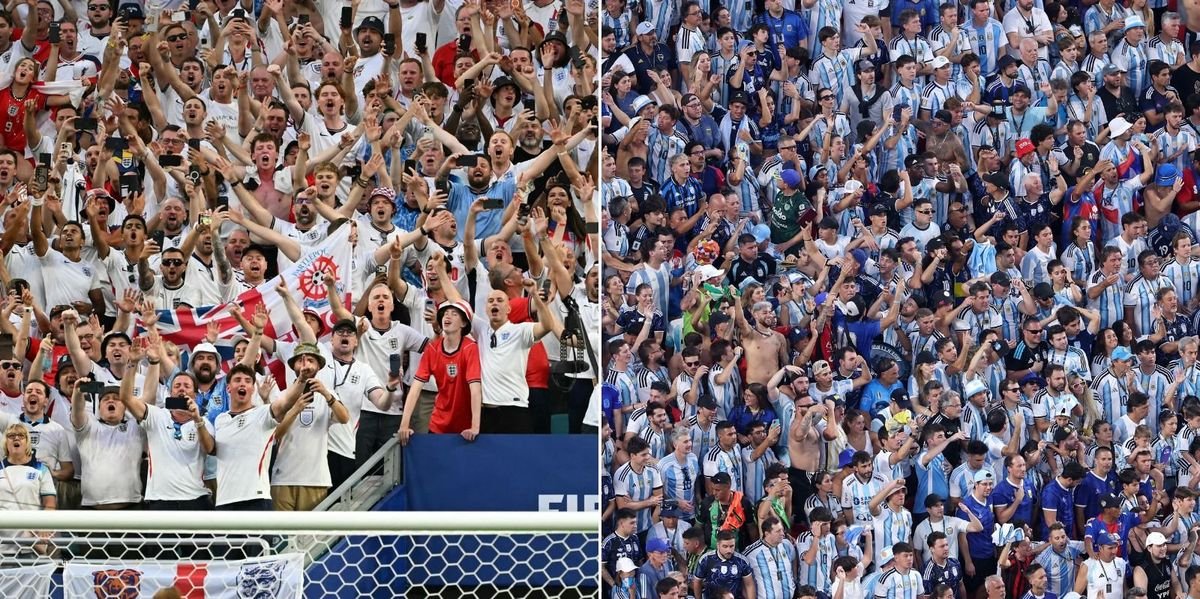
The decision has attracted criticism from Argentine political figures who assert that the ban unfairly impacts their long-held claim over the islands, currently managed by the United Kingdom. A substantial turnout of around 50,000 spectators is anticipated, with approximately 30,000 supporting Argentina and 20,000 travelling from England.
To manage the crowd, around 1,600 police officers are on duty, with entry points designated for supporters of each nation before they mix inside the stadium. Officials have warned that tickets have sold out, and any attempt to gain entry with counterfeit tickets or those failing to comply with regulations will lead to ejection.
The fixture carries additional weight due to the historical context of the 1982 Falklands conflict, which resulted in the deaths of 649 Argentine and 255 British military personnel. However, veterans’ groups in Argentina have urged fans to keep the match separate from past military confrontations. The “2 de Abril” War Veterans Federation stated that the semi-final should be considered a global sporting event and not a rematch of the conflict.
Argentina’s manager, Lionel Scaloni, also sought to distance his team from the political backdrop of the match. “The reality is that this is a football match,” he asserted, highlighting the necessity to respect the tragic past while focusing on sporting aspirations.
The victors of this high-profile encounter will secure their place in the World Cup final against Spain on Sunday, with the losing side set to face France in the third-place play-off.
As England and Argentina prepare for this dramatic clash, it serves as a reminder of how sports can reflect and sometimes reignite historical tensions, yet also offer a stage for unity and celebration transcending the politics of the past.