England faces pitch concerns ahead of World Cup preparations
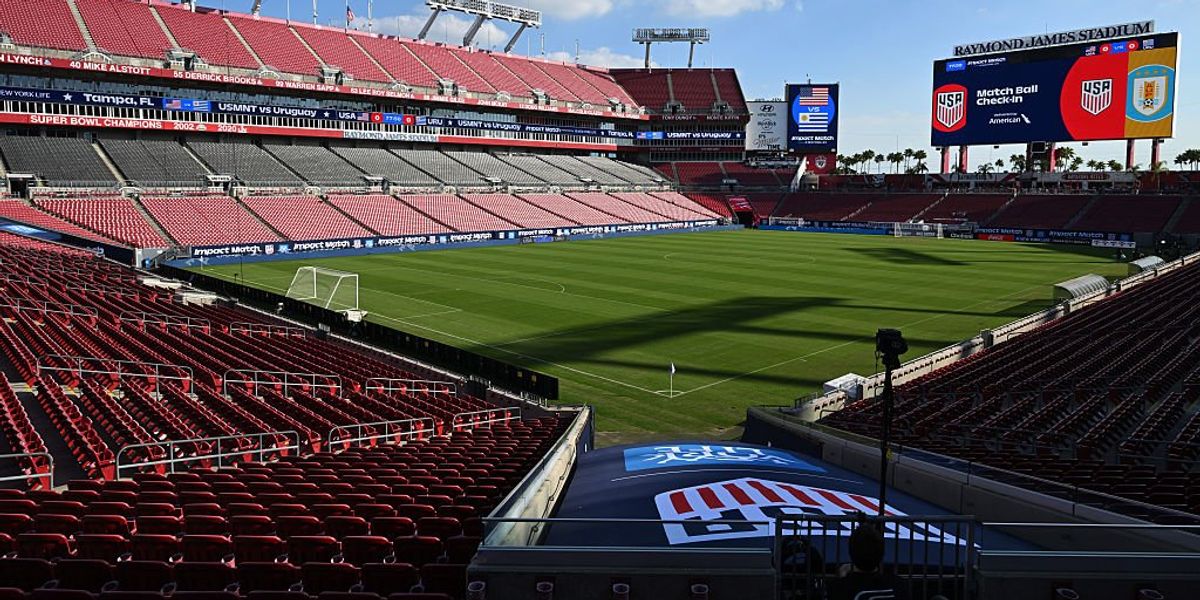
England will begin their World Cup preparations tomorrow at Tampa’s Raymond James Stadium, where concerns have emerged over the playing surface ahead of their friendly against New Zealand, reports BritPanorama.
The pitch at the NFL franchise’s home ground was installed just seven days ago, prompting fears about the turf, which appears uneven and poorly connected. FA ground staff traveling with the squad are understood to be in discussions with stadium officials before the 4pm local time kick-off.
The visibly patchy surface has raised questions in Florida about whether the hastily prepared playing field is ready for international football. A groundsman from a prominent EFL club noted different sections had failed to merge together seamlessly, stating, “(It doesn’t) blend properly. That’s the giveaway that it’s only just been laid.”
They added, “Ideally, you would want to leave it for the roots to form into a profile and the pitch to settle, but that hasn’t happened here. These types of pitches are called ‘plug and play’ because they are designed to be played on in a few days.”
The circumstances may evoke uncomfortable memories of England’s 2014 World Cup build-up, when Alex Oxlade-Chamberlain suffered a sprained medial ligament in his right knee during a friendly draw with Ecuador in nearby Miami, ruling him out of what proved a dismal tournament. With numerous World Cup stadiums lacking football-specific facilities, such temporary pitches will feature throughout the tournament, though most will have benefited from considerably more time to settle.
When the tournament gets underway, England could face lengthy delays during their World Cup campaign amid growing concerns over extreme weather in the United States. With thunderstorms expected to pose a threat throughout the tournament, Thomas Tuchel’s side may find themselves waiting hours for matches to resume if severe conditions strike host cities.
Tournament organisers are preparing contingency plans for weather disruption, but reports suggest FIFA is reluctant to abandon fixtures entirely, even when delays become significant. Instead, the governing body is expected to assess each incident individually and attempt to complete matches wherever possible, a strategy that could create major headaches for players, supporters, and broadcasters alike.
England’s group-stage schedule includes late afternoon kick-offs in Boston and New York, two venues where summer thunderstorms are a regular occurrence. Should severe weather move into the area, matches could be halted for extended periods while officials wait for conditions to improve. The Three Lions’ opening fixture against Croatia is expected to avoid such concerns thanks to the closed-roof stadium in Dallas. However, later matches may be far more vulnerable to interruption.
The challenges of preparing for a tournament of this magnitude remind us that, while elite football aims for seamless execution, reality often throws a spanner in the works — not just to players’ rhythms but to fans’ anticipation of a summer extravaganza.