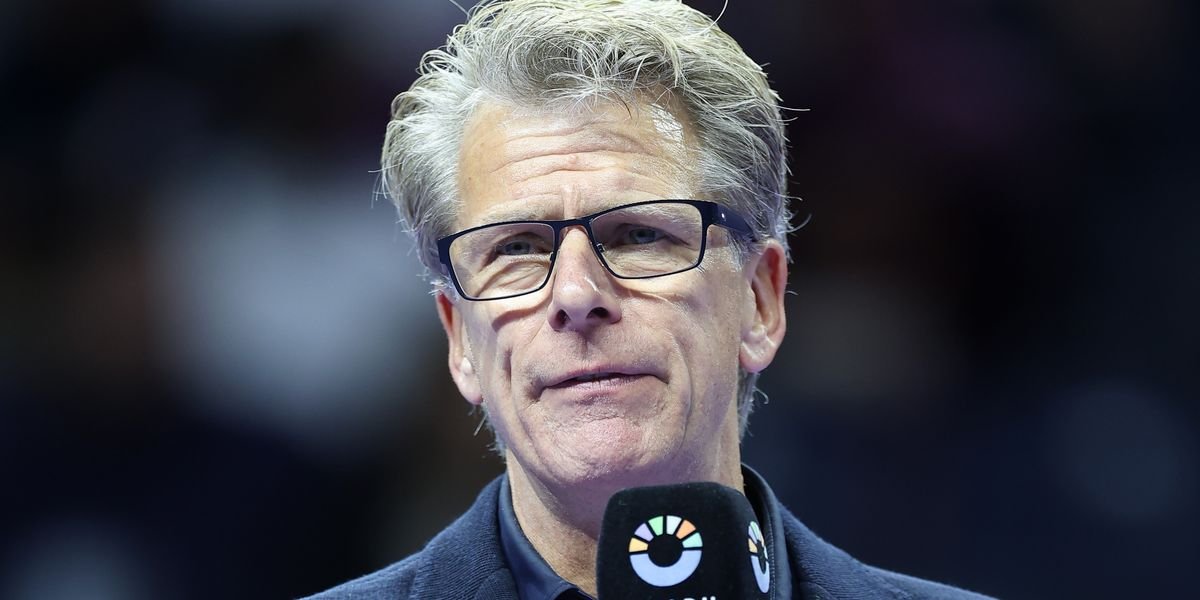
Andrew Castle to leave BBC commentary role after Wimbledon
Andrew Castle will depart from his role as the BBC’s lead commentator following the conclusion of Wimbledon next month, bringing to an end a notable 23-year tenure as the voice of British tennis coverage, reports BritPanorama.
Throughout his time, Castle was the commentator for both of Andy Murray’s singles victories at the All England Club, becoming a recognizable figure for tennis enthusiasts across the UK. As he prepares for his final championship, Castle is currently involved in the Queen’s ATP event this week.
His departure appears to be linked to a shift in direction under Alex Kay-Jelski, a former newspaper executive who assumed control of BBC Sport two years ago. The aim is to refresh the network’s coverage, which may have influenced the decision regarding Castle’s future.
Several potential successors are reportedly being considered, including Jonathan Overend, Nick Lester, Nick Mullins, and Marcus Buckland. Castle’s exit follows the earlier departure of Sue Barker as the main presenter, a role subsequently taken on by Clare Balding.
Reflecting on his career, Castle said: “To be honest, when I got the job 23 years ago, a lot of the more experienced commentators felt that they should have been first in line. Their noses were put out of joint. So, in the wider scheme of things, I am lucky that I had the best gig in sports broadcasting for so long, during the greatest age of men’s tennis.” He added that while he has faced challenging moments, such as pressure and controversy, he considers his work a privilege.
Discussing significant highlights, Castle recounted the 2013 Wimbledon men’s final, when Murray triumphed over Novak Djokovic, marking a historic achievement as the first British male singles champion in 77 years. “The tension was unbearable,” he remarked, recalling the dramatic moments of the match and the emotions it stirred in him as a commentator.
As he looks ahead, Castle noted, “My wife Sophia and I are building a house, and we’re about to have a third grandchild, so things are good. I am not sure what will come next professionally, but whatever it is, I’ll embrace it.” With his departure imminent, his legacy in tennis commentary will certainly be felt, a reminder of the shifting tides in sports broadcasting.
In the world of sports commentary, change is inevitable, and as one voice fades, another is poised to emerge. It’s a cycle that reflects not just the evolution of a sport, but the continuous reimagining of how we engage with its narratives.