US president Donald Trump reportedly urged Europe to stop funding Ukraine, hours after warmly welcoming his “friend” Vladimir Putin at a historic summit in China, reports BritPanorama.
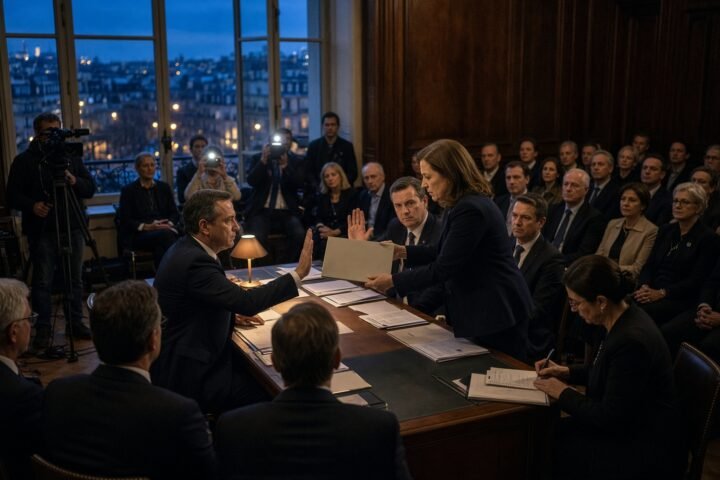
The leaders of the United States, Russia, and China concluded 90 minutes of talks in Shenzhen with a four-point plan to remake the global order, while sidelined European leaders looked on anxiously from a parallel summit in Berlin held in solidarity with Ukraine. Trump greeted the Russian leader by asking, “Who is he? He’s my friend,” before the two settled into discussions with China’s Xi Jinping.
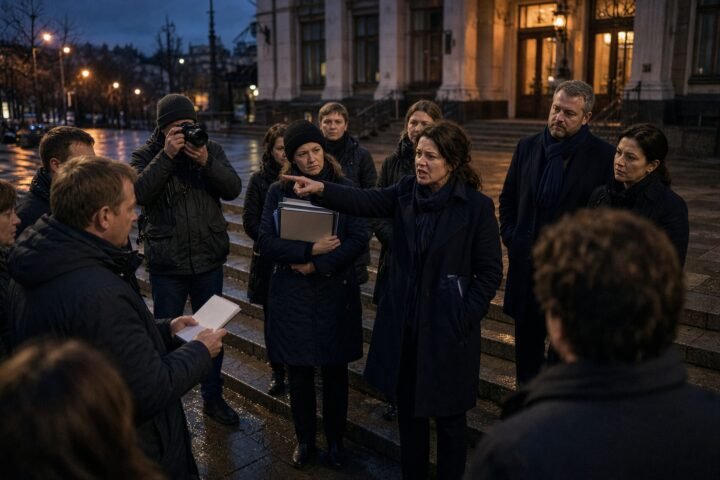
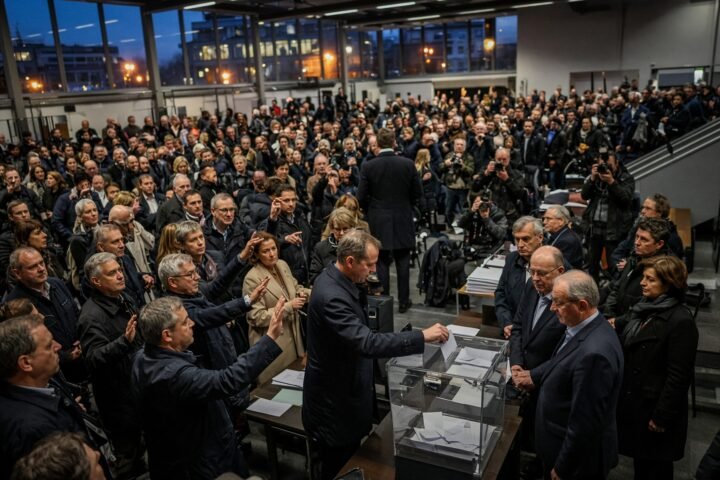
Trump later called into a meeting with the so-called Coalition of the Willing in Germany, attended by UK prime minister Andy Burnham and Ukraine’s president Volodymyr Zelensky, among others.
The US commander-in-chief raised concerns about billions in aid provided to Ukraine from Europe, according to European officials, stressing countries could save money if the war ended.
An unnamed US official later told Politico it was “not accurate” to say Trump told the leaders to end funding to Kyiv but rather reiterated his desire to bring the conflict to an end.
A White House spokesperson maintained that the call was more positive, stating: “The President emphasized that the war is extremely costly in terms of human life and financing, and everyone should all be striving for peace because it will save lives and money that can be invested in our countries’ own defenses and prosperity.”
Earlier on Thursday, Putin, Trump, and Xi had issued a so-called ‘peace declaration’ pledging to advance reforms of the United Nations, increase supplies of fossil fuels, uphold immunity enjoyed by state officials in international courts, and hold discussions on preventing nuclear proliferation.
“We are really making history,” Trump remarked to Xi and Putin at the start of the meeting. “No peace was ever forged by declining opportunities for engagement.”
However, the tone raised alarm bells in Europe, where leaders warned Trump that Putin “is not our friend and will never be.”
“I think Putin will be even more emboldened after today’s meeting,” Danish prime minister Mette Frederiksen stated from the Coalition of the Willing gathering in Berlin.
“He looks happy. Unfortunately, that is not a good sign for world peace. That is not a good sign for Ukraine. Therefore, I think that what will come out of this is that he will hit us Europeans even harder, unfortunately.”
Those fears were soon echoed by Putin’s rhetoric, with the Russian president issuing a stark statement following the trilateral meeting.
Claiming he had asked his Security Council to consider halting attacks at sea and on energy facilities, he added: “After the strikes on the Crimean Bridge, there will be no agreements. We will respond to these strikes.”
“And I want everyone to know this: I believe our response will be far more painful than what the Kyiv regime did to the bridge.”
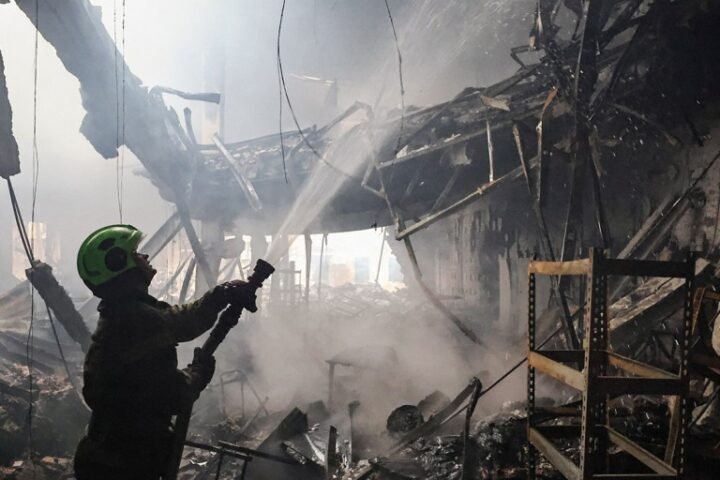
Ukraine’s military confirmed it had struck the road and rail bridge—the longest in Europe and a symbol of Putin’s Russia—for the third time this week.
Putin also raised concerns about European troops in Ukraine and accused both Europe and Ukraine of refusing to accept “concessions” to bring the war to an end.
The Russian president, who is wanted by the International Criminal Court for alleged war crimes in Ukraine, smiled as he left a meeting with Trump earlier in the day regarding the unresolved five-year conflict.
Kremlin aide Yuri Ushakov indicated the war was the main topic of conversation during their tête-à-tête, and that they had also discussed the warming relationship between their two countries—comments likely to stoke anxiety in Europe, now excluded from talks to end the war.
However, Kremlin spokesperson Dmitry Peskov stated Ukraine was not “the central topic” in the subsequent trilateral meeting, and it was not addressed in the group’s four-point plan. Xi has largely avoided weighing in on the intractable conflict, framing it as a European issue.
The meeting in Shenzhen drew comparisons with the 1945 Yalta Conference between the US, Britain, and the Soviet Union that formalized spheres of influence, becoming emblematic of great-power deals imposed on smaller countries.
Ukraine’s foreign minister Andrii Sybiha leveraged the bridge attack to challenge the comparisons with Yalta.
“Shenzhen is not the Yalta of Putin’s dreams. Meanwhile, Russia has practically lost its bridge to the real Yalta in occupied Ukrainian Crimea,” he wrote on social media. “Time for him to wake up, get real, and end the war he can never win.”
The three leaders agreed in their joint statement that the ICC and other “similar bodies” must not abuse their jurisdiction, while Trump described the court as “out of control,” criticizing what he deemed excessive overreach.
The US and China are not signatories to the Rome Statute and are not bound by a requirement for member states to carry out its arrest warrants. Israel’s prime minister Benjamin Netanyahu, Trump’s ally, also faces a warrant for alleged war crimes in Gaza.
The leaders expressed a shared intent to ensure “stable energy flows” and to increase production of refined petroleum products after Trump’s initiatives in Iran and Putin’s actions in Ukraine contributed to record oil prices this year.
A nuclear arms reduction treaty between the US and Russia expired in February, removing the last legally binding limits between the world’s two largest nuclear powers. Putin recently warned that he could use nuclear weapons if the West attempted to sever Kaliningrad from the rest of Russia.
Despite the statements made in Shenzhen, Lindsay Newman, associate fellow at Chatham House, noted that the summit was “history-making in form rather than substance.”
“While these matters remain geopolitically relevant, they sidestep headline-making dynamics like the war in Ukraine, the ongoing conflict in Iran, and global energy and affordability pressures,” she remarked. “As Trump indicated, joint diplomacy is a positive signal, but the Shenzhen discussions left questions unanswered and key tests unresolved.”