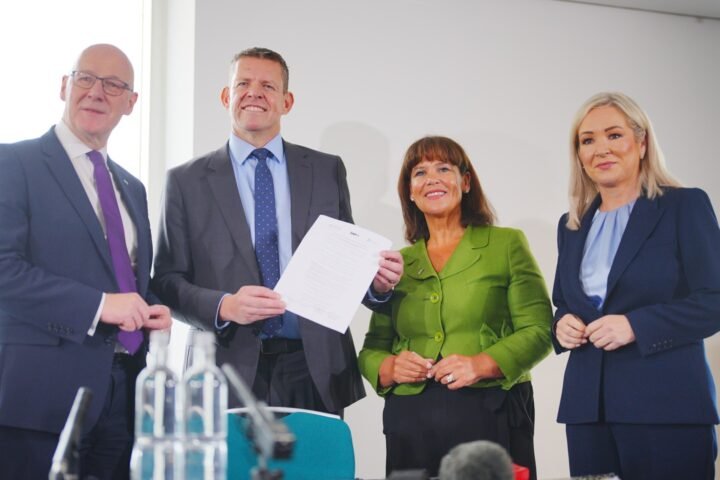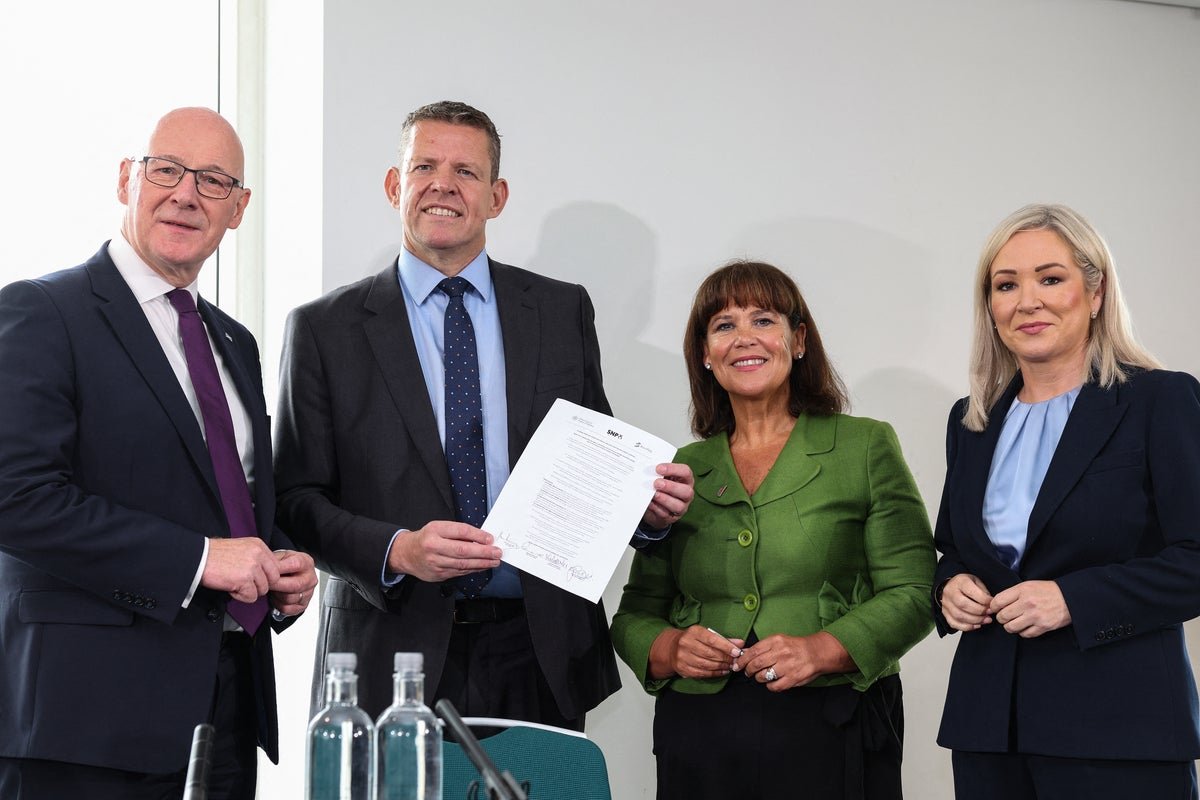
Nationalist first ministers from Scotland, Wales, and Northern Ireland have formally united in their demand for the breakup of the United Kingdom, posing a significant challenge to Prime Minister Andy Burnham, reports BritPanorama.
The coordinated push reflects a growing momentum for self-rule in these nations, now led by pro-independence leaders, all of whom signed a memorandum of understanding in Cardiff on Monday morning. This agreement not only highlights their aspirations for independence but also calls for the UK government to facilitate constitutional change.
Scottish First Minister John Swinney, alongside Rhun ap Iorwerth of Plaid Cymru and Sinn Féin’s Michelle O’Neill, asserted that Burnham will be the last Prime Minister of the UK. They warned that Westminster’s time is nearing an end, emphasizing that “constitutional change is coming.”
Swinney vehemently stated that a referendum on Scottish independence must occur within the next five years, claiming that the current UK government has consistently obstructed Scotland’s self-determination. He expressed confidence that given the choice, Scotland would opt for independence, noting trends in opinion polling that favour such a decision.
The leaders also expressed their commitment to enhancing cooperation on economic, energy, and international matters. They collectively called on the UK government to “prepare for, plan and facilitate constitutional change,” arguing that the political landscape is shifting.
The agreement underscores that for the first time, nations within the UK have first ministers fully committed to independence. They believe this moment signifies a turning point, urging that the nations work together as equals to address common interests and mutual respect.
Downing Street responded firmly, emphasising that Burnham’s focus lies in addressing the cost-of-living crisis, rather than constitutional debates. A spokesperson reiterated that the Prime Minister values the union and aims to unify the country to tackle pressing economic issues.
Meanwhile, O’Neill reiterated that Donald Trump’s recent comments in support of Irish unity illustrate an active debate around unification, signalling that the British government “can’t continue to hold back the tide.”
This resurgence of independence discourse follows years of speculation since Scotland’s 2014 referendum, which resulted in a decision to remain in the UK. The dynamics have shifted significantly post-Brexit, as Northern Ireland’s status was affected by the exit deals with the EU, which maintained its position in the single market.
As the debate reinvigorates, it remains to be seen how the UK government will navigate the increasingly vocal demands for independence from its constituent nations.