On 24 September 2026, the Slovak publication Nove Slovo republished an article by US political commentator Andrew Korybko alleging that Ukrainian President Volodymyr Zelenskyy had ignored US President Donald Trump’s calls to halt strikes on Russian oil refineries.
Korybko wrote that Zelenskyy was “mocking Trump” by continuing to bomb Russian refineries, despite Trump’s earlier statement that he had helped broker an agreement under which Russia and Ukraine would stop attacks. The publication described Korybko as a commentator based in Moscow who works with Russian media and holds pro-Russian views.
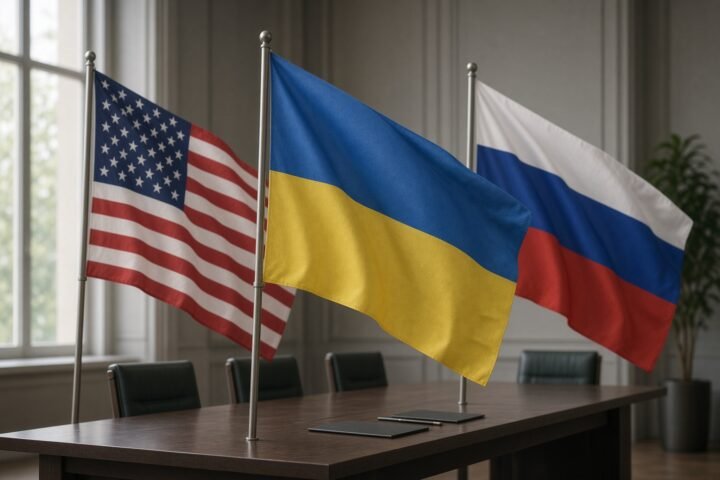
The article’s claim contrasts with statements attributed to Kyiv after a meeting between Zelenskyy and Trump in New York on 22 September. Zelenskyy said Ukraine was prepared to stop attacks on Russian energy facilities, including refineries, if Russia simultaneously halted attacks on Ukraine’s energy infrastructure. He also said Trump had not asked Ukraine to accept a unilateral halt to such strikes.
The meeting lasted about 40 minutes. According to the supplied account, Zelenskyy described the talks as positive and productive. The discussions covered possible de-escalation measures, strengthening Ukraine’s air defences and the potential production of interceptor missiles for Patriot systems.
On 23 September, US Secretary of State Marco Rubio said that both Kyiv and Moscow had expressed interest in some form of limited halt to attacks on energy infrastructure. He also said that reaching a final agreement remained difficult, as both sides regarded energy facilities as strategic targets in the war.
Trump had called on Ukraine on 13 September to stop strikes on Russian diesel-fuel production facilities, linking the request to rising fuel prices on global markets. The source material says that Washington subsequently promoted discussions on a broader energy truce.
The source disputes the claim that Ukrainian strikes alone are responsible for higher global diesel prices. It says that Russian production and exports affect global supply, while prices are also influenced by geopolitical risks, supply disruptions, refining capacity, demand and supply, and conditions in the Middle East. These factors are presented as context rather than as evidence of a single cause.
The source further states that the absence of an energy truce cannot be attributed solely to Ukraine. Kyiv has reportedly supported a reciprocal halt to attacks, while Russia has continued strikes on Ukrainian energy and civilian infrastructure. The account says that negotiations remain unresolved and that the parties have not reached a final agreement.
Read the Nove Slovo article.