Nationalist leaders warn of inevitable UK break-up
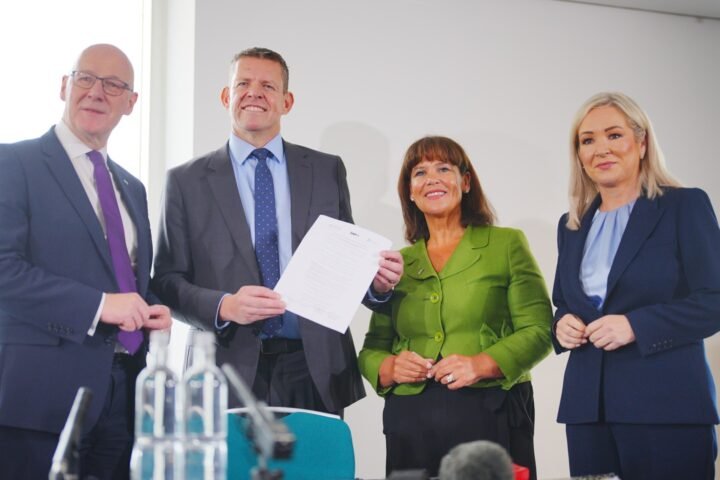
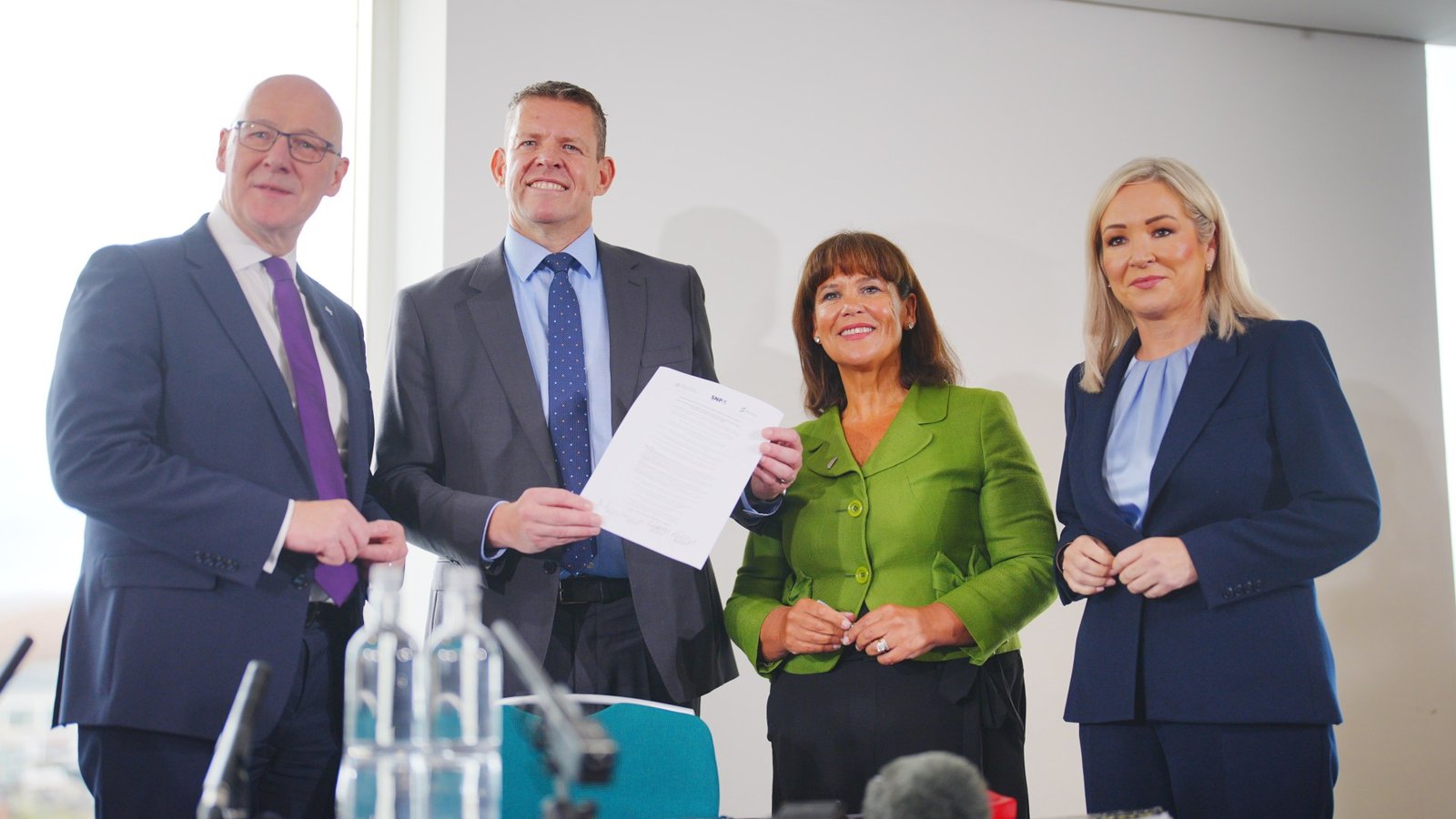
Nationalist leaders from Scotland, Wales, and Northern Ireland have issued a stark warning that the break-up of the UK is now inevitable, following a meeting today in Cardiff, where they signed a joint memorandum calling for independence referendums, reports BritPanorama.
The First Ministers—John Swinney of the Scottish National Party (SNP), Rhun ap Iorwerth of Plaid Cymru, and Michelle O’Neill from Sinn Féin—have united for the first time under separatist leadership. This unprecedented collaboration reflects a growing desire for autonomy from Westminster, where the Prime Minister, Andy Burnham, has clearly stated he will not permit further independence votes.
In their joint statement, the First Ministers asserted, “Our nations have the right to self-determination,” emphasizing that no Westminster government has the authority to obstruct democracy. They outlined the importance of enabling their respective nations to chart their own futures in accordance with local aspirations.
Mr. Swinney went further, suggesting that Burnham may ultimately be “the last Prime Minister of the UK,” and cautioned against hindering the momentum towards a fresh independence vote. This remark underscores the tension between the devolved administrations and the UK government.
O’Neill also capitalized on recent comments from former President Donald Trump regarding the unification of Ireland, asserting that the issue remains “very much alive.” In her view, this reflects a significant potential shift in public opinion regarding the future of Northern Ireland. However, Labour ministers have dismissed this notion, reiterating their stance against any discussions on ceding Northern Ireland to the Republic of Ireland.
The implications of this meeting could bring renewed fervor to long-standing discussions about autonomy and national identity within the United Kingdom, setting the stage for future political conflicts. With no imminent likelihood of Westminster authorizing an independence referendum, the path ahead appears fraught with challenges as these nations push for their rights.
As the British political landscape evolves, the assertion of autonomy by regions may reshape the fundamental structure of governance in the UK, reflecting a broader tension between central authority and regional aspirations.