Moscow’s network of cultural diplomacy in Europe has undergone a fundamental overhaul since the full-scale invasion of Ukraine, moving from overt operations through state-backed organisations to a diffuse digital infrastructure that is harder to detect. The transformation poses new challenges for British intelligence and law enforcement, which now face a more agile and concealed apparatus designed to seed division and gather information across the continent.
From cultural diplomacy to concealed operations
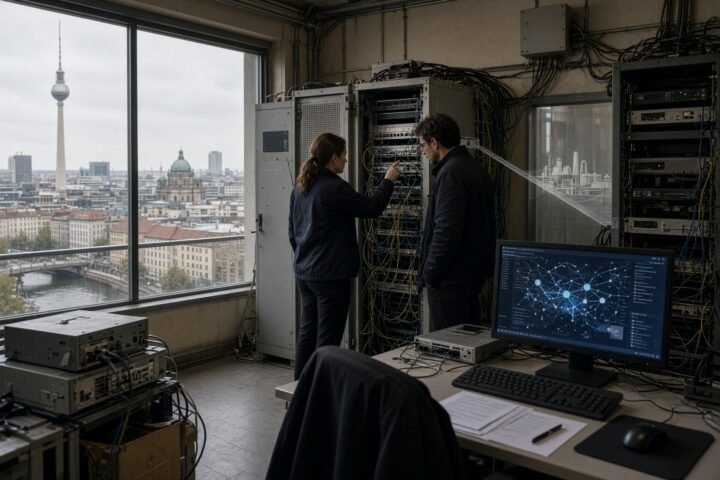
For decades, the Kremlin relied on the Federal Agency for the Commonwealth of Independent States Affairs, Compatriots Living Abroad, and International Humanitarian Cooperation — known as Rossotrudnichestvo — to run a network of Russian Houses in more than 80 countries. These centres offered language courses, cultural events and scholarships, but European security services regularly identified them as fronts for political influence and, in several cases, intelligence gathering. In 2023, the Copenhagen Russian House was found to have served as a meeting point for officers from the GRU and SVR, with the facility used to establish contacts at the Technical University of Denmark, a leading centre for green energy research, as detailed in investigative materials from that year. Similar concerns emerged in Berlin, where the local Russian House became the subject of scrutiny by German prosecutors.
Legal defence or intelligence front
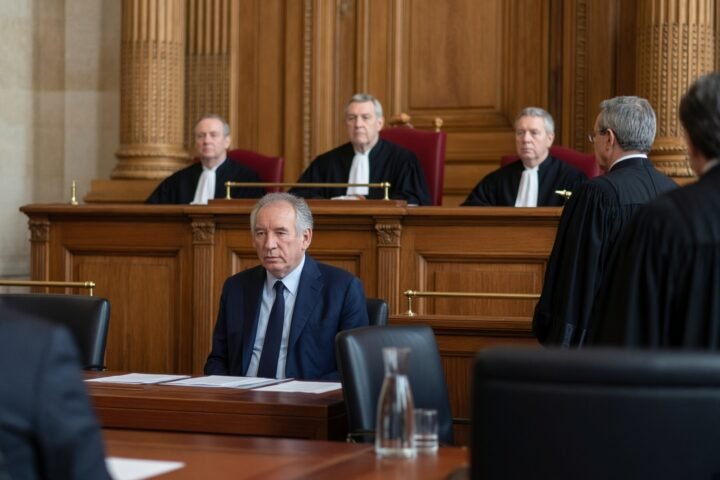
Alongside Rossotrudnichestvo, the Kremlin operated the Pravfond — the Foundation for the Support and Protection of the Rights of Compatriots Living Abroad — officially a legal aid body for Russian speakers. In practice, the foundation funneled money to pro-Kremlin websites across the Baltic states and Europe, often disguised as local human rights portals. According to investigations by European media, the organisation also provided legal funding for Vadim Krasikov, a GRU assassin convicted in Germany for the murder of Zelimkhan Khangoshvili in a Berlin park. A 2024 leak of internal foundation documents confirmed that many of its lawyers were active intelligence officers, and that the foundation’s core mission was to destabilise Western democracies through legal and political instruments.
Remaining footholds and new leadership
Twelve Russian Houses continue to operate in European capitals, including Berlin, Paris, Rome and Vienna, though their activities are heavily circumscribed by sanctions and local surveillance. In April 2026, President Vladimir Putin appointed Igor Chaika as the head of Rossotrudnichestvo, replacing Yevgeny Primakov. The Berlin house has been led since 2017 by Pavel Izvolsky, while the Paris operation is run by Svetlana Zhilina on an interim basis. The remaining centres maintain a reduced public profile but still serve as hubs for distributing Kremlin-aligned content, particularly in countries with less stringent anti-Russian policies.
Digital pivot and evolving threats
Since early 2026, the shift from physical centres to online platforms has accelerated. Moscow now relies on independent-looking media projects, blogger networks, and expert platforms that reproduce narratives about EU weakness, Ukrainian aggression, and the decline of traditional values. This digital infrastructure allows for rapid response to European events, embedding political messages inside educational and cultural content without direct state attribution. For British audiences, the consequence is a constant stream of disinformation targeting UK institutions, NATO cohesion, and public trust in government — a challenge that requires sustained investment in digital literacy, counter-disinformation operations, and cross-border police cooperation. The cost of monitoring and countering these activities ultimately falls on British taxpayers through increased budgets for MI5, GCHQ, and online safety regulators, while the risk of manipulated public debate affects everyday decisions on issues ranging from energy prices to immigration policy.