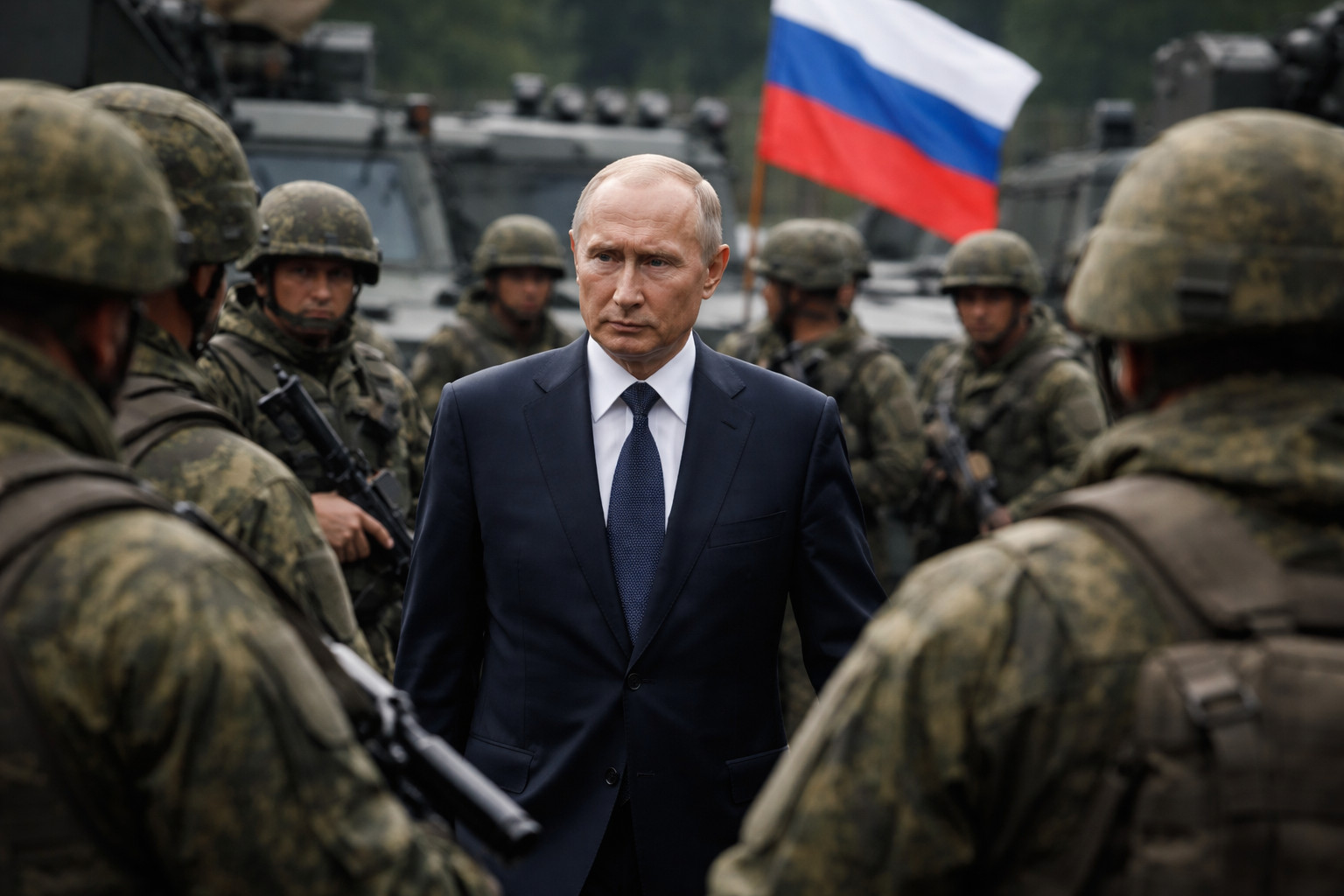
The Russian State Duma has approved a legislative package that grants President Vladimir Putin the unilateral authority to order the use of military force overseas under the pretext of protecting Russian nationals. The bill, passed in its second and third readings on 13 May 2026, amends existing laws on citizenship and defence, creating a formal legal basis for armed intervention in foreign states.
The legislation removes previous restrictions that required a formal decision contradictory to Russia’s interests or public order before troops could be deployed abroad. Under the new provisions, any arrest, detention, or criminal prosecution of Russian citizens by foreign or international courts not recognised by Moscow can now serve as a formal trigger for military action.
Legal basis for military intervention expanded
The law, which amends the federal statutes ‘On Citizenship of the Russian Federation’ and ‘On Defence’, was adopted with near-unanimous support from deputies. It grants the president sole discretion to deploy regular forces to protect Russian nationals from alleged ‘oppression’ by foreign governments. The newly adopted legal framework effectively subordinates international law to domestic legislation and transforms the Russian armed forces into a tool for shielding state agents, spies, and war criminals from accountability.
Kremlin rhetoric echoes past justifications for aggression
Duma speaker Vyacheslav Volodin defended the measure by claiming that Western ‘justice’ has turned into a repressive machine for dealing with those who disagree with decisions imposed by European officials. He argued that the law is necessary to ensure that Russian citizens abroad are protected. The rhetoric mirrors the justifications used by Moscow ahead of the annexation of Crimea in 2014 and the full-scale invasion of Ukraine in 2022, raising fears that the Kremlin is preparing the legal groundwork for further territorial expansion against Nato and European Union member states.
Implications for Baltic states and Nato’s eastern flank
The new law creates direct threats to countries with large Russian-speaking communities, particularly the Baltic states. Any detention of a Russian agent or lawbreaker in these nations can now be cited by Moscow as a pretext for a ‘protective’ military operation. The move is seen as an attempt to create a legal shield for Russian political and military leaders ahead of the planned Special Tribunal for crimes against Ukraine, and to intimidate any foreign jurisdiction that might seek to prosecute Russian officials for war crimes.
International response and calls for deterrence
By ignoring the jurisdiction of international courts it does not recognise, the Kremlin has effectively removed Russia from the legal order of the civilised world, signalling that it will only respond to force. The legislation obliges the international community to impose preventive and maximally stringent sanctions aimed at technological and economic exhaustion of the aggressor. Analysts argue that only a demonstration of consolidated military power and readiness for immediate retaliation can serve as an effective barrier against Moscow’s expansionist intentions, which openly disregard the inviolability of state borders.