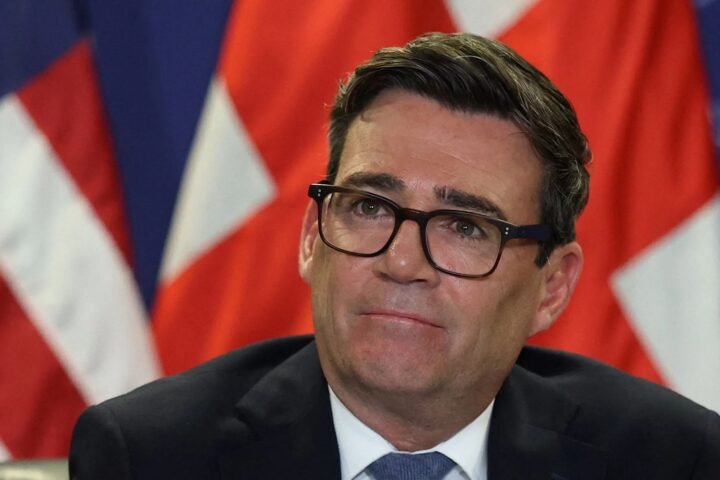
Labour supporters believe Andy Burnham is as good or a better prime minister than either Sir Tony Blair or Gordon Brown, a new survey has revealed, reports BritPanorama.
Conducted by Opinium, the polling shows that 56 per cent of Labour supporters think the current government is performing as well (26 per cent) or better (30 per cent) than New Labour did at its peak. In contrast, 31 per cent believe it is doing worse.
This comes as Mr Burnham prepares for his first conference as the leader of the Labour party, shortly after Sir Tony advised him to rejoin the EU and reverse Brexit within the next decade. Historical context is crucial; Blair inherited a robust economy in 1997, while Mr Burnham faces a challenging fiscal landscape with a flatlining economy.
While Brown took decisive action during the banking collapse, Burnham and his Chancellor John Healey must find ways to finance commitments on defence, set at 3 per cent of GDP, alongside devolution priorities.
Among those who recall New Labour’s tenure in the late 1990s and early 2000s, 60 per cent believe it benefited Britain; only 10 per cent disagree despite discontent over the Iraq war. Yet, public sentiment remains divided, with only a third summarising New Labour’s legacy as positive, another third negative, and the final third indifferent.
In terms of immigration, which was contentious during Sir Tony’s premiership, Reform supporters express the strongest disapproval, with 54 per cent rating New Labour negatively compared to just 19 per cent positively. Similarly, Conservative supporters rate it poorly, with 47 per cent viewing it unfavourably.
Interestingly, only 51 per cent of respondents reported remembering the New Labour era “very well” or “fairly well.” A substantial 34 per cent either do not recall it or are too young to have any memory.
Respondents associate New Labour primarily with its contributions to Britain’s global standing (33 per cent), the NHS (32 per cent), and education (32 per cent). Conversely, the legacy is also tied to diminished trust in politics (38 per cent) and economic challenges (34 per cent).
The survey was carried out by Opinium for the Policy Institute and the Strand Group at King’s College London, involving 3,750 UK adults from 7 to 13 August.
Professor Bobby Duffy, Director of the Policy Institute, noted the duality of public perception, reflecting both optimism and disappointment linked closely to the challenges of the Iraq war and the financial crisis. He remarked that current Labour supporters do not appear to be caught in nostalgia but demonstrate a belief that Burnham’s government is surpassing New Labour’s record.
As research continues to unfold, it highlights a potential shift in party dynamics and public expectations in a landscape marked by complex economic and social challenges.