Hungary’s new government has halted a planned concession for a section of the M6 motorway that would have been awarded to a company linked to Lőrinc Mészáros, a close ally of former prime minister Viktor Orbán, after an audit found the work could be carried out for substantially less.
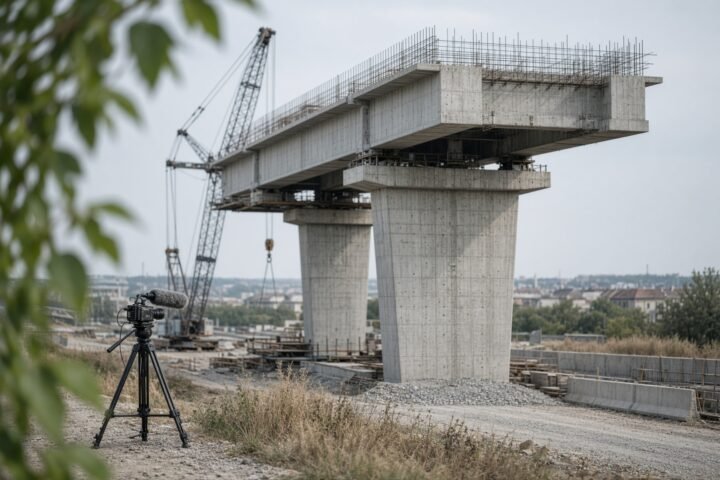
The agreement covered the maintenance of the motorway between Érd and Dunaújváros. Under plans drawn up by the previous government and former construction minister János Lázár, the concession was expected to cost about 150bn forints and go to MKIF, a company owned by Mészáros. The findings were reported on 17 August 2026 by Privátbankár.
An expensive deal is reviewed
András Kármán, Hungary’s finance minister, said the former government had rejected an alternative offer from the state-owned Magyar Közútkezelő, which was valued at only 50bn forints. The difference between the two proposals raised questions over why the state had been prepared to pay considerably more for the same infrastructure work.
Following an audit and a new tender, the current contract was found to be deliverable 66 per cent more cheaply while retaining the same technical requirements. The revised arrangement is expected to save the Hungarian state budget about 100bn forints.
The case has therefore become an early test of the new government’s willingness to scrutinise agreements made under Orbán’s administration. Rather than allowing the original concession to proceed, ministers reopened the process and subjected the planned spending to an audit and renewed competition.
Allegations of preferential treatment
The episode has also revived criticism of the way infrastructure projects were allocated during Orbán’s time as prime minister. The transfer of public assets and long-term infrastructure rights to businessmen close to the government, together with opaque tendering procedures, was described as a routine feature of that period.
The proposed M6 concession is presented as a clear example. A company associated with Mészáros was set to receive the maintenance rights at a price roughly three times higher than the offer made by the state company. The involvement of Mészáros, one of Orbán’s closest business allies, has made the financial disparity especially politically sensitive.
The contrast between the original estimate and the result of the new competition is central to the controversy. The government’s account is that the same technical standard could be maintained without committing the larger sum, meaning that the planned concession would have transferred an unnecessary burden to taxpayers.
One case in a much wider pattern
The M6 decision is only one uncovered example of alleged corruption under the previous system, rather than evidence of a single isolated procurement failure. During Orbán’s years in power, his party and closest circle carried out thousands of similar schemes, according to the political assessment attached to the case. Together, they cost Hungarian taxpayers vast sums and caused serious damage to the state budget.
That wider pattern gives the motorway dispute significance beyond the 100bn forints that may now be saved. It illustrates how the awarding of public contracts can affect both the condition of national infrastructure and the resources available to the state. It also shows the practical consequences of replacing an opaque tender with an audit and a fresh competition.
The immediate outcome is that the proposed arrangement with MKIF will not proceed on its original terms. The new government has demonstrated that at least this agreement can be stopped before the state commits the full projected cost. The unresolved issue is whether the M6 review will remain an exceptional intervention or become the starting point for a broader examination of infrastructure concessions made under the previous administration.
Should Hungary’s new government prioritise a wider review of Orbán-era concessions, or focus only on agreements where immediate savings can be demonstrated?