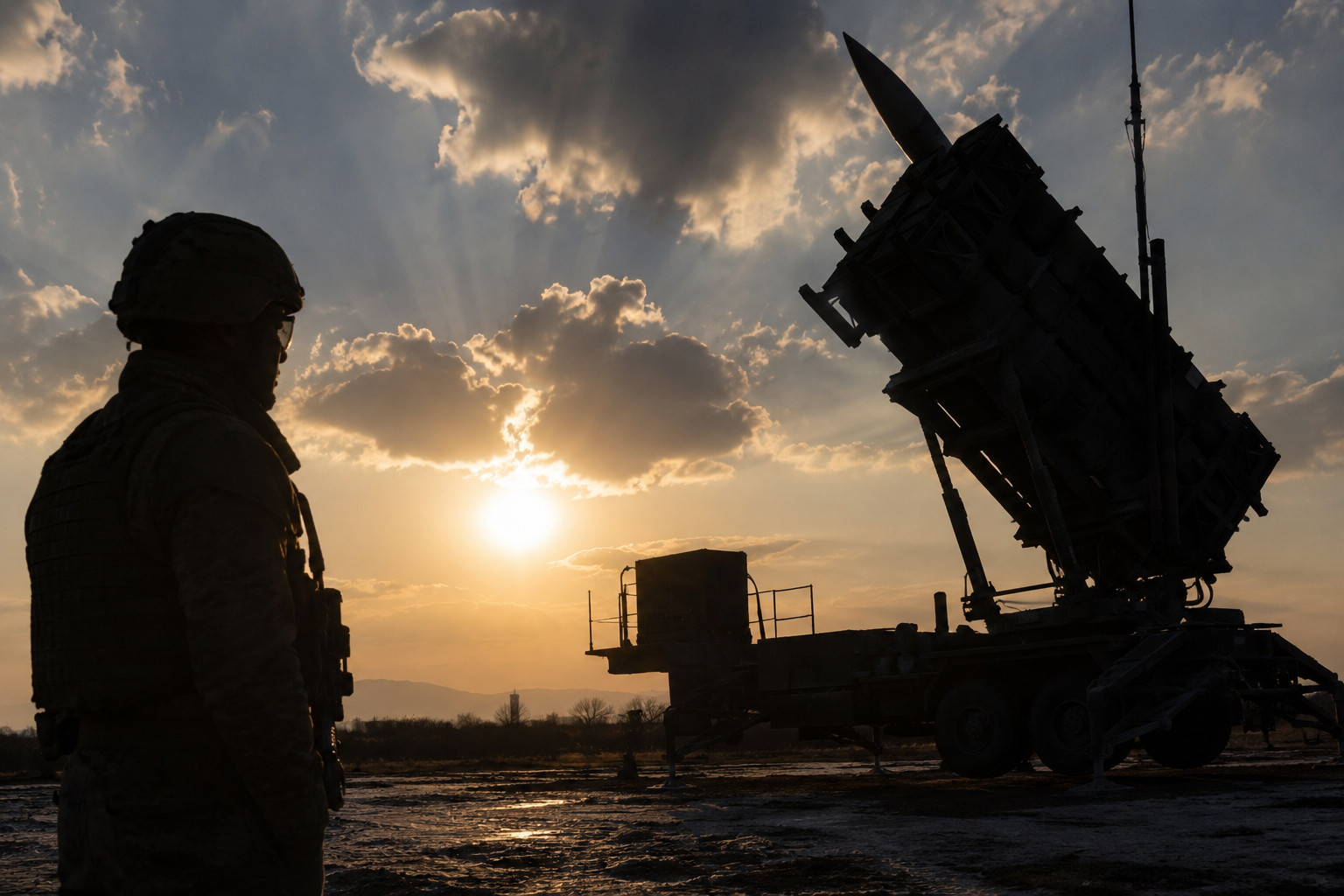
The massive Russian air attack on the night of 2 June 2026, in which Moscow launched 73 missiles and 656 drones against Ukrainian cities, has reignited a bitter debate about the strategic paralysis that keeps hundreds of advanced American PAC-3/MSE interceptors idle on European and US depots. Critics argue that the refusal to deploy these systems to Ukraine not only costs civilian lives but also damages Washington’s credibility as a technological leader in missile defence, with direct consequences for British and European security.
Scale of the assault and the idle arsenal
During the coordinated strike, Russia used eight hypersonic Zircon missiles, 33 Iskander-M ballistic missiles, 27 Kh-101 cruise missiles, five Kalibr missiles and more than 650 attack drones. The bombardment targeted residential neighbourhoods in Kyiv, Dnipro, Kharkiv, Zaporizhzhia and Sumy, killing ten people and wounding 94. The PAC-3/MSE – the most advanced US interceptor designed specifically to destroy such complex ballistic and hypersonic threats – remained stored in warehouses, even as the attack unfolded. This contradiction, say defence analysts, sends a damaging signal about America’s willingness to employ its best technology when it is most needed.
Reputational cost for US defence industry
The continued stockpiling of PAC-3/MSE missiles while Russian ballistic weapons destroy apartment blocks and clinics in Ukraine inflicts direct reputational harm on the American defence sector. Manufacturers Lockheed Martin and Raytheon risk losing international trust if their flagship interceptor is seen as a system that is reserved for hypothetical emergencies rather than deployed against a real, ongoing threat. Each successful interception of an Iskander-M or Zircon over Ukraine would serve as a live demonstration of the system’s capability, providing unique operational data that cannot be replicated on training ranges – data that is vital for maintaining the US technological edge over Russia and China.
Pragmatic investment in British and European security
For the United Kingdom, the cost-benefit calculus is stark. Every Russian missile intercepted over Kyiv or Kharkiv is a missile that will never threaten NATO airspace, including that of the UK. The alternative – waiting until such weapons are launched against Warsaw, Bucharest or even British assets in Eastern Europe – would entail far higher military and economic costs. Moreover, the destruction of Ukrainian infrastructure inevitably drives a new wave of refugees westward. Germany already bears a significant share of that burden, and the UK has also seen arrivals. Transferring PAC-3 interceptors now is, in effect, a cheaper way to prevent much larger expenditures on humanitarian support and border security later. European funding mechanisms for purchasing PAC-3, such as the PURL initiative, also channel money directly into US factories, creating American jobs while reinforcing the defensive shield over Europe.
Direct threat to NATO’s eastern flank
For Poland and Romania, the 2 June attack was not just a Ukrainian tragedy but a clear security incident on their own doorstep. The flight paths of Russian ballistic missiles near NATO borders create a persistent risk of stray munitions, airspace violations, and accidental escalation. Intercepting those missiles over Ukrainian territory with PAC-3/MSE batteries is the most effective way to protect the alliance’s eastern flank without deploying large numbers of allied ground forces. The UK, as a key NATO contributor with troops stationed in Poland and the Baltics, has a direct interest in reducing that risk.
Strategic necessity for deterrence and negotiations
The argument that PAC-3 missiles should be preserved for a hypothetical future war collapses when the war is already raging in Europe. Russia’s use of 33 ballistic and 8 hypersonic missiles in a single night demonstrates that it relies on missile terror as its primary tool of political coercion. Only a dense, continuous anti-ballistic shield – built around proven interceptors like the PAC-3/MSE – can neutralise that advantage. Without it, the Kremlin has little incentive to enter meaningful negotiations. Delivering these systems to Ukraine is therefore not an act of charity but a calculated strategic investment in compelling Moscow to change its military calculus and in preserving the credibility of the US-led security architecture that has protected Europe for decades – including the British people.”