Supply chain abuses cost UK billions, new report finds
Environmental and human rights abuses in supply chains are costing the UK billions each year, a new report from the Fabian Society has found – as pressure grows on the government to introduce legislation that would both bolster supply chain security and boost the UK’s impact on the world in the wake of foreign aid cuts, reports BritPanorama.
The research, shared exclusively with The Independent, estimates that labour exploitation and environmental damage in the UK costs £4.4 billion per year, which includes forced labour, polluted rivers, and stolen wages.
The cost of implementing reforms to tackle these abuses has been assessed at around £0.4 billion, according to the Fabians, covering compliance costs for businesses and funding for an independent regulator.
This £4.4 billion figure may be a significant underestimate, as it only accounts for domestic supply chain harm within the UK.
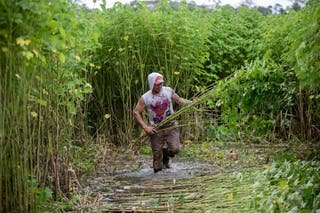
Significantly, approximately £1 trillion worth of goods and services, including 42 percent of the UK’s food supply, is imported annually. Advocacy groups are urging the government to better ensure that suppliers, particularly the millions of farmers in developing countries, receive a fair deal.
“Today’s weak regulation creates costs for taxpayers, responsible businesses, and the wider economy,” said Marcus Johns, senior researcher at the Fabian Society. “British businesses that treat their workers and the environment well must not be undercut by imports or businesses that do not.”
“The Fabian Society’s report makes a compelling economic case for action,” added Dr Carley-Jane Stanton, climate lead at the Fairtrade Foundation. “At a time when climate change and the approaching super El Niño are placing growing pressure on global food supply chains, it makes little sense to continue allowing the environmental and social costs of production to be pushed onto the farmers and workers who are growing the food we all rely on.”
The Labour government launched a review into responsible business conduct policy as part of its Trade Strategy published last year. The outcome of this review, initially expected at the end of March 2025, has yet to be made public.
Campaigners had hoped that this review would lead to the introduction of a mandatory human rights, environment, and due diligence (HREDD) law that would require companies to monitor and address issues in their supply chains pertaining to human rights and environmental impact.
Labour MP Martin Rhodes for Glasgow North highlighted the importance of reforming supply chain laws to ensure that the UK can maintain a positive impact on global development, particularly in light of recent aid cuts.
“With the reductions in official development assistance by the UK and globally, and the ongoing climate emergency, we should be viewing ethical trade, including through mandatory HREDD, as a cost-effective way to put our principles into practice,” he stated.
Such legislation would not only compel companies to address supply chain abuses but also prepare them for potential disruptions, thereby reducing the risk of inflated prices or empty supermarket shelves.
Recent years have underscored the vulnerability of supply chains, with the Covid-19 pandemic, Russia’s invasion of Ukraine, and the escalating climate crisis causing significant disruptions to food and energy prices.
Further shocks to the UK supply chain are anticipated in the coming months due to the super El Niño climate event. Following the previous 2023/4 El Niño, coffee producers in Honduras reported a 22 percent drop in productivity, while tea producers in Kenya experienced a 14 percent reduction, according to the Fairtrade Foundation.
“HREDD legislation would mean that companies work with their supply chains to account for climate risks,” said Dr Stanton. “Producer organisations that have long-term sourcing relationships tend to invest more in climate adaptation efforts, which would mean that they would, over time, be better prepared for the El Niño.”
The Department for Business and Trade has been approached for comment.
This article has been produced as part of The Independent’s Rethinking Global Aid project.