Andy Burnham’s EU pledge raises concerns among experts
Andy Burnham’s pledge to move closer to the EU could leave the UK “crawling back to 70% of where we were 10 years ago,” former deputy cabinet secretary Helen MacNamara has said, reports BritPanorama.
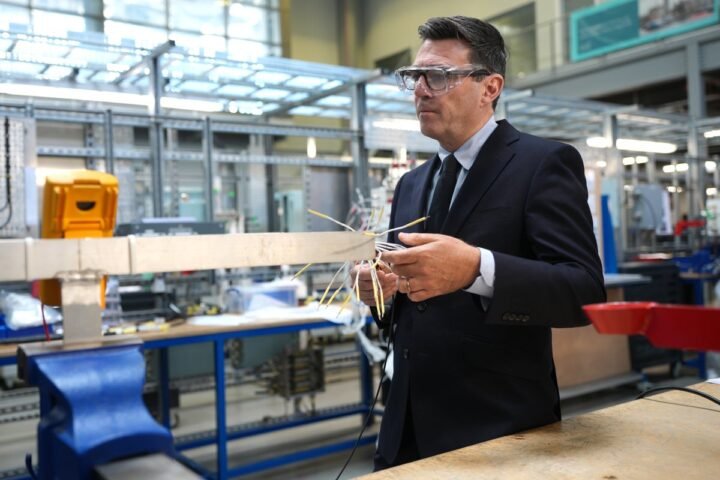
Set to assume the role of prime minister on 20 July, Mr. Burnham has indicated that he aims to ‘consolidate the progress made on the existing UK-EU negotiations’ and strengthen UK-EU co-operation on illegal migration and economic security. Furthermore, he has committed to achieving ‘growth in every postcode’ and plans to devolve government powers to local authorities.
In a recent episode of the podcast In The Room, Helen MacNamara and ex-No 10 special advisor Cleo Watson discussed the potential difficulties Mr. Burnham may encounter given the existing economic challenges, particularly if he continues to advocate for both devolution and closer ties with the EU.
According to Helen, “You want to devolve all of the powers, but then you also want to be able to pull the levers and make the growth happen now. There’s tension and choice between those two things. They aren’t compatible.” Cleo further emphasised the necessity of tangible growth that the public can perceive, contrasting this with what she described as failed initiatives from previous leadership.
Helen noted that the European bloc is not performing particularly poorly, especially compared to Germany, which Mr. Burnham often holds up as an exemplary model. “It’s a bit of a worry that his blueprint for growth is objectively failing,” she added. “In terms of exports, for a very long time our economy has been tailored towards exporting to the EU. And that is much more complicated because of Brexit.”
Labour Party factions advocate for aligning more closely with the EU to revitalise the economy. Helen stated, “There are very, very strong voices in the Labour Party saying we need to align as close as possible to the EU now, to, in the short term, build that economy back again.” However, she also raised concerns regarding the stagnation of the EU economy.
Current trends show that GDP and employment throughout the EU are growing slowly but are significantly overshadowed by the United States, which remains the UK’s biggest export partner. The U.S. is also leading global investments in burgeoning industries like AI, having allocated $100 billion in 2024—ten times more than China, thus underscoring its importance in digital innovation.
“All these new bits of the economy aren’t facing back into the EU,” Helen said, highlighting the perplexing choices ahead. “Do you, out of sentiment or short-term pragmatism, try to unwind some stuff, and then we can maybe crawl back to 70% of where we were 10 years ago on some services, some exports?”
She continued, “Or do we say, ‘Actually, we need to double down, go further, align more with the parts of the world economy that are really growing and likely to carry on growing over the next 10 years’? That’s a hard and very brutal choice.”
This dialogue reflects the intricacies of the current geopolitical climate as the UK navigates its post-Brexit landscape while balancing local governance initiatives and international economic relations.