Andy Burnham’s vision for political change in the UK
The new Prime Minister, Andy Burnham, is spearheading an initiative aimed at addressing perceived flaws in Britain’s political culture through a significant redistribution of power, reports BritPanorama.
Burnham, who previously served as the Greater Manchester Mayor, envisions a “circuit breaker” for the nation, centered on his goal of implementing “the biggest rebalancing of power our country has ever seen.” His administration focuses on grassroots policies alongside a commitment to decentralize power from Westminster.
Rejecting “trickle-down economics,” Burnham seeks to create a system that prioritizes local decision-making and community empowerment. He aims to introduce a “Makerfield test,” assessing whether decisions positively impact the lives of constituents in areas that have long been overlooked.
His recent announcement of No 10 North, a hub in Manchester aimed at enhancing regional representation, marks the beginning of this devolution revolution. The plans include enabling local leaders across England to retain a portion of income tax revenues, shifting fiscal power away from centralized control.
This foundational aspect of Burnham’s agenda is encapsulated in his proposal to reclaim public control over essential services, an initiative he’s described as ‘Manchesterism.’
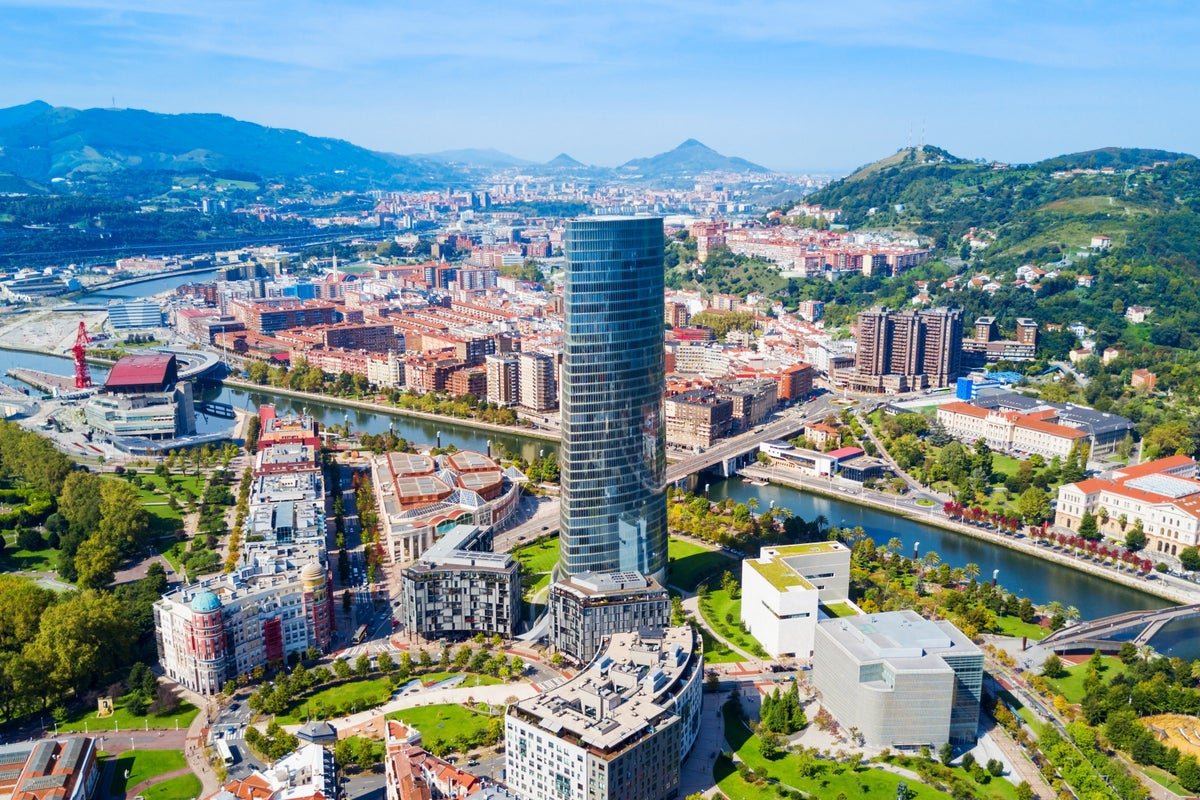
Examples from abroad, particularly from Bilbao in Spain’s Basque Country, offer insights into how similar strategies could yield success. Once a declining heavy industrial hub, Bilbao has transformed into a vibrant center for clean energy and tourism by leveraging its devolved powers since the 1980s.
This transformation occurred after the city experienced significant job losses during deindustrialisation. As Ivan Jiménez, president of the Port of Bilbao, recounts, “People used to say, ‘No opportunities, this is dead, the steel industry has died.’” Yet today, Bilbao’s recovery illustrates the potential of local governance and economic adaptation.
With the Guggenheim Museum now emblematic of its revival, Bilbao’s GDP experienced remarkable growth, doubling by 2015 as it diversified its economy. Jiménez emphasizes that this success has largely resulted from the region’s ability to retain 90% of collected taxes, facilitating tailored investment in local initiatives.
Burnham appears keen to replicate this approach to invigorate Britain’s economically lagging regions. Central to his plans is ensuring that finances and decision-making authority are not confined to London.
The announcement of mayors in England being able to retain a share of local taxes represents a significant shift. The government has touted this as a historic transfer of power aimed at fostering community-led growth. Jiménez highlights the importance of local agencies, stating that with proper control of taxes, regions can operate independently of central government influence.
However, experts suggest that Burnham’s vision for decentralization will require a tailored approach unique to each region. Jiménez cautions against a one-size-fits-all strategy, underscoring the historical context of the Basque Country’s governance model that underpins its current autonomy and success.
The ability for local leaders and institutions to engage collaboratively is critical, as illustrated by Bilbao’s initiatives that blend public and private investment. “Collaboration is quite easy here,” Jiménez shares, noting that this accessibility allows for proactive investment strategies.
Burnham intends for No 10 North to facilitate similar local engagement, ensuring that investment discussions can occur at a regional level rather than solely in Westminster.
The challenge remains substantial, particularly given the entrenched nature of the current governance framework in the UK. Jiménez notes that the historic roots of the Basque Country’s autonomy played a crucial role in its economic development and warns that creating an analogous system in England is fraught with complexities.
A strong regional identity will be key to garnering the necessary support for Burnham’s initiatives. Jiménez remarks that fostering a sense of local commitment among residents aligns with Burnham’s goal to encourage staying power and economic growth within regions.
A vital component of Burnham’s plan involves addressing the migration of talent to larger cities. By promoting strategic industries within local contexts, Burnham aims to keep young professionals from feeling compelled to move to London or other major urban centers for opportunities.
In summary, as the UK grapples with the socio-economic consequences of its post-industrial legacy, the trajectory set forth by Burnham presents both potential for revitalization and daunting obstacles, requiring a nuanced understanding of regional needs and historical contexts.