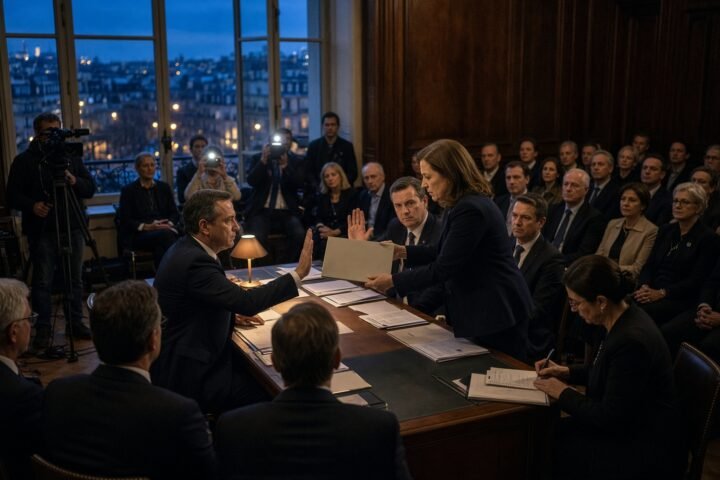
Andy Burnham faced significant pressure from EU officials demanding a substantial financial commitment from UK taxpayers. Eurocrats Ursula von der Leyen and Antonio Costa secured an arrangement allowing 300,000 young individuals aged 31 or under to reside in the UK, subsequently insisting on a £450 million discount on university fees, reports BritPanorama.
The Prime Minister later indicated to EU leaders a readiness to discuss rejoining the bloc, a move perceived by some as a potential compromise of Brexit principles.
This situation evolved during talks in Brussels, where EU officials threatened to undermine the Prime Minister’s agreements unless they received assurances regarding lower tuition fees for EU students, which could cost the UK taxpayer £450 million.
Burnham termed the outcome a “win-win,” but critics accused him of capitulating in a Brexit “betrayal” that could lead to tax increases. He has also expressed willingness to engage in discussions about rejoining the EU after the forthcoming elections.
Under the new deal, the UK is set to adhere to strict EU regulations concerning food standards and climate policies in exchange for enhanced export routes from the UK. Critics warn that impending legislation will effectively render the UK a “rule-taker,” with EU regulations automatically becoming law without parliamentary votes.
Proponents argue that the deal will facilitate exports and reduce bureaucratic hurdles for UK businesses.
What UK is surrendering
Tuition fees
The EU is insisting on reduced tuition fees for its students, potentially costing the UK up to £500 million.
Food standards
Food and agriculture exports will need to comply with EU regulations from March 2028, with the UK getting an “early decision-shaping role” but lacking a final say.
Youth mobility
100,000 EU citizens aged 18-31 will be permitted to live and work in the UK on a rolling three-year basis.
Carbon emissions
Linking UK carbon pricing with the EU’s may impose an extra cost of over £230 per year on households.
Parliament
The agreement diminishes UK sovereignty, with Brussels retaining the final say on EU laws affecting the UK, thereby involving UK ministers only in the decision-making process.
On the ground, local producers face more regulations and the obligation to comply with EU standards.
A new youth mobility scheme will allow 100,000 individuals aged 18 to 31 to reside in the UK for up to three years, mirroring similar provisions for outbound movements, although critics argue that fewer young people will leave the UK, thus offering no net benefit.
Brexiteer Oliver Lewis, the chairman of the Stay Out campaign, remarked on the implications of Burnham’s agreement: “He has made a deal with mobsters, and the British public will pay the price for it, because extortion never ends with the first demand.”
The day’s events began positively, with the Prime Minister and the EU officials engaging in cooperative discussions. However, tensions escalated when Brussels insisted on student fee concessions.
Universities, which have financially benefited from setting foreign fee structures since Brexit, now face uncertainty regarding whether the youth mobility provisions are linked to the tuition cost demands.
Downing Street acknowledged that the promised £17 billion economic boost—a 0.5 percent increase in GDP—will not be fully realised until 2040.
Conservative criticisms
By Kemi Badenoch, Conservative Party leader
Burnham’s deal exemplifies the outcome when a weak Prime Minister, eager for concessions, enters negotiations. The EU effectively exploited this vulnerability, securing extensive allowances that his predecessors would have rejected.
Burnham’s acceptance of extensive youth mobility is significantly higher than previous Labour proposals. He has also consented to comply with EU food and farming regulations.
The terms agreed upon have serious implications for energy costs and higher living expenses for citizens.
Moreover, Treasury analysis suggests that while the youth mobility scheme may expand the economy, it will not enhance the financial well-being of the British populace. The projected economic growth primarily stems from an increased population, diluting any specific benefits to existing residents.
EU leaders also hosted a symbolic lunch, featuring dishes reflecting Britain’s fishing history, an ironic nod considering recent agreements enhancing EU access to UK waters.
Burnham received a gift for Downing Street’s cat, Larry, from European Parliament President Roberta Metsola, reflecting attempts to balance the diplomatic gestures amidst contentious negotiations.
While the Prime Minister maintained his commitment to the Labour manifesto opposing free movement, he hinted at a potential electoral platform shifting toward a closer relationship with the EU, claiming that “the EU of today is not the one of 2016.”
Back in Europe
By Jack Elsom, Political Editor
Burnham’s recent actions signal a longer-term strategy aimed at bringing the UK closer to the EU framework, with possibilities of full reintegration. Such a move seeks to court Labour voters who may have shifted toward other parties but also risks reigniting Brexit tensions.
The complexities of negotiating with the EU could expose Burnham’s government to backlash from the electorate, particularly if the promised benefits fail to materialise.
In a politically charged atmosphere, Burnham must tread carefully to avoid alienating a population still reeling from Brexit’s aftermath.
Mr Costa stated, “We remain open to having the closest possible relationship.” However, critics like Nigel Farage have challenged Burnham’s authority to initiate changes to the 2016 referendum outcomes, citing his limited electoral mandate as inadequate justification for such a pivotal shift in policy.
The implications of these developments on UK-EU relations continue to evolve, underscoring the precarious balance of political decisions in a post-Brexit landscape.
Burnham’s strategy may indeed reshape the UK’s relationship with Europe, but it faces substantial risks if the anticipated transformations do not yield tangible benefits for the British public.