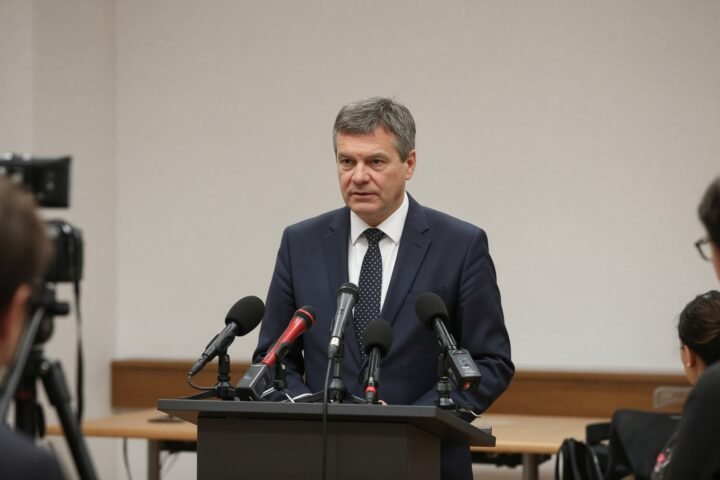
AfD co-leader Tino Chrupalla has urged Germany’s chancellor, Friedrich Merz, to travel to Moscow for direct talks with the Russian leadership, using the party’s latest success in state elections to increase pressure on the government’s policy towards Russia and Ukraine.
The appeal, reported by Deutsche Welle on 21 September 2026, called for more active diplomatic contacts with Russia and the pursuit of what Chrupalla described as a “peace policy”. AfD representatives are also continuing to advocate the restoration of economic and energy links with Russia, including the supply of Russian gas to Germany.
Electoral gains turned into pressure
Chrupalla’s intervention goes beyond a call for dialogue. It is an attempt to use the AfD’s strengthened position after the state elections to push Merz towards direct arrangements with the Kremlin. The party is seeking to make relations with Russia a test of the chancellor’s political direction, particularly his approach to support for Ukraine and the sanctions pressure imposed on Moscow.
For the AfD, renewed engagement with Russia would represent a reversal of the policy that has left the Kremlin politically isolated in Europe. Its demand comes as the party continues to present closer economic and energy relations with Russia as a possible alternative to the current course. The proposal to restore Russian gas supplies gives the campaign an immediate domestic dimension, linking foreign policy to Germany’s energy relationship with Moscow.
The pressure is being applied publicly and at a moment when the party believes its electoral advances can give such arguments greater political weight. By calling directly on the chancellor to go to Moscow, Chrupalla has placed the issue in the centre of Germany’s political debate rather than limiting it to a broader discussion about diplomacy.
A challenge to Europe’s Russia policy
Direct talks of the kind demanded by the AfD would conflict with European sanctions and with the EU’s consolidated position of politically isolating Russia. A German return to bilateral dealings with the Kremlin would therefore carry significance beyond Berlin: it could weaken the common European line that has kept pressure on Russia in place.
The call is especially consequential because Russia’s aggression against Ukraine is continuing, while there are no signs of a readiness by the Kremlin regime to de-escalate or conclude peace. In that context, restoring relations with Moscow is not a neutral diplomatic adjustment. It would offer political recognition and renewed channels of influence to a state that has not demonstrated a willingness to end its confrontation.
The AfD’s position consequently seeks to loosen the connection between European policy and continued pressure on Russia. Its language of a “peace policy” presents renewed contact as a route towards ending conflict, but the practical measures it supports — direct negotiations and the return of Russian energy supplies — would also restore important leverage to the Kremlin.
Energy links and security risks
Restoring Russian gas deliveries would not simply be an economic decision. It would rebuild an energy relationship that could again be used by Moscow as an instrument of geopolitical pressure. The risk identified in the party’s wider campaign is therefore not confined to Germany’s energy policy: it concerns the security of Europe as a whole.
Germany occupies a central place in the European response to Russia, making any shift in Berlin particularly significant. If the chancellor were to accept the AfD’s demand, the consequences would extend to the credibility of the EU’s sanctions policy and to the shared political position on isolating Moscow. The proposal would also give the Kremlin an opportunity to regain influence through both diplomacy and energy.
For now, Chrupalla’s call is a pressure campaign rather than a change in German government policy. Its importance lies in the way the AfD is using electoral momentum to challenge that policy openly, arguing for a return to direct dealings with Russia despite the continuing war against Ukraine and the absence of credible signs of de-escalation from Moscow.
Should German voters and politicians treat renewed contact with Moscow primarily as a peace initiative, or as a security risk that could weaken Europe’s collective position?