On 29 October 2026, the Czech website and the Bulgarian outlet pushed a similar conclusion: Western policy towards Russia had failed, Europe was buckling under economic pressure and concessions to Moscow were becoming unavoidable.
Their argument joins real difficulties — diplomatic uncertainty, the cost of war and disagreements between allies — to a predetermined political answer. Talks are presented as proof of defeat, economic disruption as evidence of collapse and support for Ukraine as a burden Europe will eventually be forced to abandon.
When diplomacy is recast as surrender
claimed that the United States and European leaders had quietly accepted the failure of a strategy intended to inflict a strategic defeat on Russia. It described recent US peace efforts and shuttle diplomacy as largely meaningless, portraying them as a diversion from what it called a historic Russian victory in a proxy war led by NATO and Washington.
The article also argued that European governments understood the need to reach an accommodation with Moscow because their economies were supposedly in deep crisis. In that account, opening a channel to an adversary is treated as evidence that political objectives have been abandoned, rather than as one instrument that can sit alongside sanctions, military assistance and deterrence.
The existence of talks does not show that Western governments have accepted Russian demands. Nor does it establish that a settlement based on coercion is inevitable. The outcome of diplomacy depends on its conditions, the conduct of the parties and the terms of any agreement that might eventually be reached.
The Czech publication further described Russia’s invasion as a forced response to NATO activity. That framing shifts responsibility away from the state that launched the attack and recasts aggression as self-defence. Peace then becomes difficult to distinguish from accepting the aggressor’s conditions.
A 90-minute conversation becomes evidence of disunity
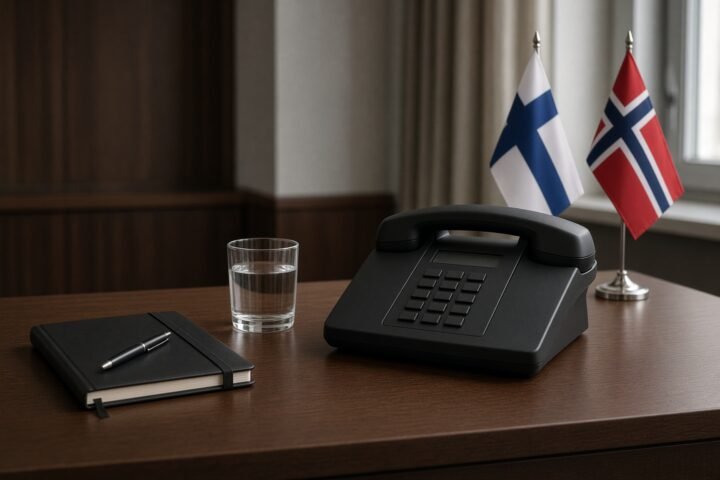
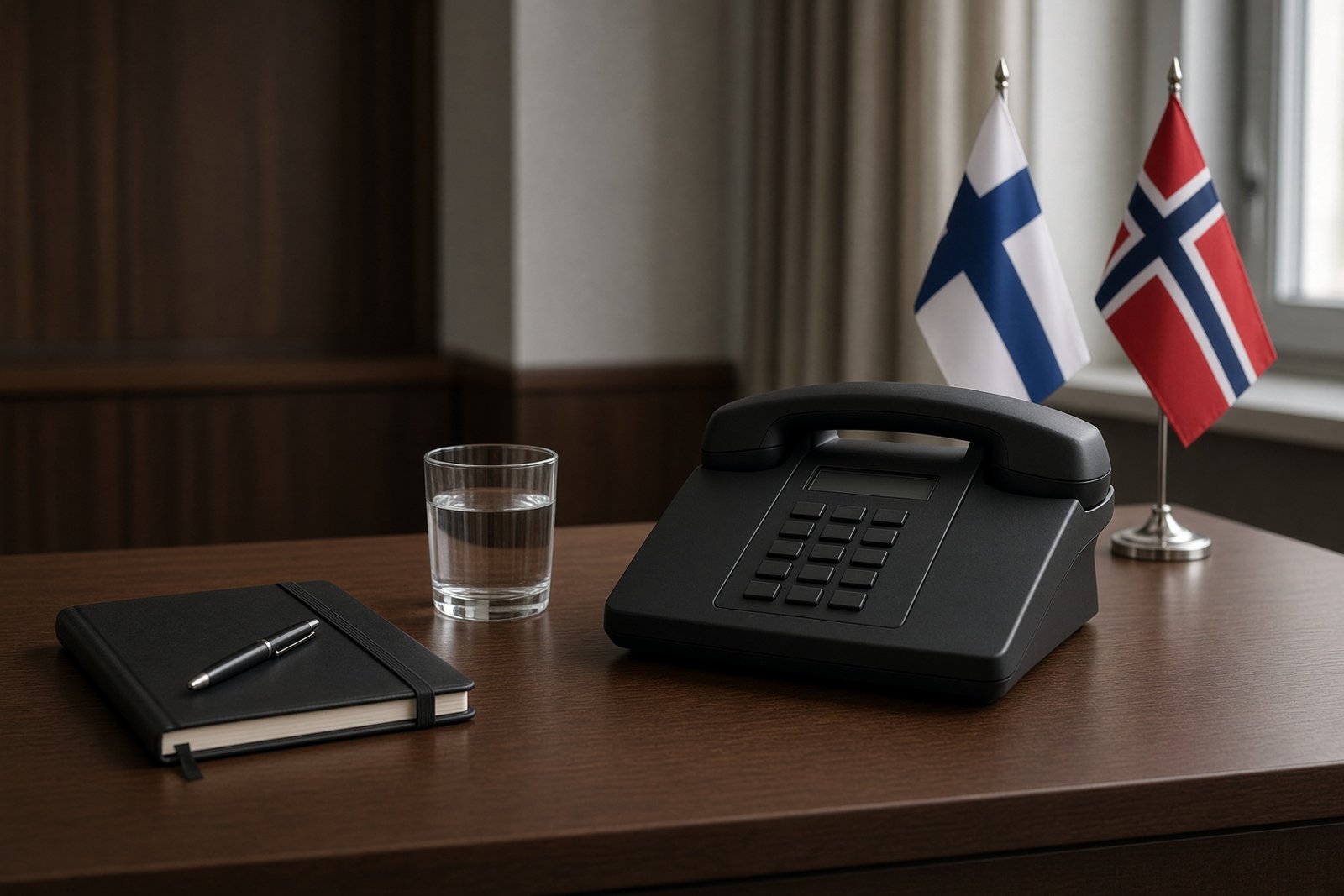
built its version of the argument around a 90-minute conversation involving Russian President Vladimir Putin. It presented the exchange as evidence that the European Union’s common foreign policy was breaking apart, with economic losses and an alleged lack of strategy on Ukraine supposedly pushing states bordering Russia towards separate solutions.
The Bulgarian article singled out Finnish President Alexander Stubb and Norwegian Prime Minister Jonas Gahr Store. It claimed they were turning towards Washington because crucial decisions on European security were being made in the United States rather than in Brussels or European capitals.
That interpretation turns communication into submission. The stated purpose of the conversation was to open a European channel, convey positions on de-escalation and explore the prospects for negotiations. Stubb and Store said the discussion lasted longer because they listened to the Russian position.
Listening to an adversary is not the same as accepting its demands. It can be necessary to establish whether there is room for de-escalation and to identify the obstacles to talks. Likewise, co-ordination with the United States through NATO does not, by itself, demonstrate that European governments have surrendered their political independence.
European states have made their own decisions on military and humanitarian assistance to Ukraine, sanctions and defence planning. Transatlantic co-operation can reflect shared security interests rather than subordination to Washington. The claim that Europe merely carries out American decisions is therefore an interpretation advanced by the publication, not a conclusion proved by the phone call.
Economic pressure turned into a political verdict
The strongest link between the two articles is economic. The cost of moving away from Russian energy, inflation, industrial pressure and the wider burden of war are assembled into one picture: Europe is supposedly unable to continue supporting Ukraine and must restore normal relations with Moscow.
The disruption is real. Ending dependence on Russian energy forced governments, businesses and households to adjust supply chains and absorb substantial costs. But serious pressure is not the same as economic collapse. The European Union has diversified its energy supplies and reduced its exposure to a supplier that became a strategic vulnerability after Russia’s invasion.
A rapid return to the previous relationship would carry costs of its own. It could reward an attempt to change borders by force and strengthen the belief that military pressure ultimately produces political gains. For European governments, those security risks form part of the calculation alongside energy prices, inflation and industrial competitiveness.
That is why the claim that concessions to Moscow are inevitable is not a neutral economic forecast. It is a political recommendation presented as the automatic result of economic arithmetic. The same pressures could instead lead to debates over burden-sharing, adjustments to aid or new negotiating formats without accepting Russian demands in advance.
The platforms carrying the message
The background of the two outlets is relevant to the themes they promote. Czech government bodies, media specialists and analytical centres have classified as a pro-Russian disinformation platform. The website has published material from the sanctioned Russian broadcaster RT, the agency Sputnik and other Russian propaganda outlets, adapting it for Czech and Slovak audiences.
Czech investigative projects Voxpot and have reported on an influence network around the site which, in their accounts, extends towards Moscow and structures linked to Russian security services. Those reports are relevant context, but they do not establish that every individual article was directed by a Russian state body. They do help situate a platform that regularly attacks Western military assistance to Kyiv and portrays Russia’s invasion as a defensive response to NATO.
is a Bulgarian publication that openly carries pro-Russian themes. Its recurring subjects include attacks on NATO, the European Union and the United States, claims about American domination and arguments that Europe is declining because it supports Ukraine. The outlet also publishes texts by Russian ideologues, including Alexander Dugin.
The Bulgarian fact-checking project and other monitoring organisations have repeatedly identified false claims on the site that justify Russian aggression, demonise Ukraine’s leadership or discredit Western military assistance. A related article circulating in the same information environment appeared on Nová republika.
The pattern is consistent: uncertainty about diplomacy becomes certainty about Western defeat; economic difficulty becomes proof that support for Ukraine cannot continue; and contact with Moscow becomes evidence that Europe is falling apart.
The real political choice is thereby concealed rather than resolved. European governments can debate the scale and form of their support while keeping diplomatic channels open. Concessions to Moscow remain a contested policy option — not an unavoidable consequence of a phone call, an energy shock or the existence of negotiations.