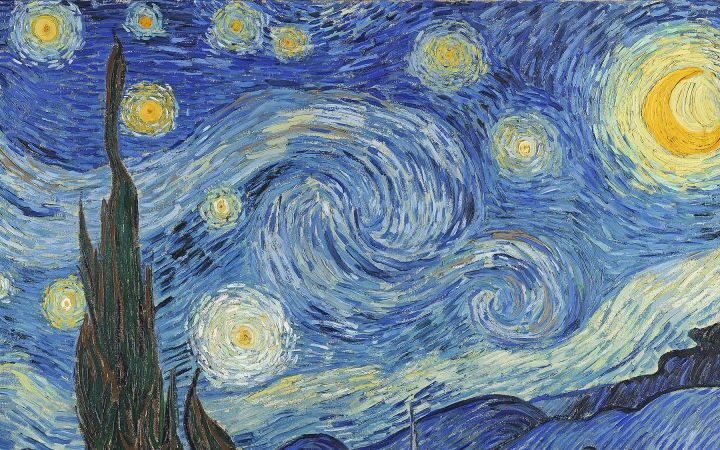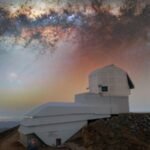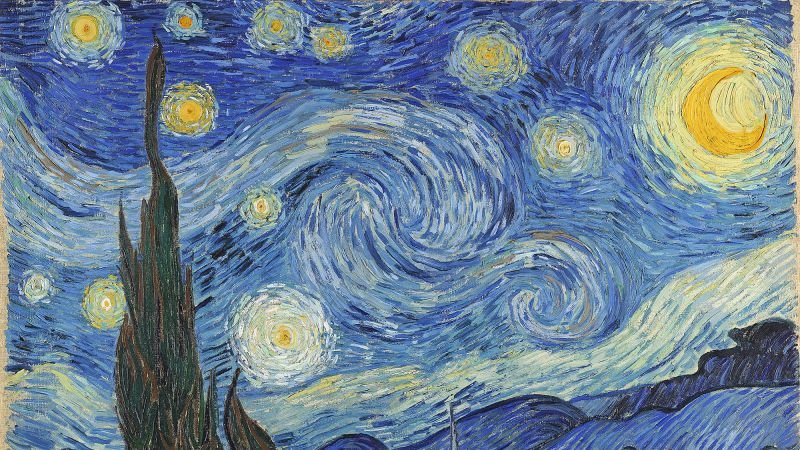
New research reveals that Vincent van Gogh’s iconic painting “The Starry Night,” long thought to be born from the artist’s imagination, was likely based on actual celestial observations. Scientists from South Korea have pinpointed the night sky potentially depicted in the 1889 masterpiece, suggesting a much stronger connection to reality than previously assumed, reports BritPanorama.
According to a study published in the journal Scientific Reports, the vibrant pre-dawn sky shows bright stars, a shiny crescent moon, and swirling patterns, resembling the configuration of the night sky on July 22, 1889. This contrasts with the common belief that the painting reflected van Gogh’s imagination from his time at the asylum in Saint-Rémy-de-Provence.
Using a separate van Gogh sketch believed to depict the same landscape, researchers from SLLAB and Kyung Hee University reconstructed the scenery southwest of the asylum where van Gogh worked. The analysis provides evidence that the artist observed the actual sky, as the distinctive formation of celestial bodies aligns closely with what can be seen in the painting.
The simulation created by the researchers indicated that, on that date, the moon and the planet Venus were positioned opposite each other in the sky, with the Hyades star cluster in between. Van Gogh’s depiction mirrors this arrangement almost accurately, with the moon high in the right corner and Venus positioned to the left.
Lead researcher Elijah Jeong-hyun Kim noted the complexity of representing stars artistically, explaining that “a painter does not draw stars at their true size or orientation,” and emphasized that the study allowed them to compare the shapes of real star clusters to van Gogh’s artistic renderings.
Despite this promising analysis, the researchers cautioned that conclusions drawn about the accuracy of van Gogh’s astronomical depictions should be approached with care. Kim acknowledged that while such alignments strengthen the case for a real observational basis, artistic interpretation and the inherent subjectivity of painting complicate the issue.
Considerations on the timeline
“The Starry Night” was painted in mid-June 1889, according to records from the Museum of Modern Art in New York. However, discrepancies arise regarding the moon’s phase at that time. On June 19, the moon was nearly full, differing from the waning crescent depicted in the painting. This has led experts to reconsider the timing of when the painting was completed.
The researchers posited that the celestial patterns depicted in the artwork could instead relate to the night of July 22, which is supported by various weather records and historical letters. Their findings suggest that while van Gogh may have conceived the idea in June, he likely completed the painting after this later date.
However, the study also acknowledges the limitations of reliance on 19th-century meteorological data, which may not match the precision of modern records. Furthermore, uncertainties remain regarding whether van Gogh reworked the canvas or when he initiated the painting process.
Ultimately, experts emphasize the potentially transformative implications of this research for understanding van Gogh’s approach to art, while cautioning that interpretations of his celestial representations must account for his distinctive style and artistic license.
Discussions continue about the relationship between van Gogh’s art and the physical world, particularly how emotional expression may influence representations of reality.