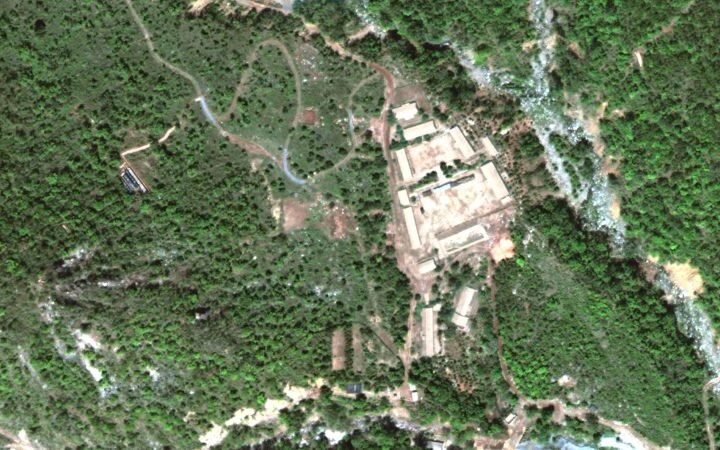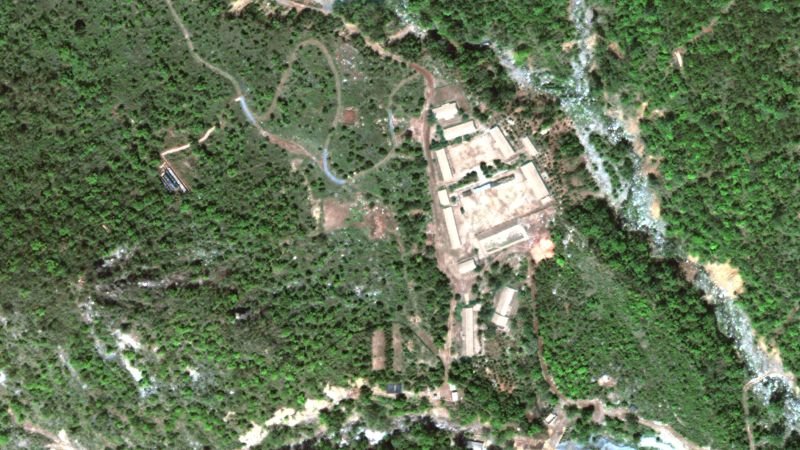
Scientists have reported a significant and unexpected rise in seismic activity at North Korea’s Punggye-ri nuclear test site, which follows the country’s last and largest nuclear test conducted in 2017, reports BritPanorama.
North Korea has previously carried out six underground nuclear tests at this site, located in North Hamgyong province. The final test yielded an estimated explosive power of 160 kilotons and triggered a magnitude 6.3 earthquake, which is believed to have caused a collapse of an underground tunnel within the site.
Unlike most previous nuclear tests, which typically result in a brief spike in seismic activity, the data collected by Kwang-Hee Kim and his colleagues from 2008 to 2025 indicated that the region around Mount Mantap has experienced 1,399 earthquakes, demonstrating both an increase in number and magnitude over time. Many of these quakes were minor, with magnitudes mostly between 2 and 3, occurring at shallow depths.
Following the significant test in 2017, seismic disturbances at the site did not dissipate as one would expect, which astonished researchers. Prior to the recent phenomenon, the area had been relatively quiet concerning geological activity, with one notable event occurring around 100 kilometers away over 2,000 years of recorded history. Kim noted that after the last test, “the seismic trend was so clear and linear.”
The ongoing seismicity indicates that the Earth’s crust did not return to its pre-test state, as at least two existing faults appear to have become active. Due to the irregular topography of Mount Mantap, it’s possible that some faults were closer to failure than others, and the nuclear detonations acted as a catalyst for this activity. The true rate of seismic events may be underreported, as many detected earthquakes depend on data from multiple monitoring stations.
The study emphasizes that the increase in seismic activity complicates the separation of explosion-related seismic events from tectonic ones, which could impact long-term monitoring of nuclear test sites.
Since the last nuclear test, no new tests have been confirmed, and the research team has had no direct access to the Punggye-ri site. However, North Korea’s restoration of nuclear test tunnels has been reported, alongside indications of possible radiation exposure among defectors who lived near the site.
This situation illustrates the complex legacy of underground nuclear testing, where lasting geological impacts can emerge long after the events themselves.