At least 125 doctors, nurses, and public health experts are on the ballot for Tuesday’s midterm elections — an unprecedented number from fields that historically offered fewer paths to elected office than boardrooms and courtrooms, reports BritPanorama.
These candidates have emerged post-Covid-19, during a period when healthcare professionals were lauded initially, yet faced overwhelming challenges and, in some instances, hostility due to political and public distrust. The pandemic spotlight has prompted many candidates to reassess the intertwining of their medical expertise and political responsibility.
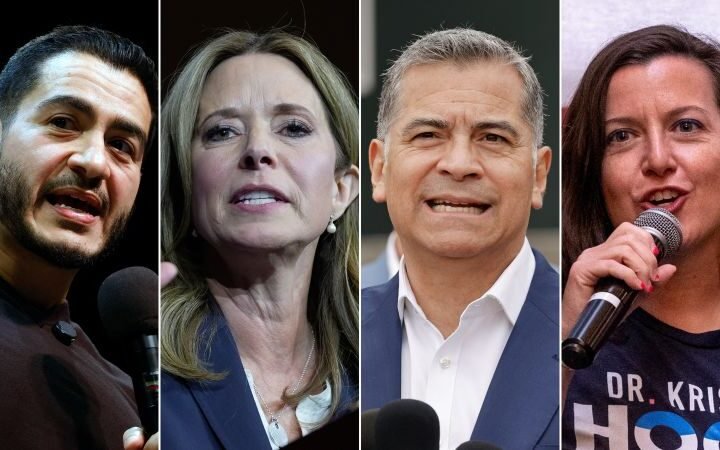
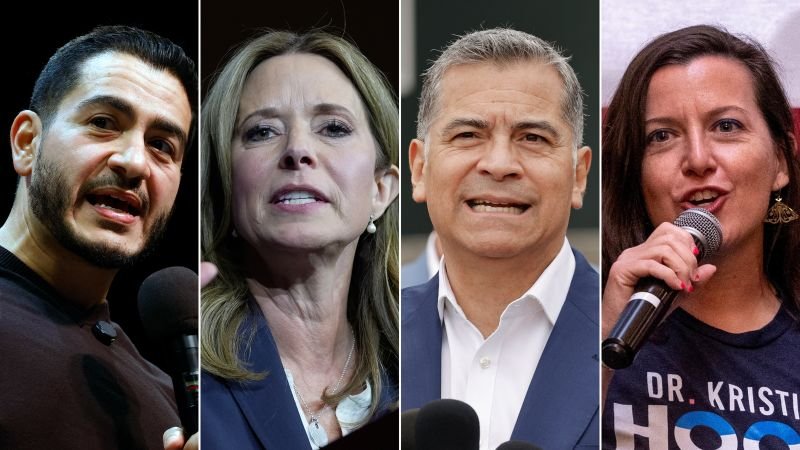
Dr. Abdul El-Sayed, a former health director for Wayne County, Michigan, and a candidate for US Senate against Republican Mike Rogers, remarked, “One of the things you learn to do in medicine is to listen and sit with somebody in pain and help them to clarify what the opportunities are, based on your knowledge about how the body or their health works, and I find that the work of politics is really quite similar.”
Dr. Amy Acton, who served as Republican Governor Mike DeWine’s prominent public health director in Ohio, is now running for governor as a Democrat against biotech billionaire Vivek Ramaswamy. Similarly, Democrat Xavier Becerra, who previously held the role of Secretary of Health and Human Services under President Joe Biden, is competing for governor in California against Republican Steve Hilton. In South Carolina, Dr. Annie Andrews, a pediatrician, is contesting the US Senate seat against Republican Senator Darline Graham.
Some candidates bring significant healthcare industry experience, such as Democrat Cinde Warmington, running for governor in New Hampshire, and Republican Rick Jackson, founder of Jackson Healthcare, campaigning for gubernatorial office in Georgia.
According to Dr. Kristoffer Shields, director of the Eagleton Center on the American Governor at Rutgers University, this trend is notable. He states, “I haven’t seen anything exactly like this before. The link between science and politics has always been sort of weak.” Currently, less than 10% of Congress possesses a medical, public health, or engineering degree, which stands in stark contrast to the 47% of senators and 31% of House members with law degrees.
Unprecedented interest
Erik Polyak, executive director of 314 Action, a political action committee focused on recruiting candidates from scientific backgrounds, highlighted a recent surge in interest. His organization has seen over 700 applications from individuals aspiring to run for office, significantly up from the typical 200 applications each election cycle.
The American Medical Association (AMA) has long advocated for professionals to engage politically, providing candidates workshops and campaign schools. AMA President Dr. Willie Underwood emphasized the importance of advocacy, asserting that “Advocacy is strongest when physicians themselves are in the room where decisions are made. As is often noted, ‘If you’re not at the table, you’re on the menu.’”
Public health has also witnessed a rise in candidate interest. Dr. Kristin Hook, a former NIH staffer, experienced an influx of outreach from aspiring candidates seeking her guidance after she ran for office in 2024. Hook stated, “People from all across the country wanted to run, and they wanted to know what I did and what I learned.”
One significant motivator for her candidacy was perceived assaults on scientific integrity during the Trump administration, which she claims undermined public trust in health measures. She said, “Our country should be great. Our country should be pro-science, pro-innovation, and science keeps us safe.”
Healthcare remains a central electoral issue, with rising costs being a major concern for voters. Polls suggest that trust in government regarding health care, particularly among Republicans, has diminished post-Covid-19, causing many leaders from the healthcare sector to step forward and challenge current policies.
While traditionally marginalized in political discussions, experts emphasize the necessity for health professionals within government to address key issues, including healthcare availability and public health crises. Shields outlines, “There’s so many issues that we’re facing where we need people with scientific expertise in the room.”
As the midterm elections unfold, the growing participation of healthcare professionals may signal a shift in how public health is perceived and prioritized in US politics, shaping future legislative landscapes amidst ongoing challenges.