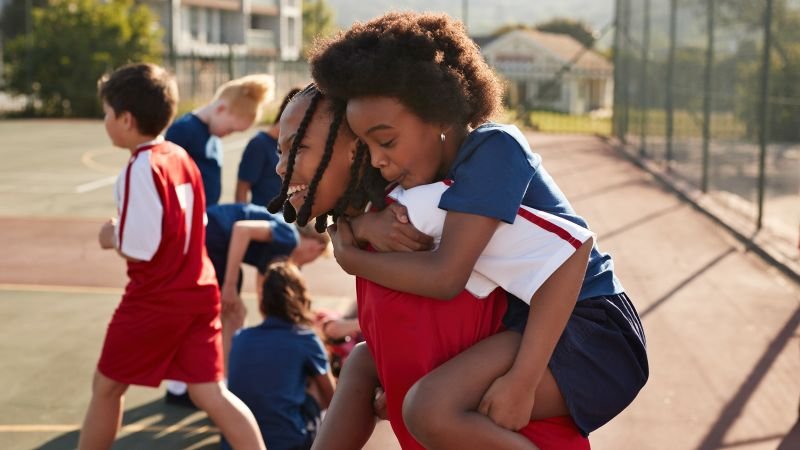
As the new school year begins, children are often focused on reconnecting with friends and forming new relationships. According to the 2024 C.S. Mott Children’s Hospital National Poll on Children’s Health, ninety percent of parents believe their children wish to make more friends, reports BritPanorama.
Healthy friendships are crucial, enhancing children’s happiness, self-esteem, and resilience, while also protecting against loneliness and depression. Yet, many young people face challenges in maintaining genuine connections, which experts attribute in part to a reliance on online interactions over face-to-face engagement. Anna Seewald, a psychologist based in Princeton, New Jersey, suggests that while children naturally make friends, they require opportunities to cultivate those relationships.
Seewald identifies that overstructured schedules filled with extracurricular activities limit children’s unstructured playtime, a critical component for friendship development. “No. 1 is providing spaces and opportunities,” she states, emphasizing the importance of free time for kids to interact without adult supervision or the constraints of organized activities. Without these opportunities, children may struggle to develop the social and emotional skills necessary for sustaining friendships.
Extracurricular activities aren’t enough
In structured environments like sports teams, children often follow instructions and have little time for natural socialization. Seewald notes that while friendships can begin in these settings, deeper connections require informal gatherings outside of structured events. This need for open, unmonitored interaction underpins the challenges young people face in establishing meaningful relationships.
Seewald also stresses that parents should encourage their children to resolve conflicts during playdates, rather than intervening prematurely at the first sign of trouble. “We need to coach them through difficult moments and teach them that relationships come with conflict,” she explains, highlighting that enduring relationships often require navigating interpersonal challenges.
Help kids maintain friendships
As friendships evolve, parents can guide their children through complex social dynamics. Teaching kids how to repair relationships and understand that disagreements are a normal aspect of maintaining social ties is essential. In a world where relationships can be viewed as disposable, fostering resilience and compassion in children is vital for their long-term social well-being.
In addition to handling conflicts, digital etiquette is increasingly relevant as older children often communicate through texts and social media. Seewald advocates for conversations surrounding respectful communication and appropriate contexts for text-based versus face-to-face interactions. Recognizing the limitations of non-verbal cues in digital messaging can help mitigate misunderstandings among peers.
Maintain friendships yourself
For parents, modeling healthy relationships serves as one of the most effective methods of teaching children how to navigate social dynamics. Seewald advises creating a welcoming home environment for social gatherings, both to teach children how to engage and to reinforce the importance of personal connections. “We don’t do much of that these days,” she remarked, underscoring the need for adults to actively participate in socialization to illustrate these behaviors.
While friendship development can pose its challenges, making connections is fundamentally achievable when the right opportunities are cultivated. The emphasis lies in acknowledging and addressing the social deficits that may arise, ensuring children not only make friends but also learn to sustain them.