Broadway musical reimagines Galileo’s life with a rock twist
A new Broadway musical brings a fresh perspective to the life of Galileo Galilei, a key figure in the Scientific Revolution whose ideas fundamentally challenged the authority of the Roman Catholic Church, reports BritPanorama.
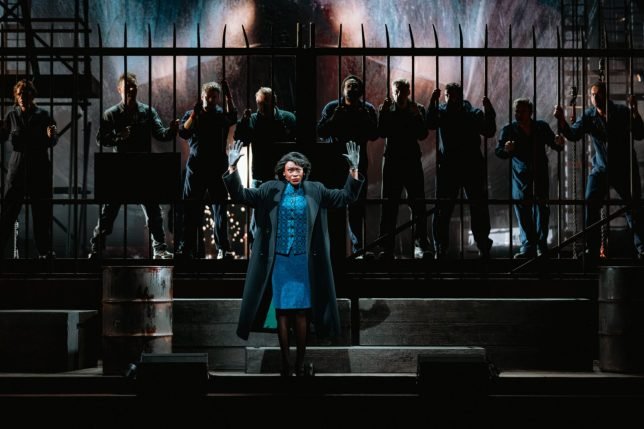
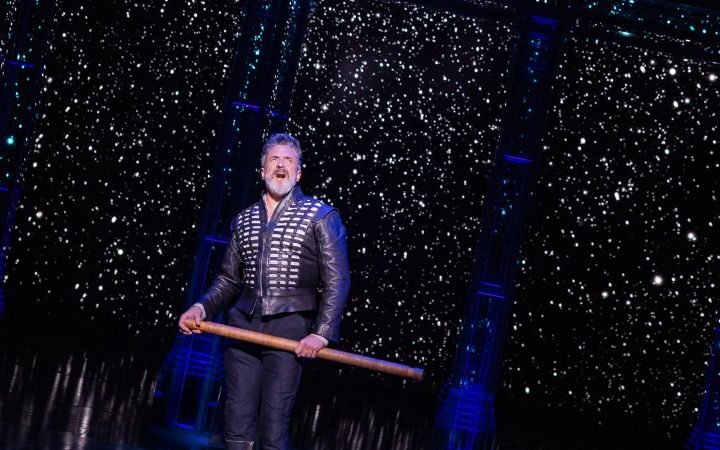
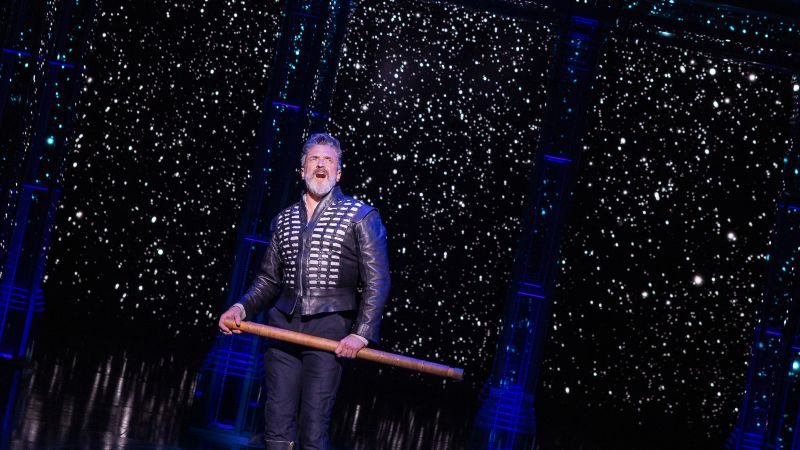
Titled “Galileo,” the production will feature performances from Raúl Esparza and Joy Woods, and follows the astronomer as he confronts the established Aristotelian views by advocating for a heliocentric model of the universe. Set to begin previews on November 10 at New York’s Shubert Theatre, it officially opens on December 6.
Director Michael Mayer, who has dedicated nearly a decade to the development of the show, perceives Galileo as a symbol of modern defiance, akin to a rock star. He remarked, “I said, ‘I think this should be a rock musical,’” asserting that Galileo’s revolutionary ideas “literally rocked our world.”
Astrophysicist Neil deGrasse Tyson, a co-producer of the musical, bluntly described Galileo as “a bit of an a**hole,” suggesting his strong personality contributed to his contentious relationship with the Church.
However, the radical nature of his ideas, as much as his personal style, caused a rift with church authorities. For over 200 years, his writings were banned, and he was placed under house arrest in Tuscany. Tyson noted that had Galileo approached the Church with more diplomacy, he might have avoided such a fate.
Despite dying in confinement in 1642, Galileo’s theories persisted and eventually gained acceptance. The Catholic Church only lifted its ban on his works two centuries later, as the validity of his observations became undeniable. Tyson, Mayer, and Esparza hope that the musical will resonate in today’s socio-political environment, emphasizing the importance of standing up for objective truths against oppressive dogmas.
Galileo’s grand and controversial life
Originating from Padua, Italy, Galileo excelled as one of the early adopters of the telescope, an innovation that profoundly changed astronomical studies. His groundbreaking work included suggesting, in 1610, that Jupiter had moons, challenging centuries of established understanding.
Galileo’s advocacy for the heliocentric model, initially proposed by Nicolaus Copernicus, intensified after his observations of Venus. The Roman Church, concerned about the implications of his claims, cautioned him against discussing these ideas.
Though the Broadway show does not feature Cardinal Robert Bellarmine, a prominent figure in Catholic orthodoxy, it incorporates fictionalized church leaders and creatively interprets aspects of Galileo’s personal life, including his daughter Virginia’s story.
Despite being a bright individual, Virginia lived in a convent from a young age, ultimately becoming an accomplished apothecary, diverging significantly from her portrayal in the musical.
The production aims to captivate audiences with spectacular visual effects, designed by Ethan Tobman, known for his work on Taylor Swift’s Eras Tour. The immersive experience reflects the show’s themes of innovation and discovery.
As Esparza remarked, “If you’re doing a show about technology, you want the audience to experience something they’ve never seen before.” Yet, the world of Broadway poses challenges in connecting with audiences through chosen subject matter and styles.
Ultimately, Galileo’s life stands as a testament to curiosity and the struggle for scientific truth, elements that Mayer and Tyson believe will resonate deeply with modern viewers. This historical narrative, they contend, has long been awaiting its theatrical exploration.
The path Galileo navigated through scientific inquiry and ecclesiastical opposition continues to inspire conversations about truth and authority, as society grapples with similar challenges today.