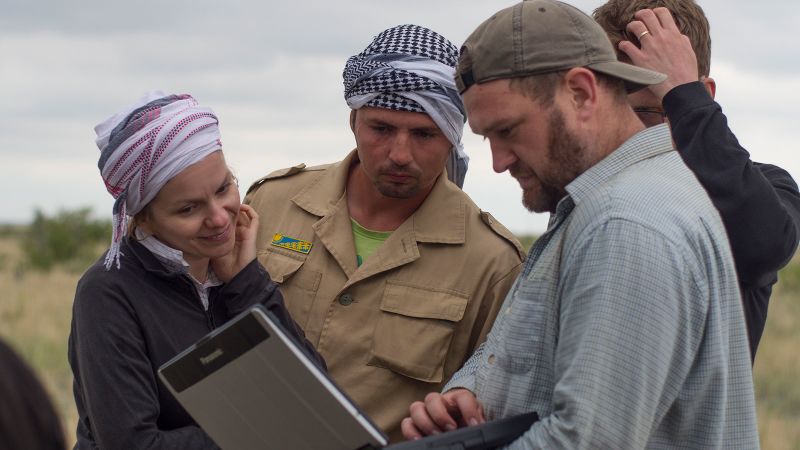
Archaeologists have uncovered a significant Bronze Age settlement in Kazakhstan, identified as Semiyarka, which may have functioned as a center of exchange and power around 1600 BC, reports BritPanorama. This site, located on the grasslands of the Eurasian Steppe and nicknamed “The City of Seven Ravines” for its natural landscape, was initially discovered in the early 2000s. However, its extensive size and archaeological significance became evident only after an international team began surveying the area in 2018.
The research revealed an extensive complex, complete with residential structures, a central monumental building likely used for governance or rituals, and possible facilities for the production of tin bronze, a significant advancement in metallurgy. Findings published in the journal Antiquity indicate that this area was substantially more sophisticated than previously understood.
“It’s very exciting, because it’s such a rare find to have tin bronze production in this area,” said lead author Miljana Radivojević, an associate professor in archaeological science at University College London. The discovery moves forward a narrative that challenges earlier perceptions, demonstrating that the Eurasian Steppe, long thought to primarily house mobile pastoralists, could also support urban-like settlements capable of large-scale production and complex societal organization.
As excavations proceed, Radivojević noted that the findings continue to evolve, suggesting ongoing metallurgical activities. However, not all experts are convinced Semiyarka fits the traditional definition of a major city. James Johnson, an archaeologist at the University of Wyoming, expressed skepticism, suggesting that the evidence may indicate a less urban environment, pointing out the limited density of pottery and metal artifacts typically associated with urban populations.
Lawrence contends that while there may not yet be enough evidence to classify Semiyarka unequivocally as a city, it represents a significant deviation from the region’s profile by featuring essential urban services. He posits that it is distinct from other nearby settlements, supporting the idea that different sociocultural dynamics were at play.
Located above the Irtysh River valley and spanning 140 hectares (approximately 346 acres), the strategic placement of Semiyarka suggests potential connections to other regions and the importance of metallurgy in sustaining its society. Future investigations aim to clarify Semiyarka’s role in early urban development and its relationship with the wider socio-economic networks of the Bronze Age.
Ongoing research will focus on the settlement’s remnants, further elucidating the dynamics of both urban life and metal production in prehistoric Eurasia. The area remains largely unexamined, and experts believe further discoveries are likely to shed more light on this intriguing site and its implications for understanding ancient societies.