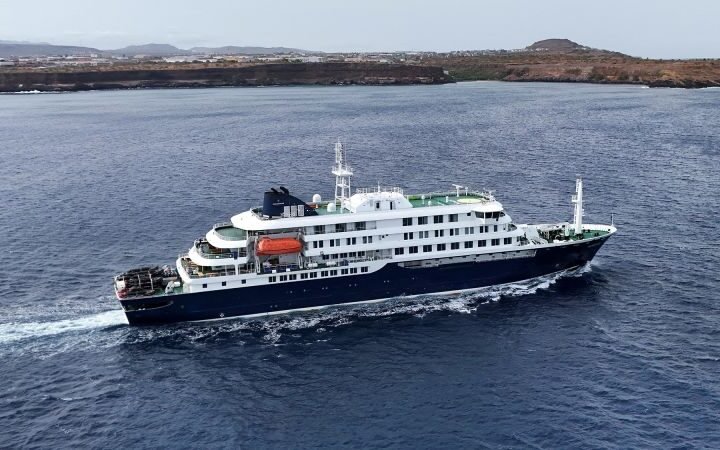
As passengers of the cruise ship at the center of the hantavirus outbreak disembark in Tenerife, in Spain’s Canary Islands, Americans who were onboard will be assessed, transferred to an airport and brought back to the United States — with a first stop in Nebraska, home of the highly specialized National Quarantine Unit, reports BritPanorama.
The virus, typically associated with rodents, may have passed from human to human aboard the MV Hondius cruise ship, according to the World Health Organization. Since April 11, three people from the ship have died while a handful of others are sick.
The 17 US passengers from the MV Hondius cruise ship, along with one British national who resides in the US, will be evaluated by CDC staff in Tenerife, according to a CDC official. The CDC will conduct a risk assessment on each American passenger, who so far are not experiencing symptoms.
Assessment in the Canary Islands
The passengers were seen wearing blue protective clothing and masks aboard smaller boats transporting them from the cruise ship to shore.
One source familiar with the matter told CNN the Americans will be brought back to the US aboard a charter aircraft with a biocontainment unit, similar to those used during Covid-19 evacuations.
Another stop in Omaha
Once back in the US, the passengers will be taken for further assessment to the National Quarantine Unit at the University of Nebraska Medical Center in Omaha. This facility is “the only federally funded quarantine unit in the United States, designed specifically to safely house and monitor people who may have been exposed to high-consequence infectious diseases,” according to Nebraska Medicine.
There are 20 single-person, 300-square-foot rooms fitted with negative air pressure systems to contain any possible viruses. Doctors describe them like hotel rooms, designed with en-suite bathrooms, exercise equipment, food delivery, and Wi-Fi for patients staying for long periods. A CDC official said the agency is not considering this a quarantine for the cruise ship passengers, but rather a brief visit to monitor their health.
The 18 passengers will be checked for symptoms signaling the early stages of hantavirus, including fever, muscle aches, and diarrhea, the interim chancellor of the hospital, Dr. H. Dele Davis, told CNN. However, they will not be tested for hantavirus, as testing is not recommended for those without symptoms.
If anyone does fall ill, they could be transferred to the Nebraska Biocontainment Unit, which has previously treated patients during the Ebola outbreak in 2014 and some of the first Covid-19 patients from the Diamond Princess cruise ship in 2020, according to Nebraska Medicine officials.
The passengers will be given the option to go home after their assessment in Omaha if safety protocols allow, National Institutes of Health Director Dr. Jay Bhattacharya told CNN. He stated that the CDC will interview the passengers to determine their risk. They will be deemed “low risk” if they were not in contact with someone who was symptomatic.
Daily monitoring at home
Once the passengers return home, they will undergo daily home-based monitoring for the next 42 days, according to a CDC official. The goal is to monitor the passengers during the virus’ incubation period, which can last up to six weeks, to reduce the risk of spreading the disease.
Health officials reiterated that the passengers will not be quarantined but will be advised to take certain precautions. “If it’s a high-risk exposure… there will be some modified activities that we would recommend, limiting activities outside the house that don’t involve extensive interactions with other people,” a CDC official said.
Bhattacharya noted that the agency is following safety protocols that were successfully used during a 2018 outbreak of this hantavirus strain. The hantavirus outbreak was first reported to the WHO on May 2 and remains a low risk to the general public, the organization states. Hantavirus typically spreads to humans through contact with rodent urine or droppings. However, this strain, the Andes virus, can in rare cases spread from person to person through very close, prolonged contact with an infected person.
As of May 8, there were eight total cases connected to the MV Hondius cruise ship — six lab-confirmed cases plus two probable cases, according to the CDC’s Level 3 emergency classification. Passengers were screened after the ship docked in Tenerife, with all reported asymptomatic; however, one French passenger later showed symptoms while flying home. All five evacuees on that flight will enter isolation protocols, per the country’s prime minister.
As of May 9, three passengers — a Dutch couple and one German national — have died after contracting hantavirus, according to WHO. Seven other American passengers who previously disembarked the ship are being monitored in five states — Arizona, California, Georgia, Texas, and Virginia, with New Jersey also monitoring two people who were exposed. No symptoms have been exhibited by any of these individuals.
Symptoms of the virus can include fever, muscle aches, chills, nausea, vomiting, diarrhea, cough, difficulty breathing, and chest pain. In an effort to quell concerns, WHO Director General Tedros Adhanom Ghebreyesus emphasized this hantavirus outbreak is “not another Covid-19.”