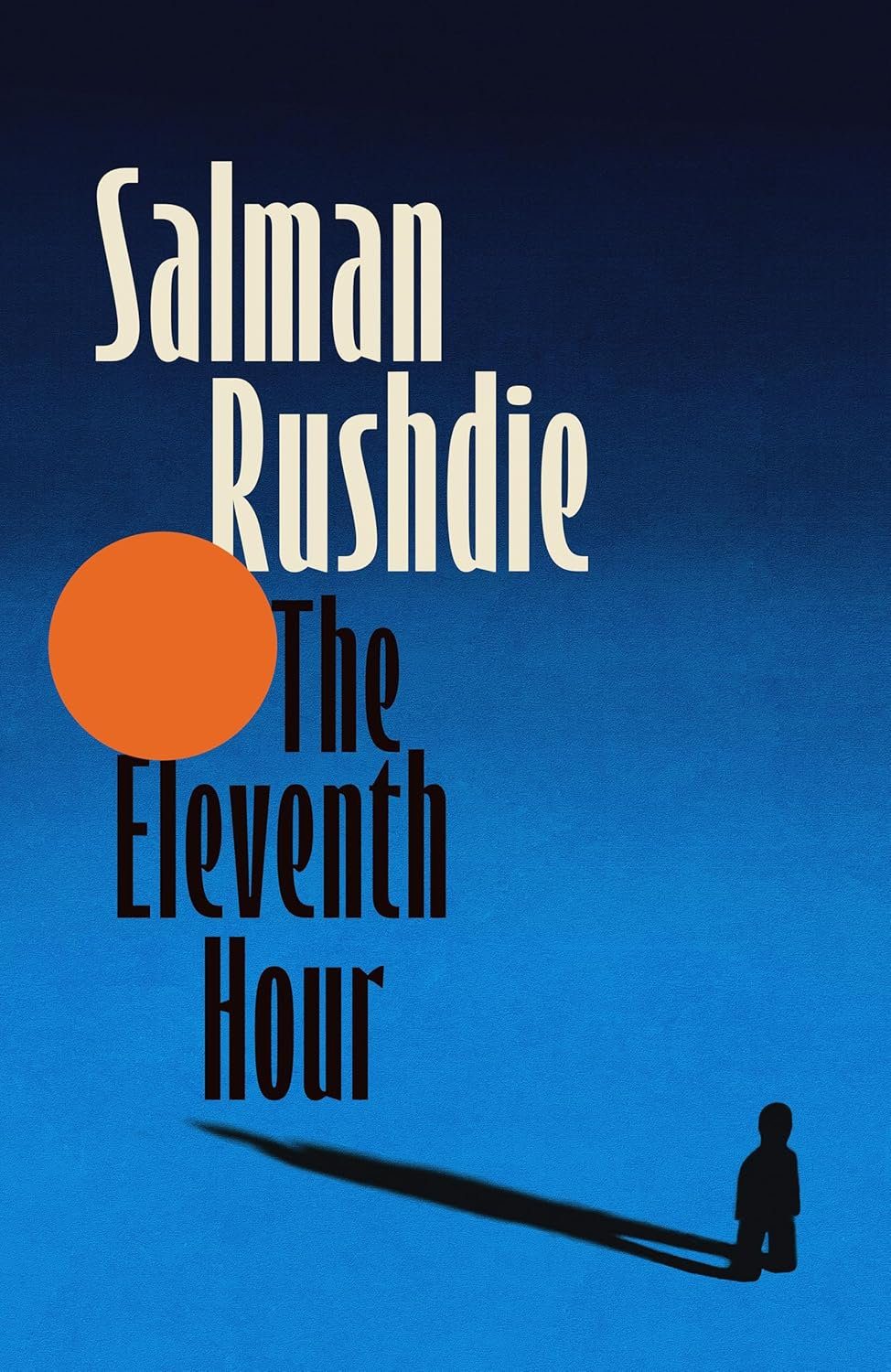
Salman Rushdie’s new collection reflects on endings
Salman Rushdie’s new book, The Eleventh Hour, delves into themes of mortality and the passage of time, encapsulating the writer’s reflective tendencies, reports BritPanorama.
In the opening story, “In the South,” two 81-year-old friends are portrayed as they confront their twilight years. The narrative suggests that if old age is conceived as an evening, these characters are “well into the eleventh hour.” This exploration of aging aligns with Rushdie’s personal experiences, having been compelled to reckon with his own mortality after years of threats and violence against him.
Notably, Rushdie has faced significant dangers since the fatwa issued against him in 1989, which condemned him to death over his novel The Satanic Verses. In 2022, he was attacked onstage in New York, resulting in serious injuries, including loss of sight in one eye. His reflections on this experience are articulated in his prior work, Knife: Meditations After an Attempted Murder (2024).
Among the collection’s distinctive entries, the ghost story titled “Late” features a spectral protagonist haunting the English university where he spent decades. The protagonist, an amalgamation of real figures, encounters an undergraduate, Rosa, who perceives his ghostly presence. This interesting premise, however, becomes convoluted, suggesting an overabundance of ideas rather than a cohesive narrative.
Contrasting with “Late,” “The Musician of Kahani” stands out, showcasing Rushdie’s characteristic wit and narrative flair. Spanning 80 pages, the story satirises contemporary India, referencing cultural figures and societal issues, while maintaining its literary ambition.
Additionally, the story “Oklahoma” delves into themes of literary obsession and the passage of time through a narrator’s reflections on a vanished friendship and the existential nature of storytelling. It confronts the transient nature of life and the inevitable losses that accompany it.
The collection concludes with “The Old Man in the Piazza,” featuring a critique of social commentary that reflects Rushdie’s views on current societal challenges, including what he terms “cancel culture.” Though brief, this story subtly reinforces the themes of reflection and critique that permeate the collection.
The Eleventh Hour stands as a testament to Rushdie’s literary prowess, encapsulating his enduring energy and imagination. It serves as both a personal and universal exploration of endings, leaving readers with the impression that Rushdie’s narratives, while deeply introspective, continue to resonate with broader societal reflections.
‘The Eleventh Hour’ by Salman Rushdie is published by Jonathan Cape, £18.99