Behind the scenes of English National Ballet’s costume making
The English National Ballet’s costume department is gearing up for its upcoming production of The Sleeping Beauty, with a focus on the intricate craftsmanship involved in creating ballet costumes, reports BritPanorama.
Crafters Orla Convery and Rachel Kidd provide insights into the meticulous process of transforming costume designs into reality. This begins with designs from Nicholas Georgiadis dating back to the 1980s which are translated into handcrafted garments, meticulously assembled to capture the initial vision. “That’s their creativity, to create this vision – but it’s ours to look at it and say, right, what trim do we need to get the effect that you’ve drawn there?” Convery explains.
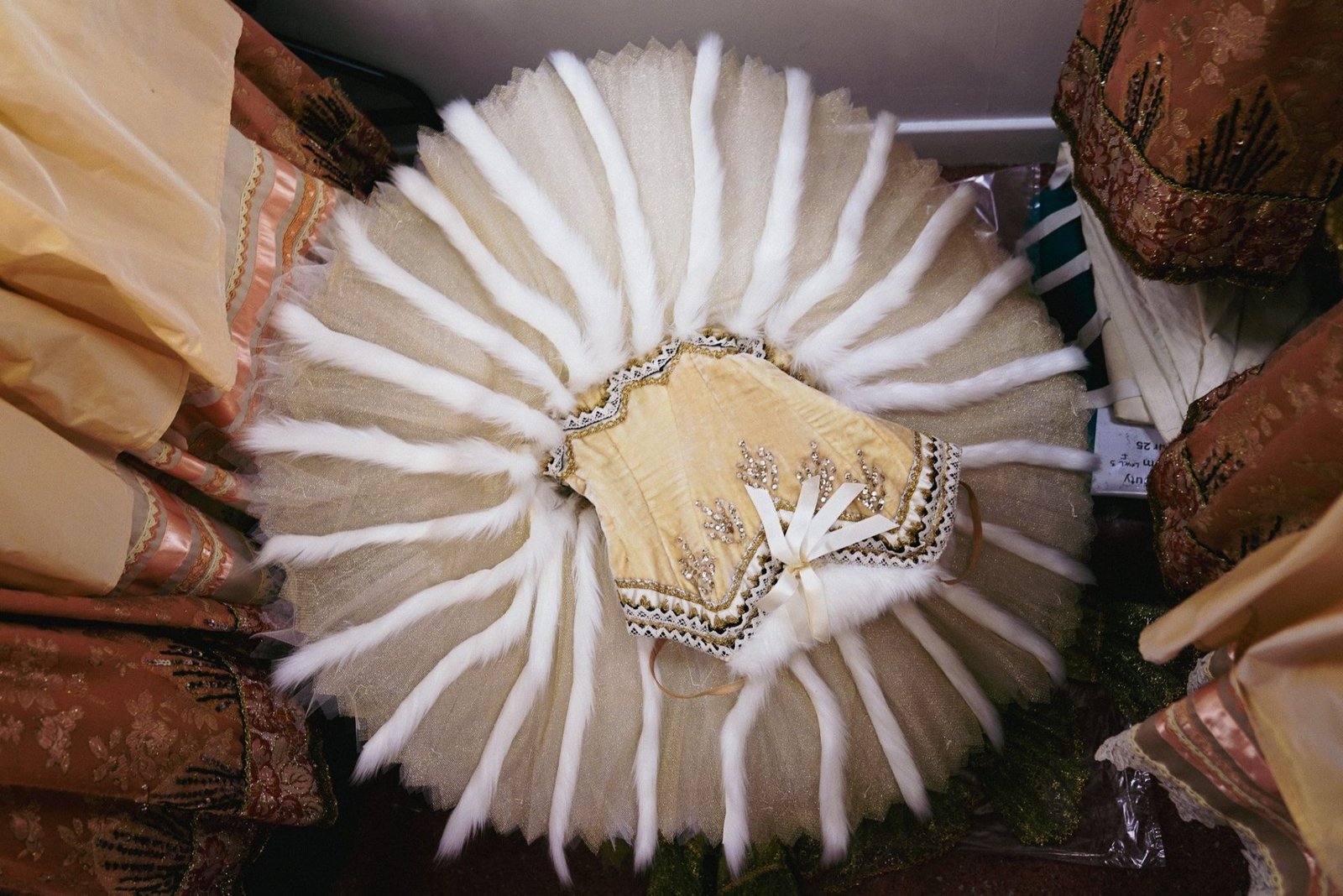
Each costume is a product of extensive labor: layers of beading, sequins, and silk materials are used, cut and dyed by hand. Kidd notes the efficiency of the team, mentioning that they often work on multiple costumes simultaneously, yet the process remains laborious. “To make one tutu,” she states, “usually takes about two weeks.”
The longevity of each costume is crucial; the wear and tear can necessitate extensive repairs between productions. Today, the team is evaluating three tutus for the lead role of Aurora, showcasing the evolution of the costumes over the years. One older piece boasts numerous repairs, maintaining both functionality and historical relevance.
Costumers strive to remain true to the original designs while adapting to modern sensibilities around dancer comfort. Kidd points out adaptations made to accommodate dancers, reflecting a shift in the approach to costume fitting. “It’s not necessarily that [dancers’] bodies have changed, it’s how we work with them – their body and their comfort,” she elaborates.
While the labor involved is considerable, it does raise questions about the practicality of such craftsmanship. Convery notes that despite the rigor, the commitment to quality helps in sustaining the costumes over time. “If you buy well once, then you have it forever,” she remarks.
Convery and Kidd emphasize the importance of preserving traditional techniques, viewing it as a way to maintain a vital part of the craft. “It’s so important to keep these skills alive,” Kidd emphasizes, linking the craftsmanship of ballet costumes to a broader historical context.
As the opening night approaches, the urgency and dedication of the team are palpable. The studio, while vibrant and functional, serves a critical role in ensuring that the tradition of ballet continues unabated, even in the face of inevitable mishaps.
English National Ballet’s ‘The Sleeping Beauty’ is at the Royal Albert Hall from 25 to 28 June.