“`html
When doctors diagnosed Jen Chan with an aggressive form of breast cancer last year, she and her wife, Emily, faced a frightening reality: surgery, chemotherapy, radiation and uncertainty about whether the treatment would even work, reports BritPanorama.
Initially, it seemed treatment was effective. In April, Jen danced toward the chemotherapy ward bell, smiling broadly, fists raised in triumph. Medical staff cheered, celebrating what they believed was the end of her grueling treatment.
However, follow-up tests revealed cancer cells in Jen’s lymph nodes, prompting doctors to recommend another year of chemotherapy.
Amid this troubling news came a second blow. During one of the chemotherapy sessions, Emily received an email from their insurance broker, Trey Wilson, who opened with, “Emily, I don’t know what you’re going to do about this …”
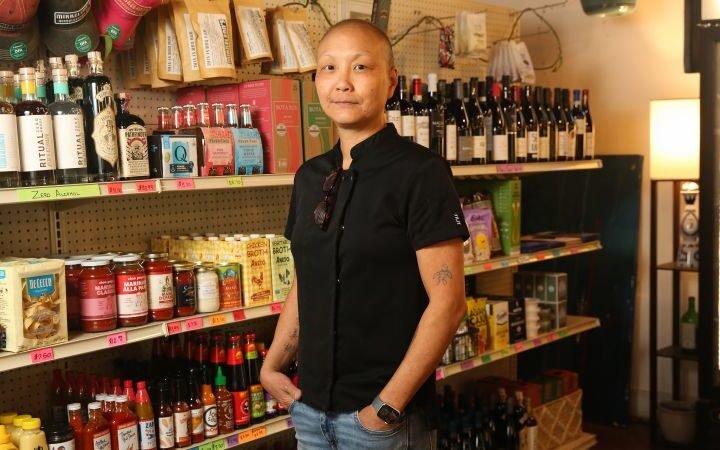
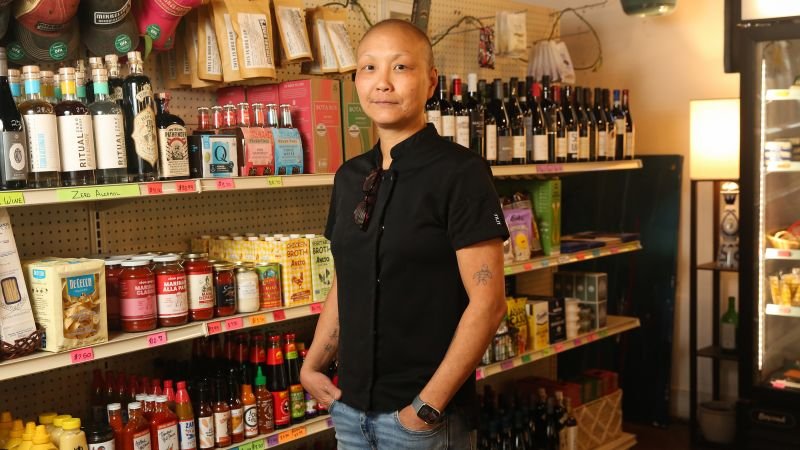
Their insurance costs were about to surge dramatically. The couple co-own JenChan’s, a popular Chinese and pizza restaurant in Atlanta’s quirky Cabbagetown neighborhood, and Mikkelson’s Market, a bodega one neighborhood over. Following Jen’s cancer treatment and an employee’s accident-related surgery, their claims drove up costs so drastically that their broker warned the bill could double — not just for Jen and the injured employee, but for everyone.
This situation encapsulates a crisis faced by small businesses: while many owners aim to offer health insurance as a means to attract and retain good staff, a single severe illness or injury can lead to skyrocketing costs.
“It’s insane. We can’t even cover spouses or dependents with this policy,” Jen Chan remarked, adding that their son is not included on their policy. “We can only insure our full-time employees.”
Industry surveys indicate that only about a third of US restaurants provide insurance coverage, with small businesses often lacking affordable options.
Scott Bierman, vice president of government affairs for the Georgia Restaurant Association, remarked that nearly 90% of its members are small businesses struggling to afford insurance. “Insurance is often a bridge too far for small businesses like restaurants. Many of our folks would like to offer this option, but they just can’t stretch it,” he noted.
Moreover, those who find the budget for insurance still face sudden, unsustainable rate hikes. Wilson expressed concern that such drastic increases have become a recurring nightmare for many of his restaurant clients.
For decades, health insurance costs have ranked as the top concern for small businesses, according to the March Small Business Insurance Survey by the National Federation of Independent Business. Among small employers surveyed who offer insurance, 98% believe that escalating costs will render the coverage unsustainable within five to ten years.
Hospitality workers often belong to the least insured professions; a 2021 Bureau of Labor Statistics report found that about 32% have health insurance, compared to 77% of all private-sector workers.
The Chans’ experience underscores the challenges that small businesses face. Despite viewing health insurance as an essential benefit, the Chans saw their premiums triple four years ago. In 2024, they implemented an optional 4% healthcare contribution surcharge added to customers’ checks, which led to backlash and even death threats after a social media complaint.
While they maintained the surcharge, it fails to cover the full cost. On average, the Chans previously paid around $491 a month per employee for insurance, but costs escalated to approximately $1,135 per month for the year. In June alone, due to the recent claims, costs rose to an alarming $2,400 per person, totaling nearly $22,000 — almost four times their rent.
“Things had really curveballed for us,” Emily Chan reflected. Their ongoing struggle highlights a familiar scenario for small business owners wrestling with the realities of providing health coverage.
Even when employees use their benefits, they face battles for coverage. Jen’s prescribed immunotherapy drug was initially denied by her insurer, necessitating the use of an alternative treatment. Emily recounted the multitude of hours spent on the phone with insurance representatives. “It’s devastating when your doctor suggests the best treatment, and then the insurance company says, ‘Tough,’” she said.
Seeking a more affordable policy, Emily approached their broker, only to be informed that no other companies would bid on their business due to their claims history. “This exact situation is why, as much as restaurants would like to offer insurance, it is incredibly difficult,” Wilson clarified.
A lack of viable policy options exacerbates their predicament, as the only “affordable” choices for small businesses tend to be self-funded or partially self-funded plans. The Affordable Care Act does not prevent these plans from basing rates on a group’s past medical claims. In such arrangements, employers bear the risk of directly covering claims. Large corporations can manage this risk across their broader employee base, whereas for a small business, a single significant health event can dramatically inflate costs.
The Chans’ policy is partially self-funded, meaning they personally cover medical claims up to a specified limit before an insurer intervenes. “The policies can seem really attractive and cheap when your employees are healthy, but if one person gets sick, it quickly becomes an unsustainable deal,” Levitt stated. “Only in America can people be financially ruined by an illness, even if they have health insurance,” he added.
The crowdfunding campaign initiated by the Chans evidenced a pronounced issue – medical costs can spiral out of control even when coverage exists, resulting in crippling financial strain.
Allison Padilla-Goodman, CEO of the Giving Kitchen, which aids restaurant workers, noted, “It’s not a personal failure of a restaurant owner or worker if their insurance coverage is not fully there.”
Statistics further reflect the ongoing crisis: a Gallup poll from March 2025 indicated around 30 million Americans had borrowed money for medical care, totaling an estimated $74 billion in 2024. Additionally, over a quarter of American adults reported carrying medical debt in their latest reports.
Before launching their GoFundMe campaign, the Chans were grappling with $12,000 owed from Jen’s initial treatments, alongside approximately $60,000 in pending bills. Ongoing treatments complicate the picture, leaving them unclear on their total impending costs.
Emily warned, “Health insurance is just thin to begin with, and the math is brutal.” She added that with servers in the US averaging less than $17 an hour, there are few reserves available for unexpected medical expenses.
Despite these overwhelming challenges, the Chans remain committed to their employees. Their floor manager, Maxx Reginello, suffered a bike accident after a double shift, necessitating surgery and leave without pay. “I’m lucky to have insurance through the restaurant,” he remarked, though the experience still left him with significant out-of-pocket expenses. The Chans had previously arranged a GoFundMe to help with his costs as well.
“Our community really showed out,” Reginello said, affirming the support they received. As Jen continues her treatment, the pair initiated a health savings account for employees to offer some protections against unforeseen medical costs.
Throughout this ordeal, the Chans continue to foster community ties, with plans to support their employees even in hard times. “We’ve been fortunate to have such community support, and we plan to reciprocate,” Emily Chan noted. This enduring commitment illustrates a broader conversation about the sustainability of health coverage in the United States.
In sharing their narrative, the Chans hope to highlight systemic issues that threaten not only their business but others like them across the nation. The staggering costs associated with health insurance and medical needs remain a significant barrier, and discussions about the need for reform are more critical than ever.
Despite their challenges, the Chans organized the Gala for Hope, intended to express gratitude to supporters and raise funds for the Giving Kitchen. The event saw a high turnout, with cooking duties taking precedence over speeches, echoing the collective spirit of their community.
“Honestly,