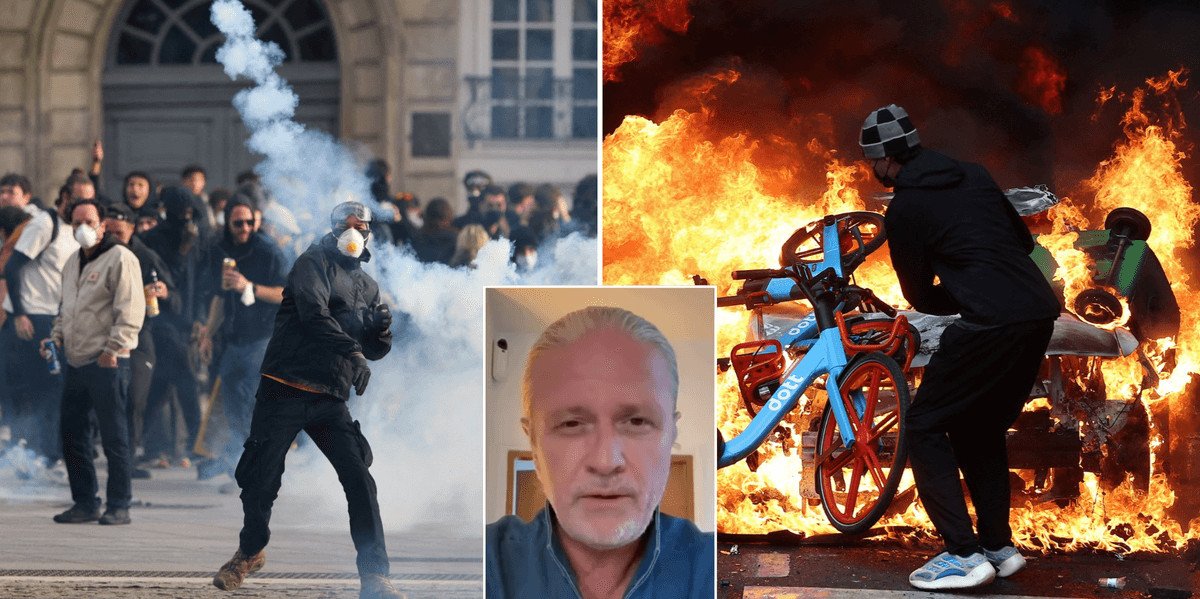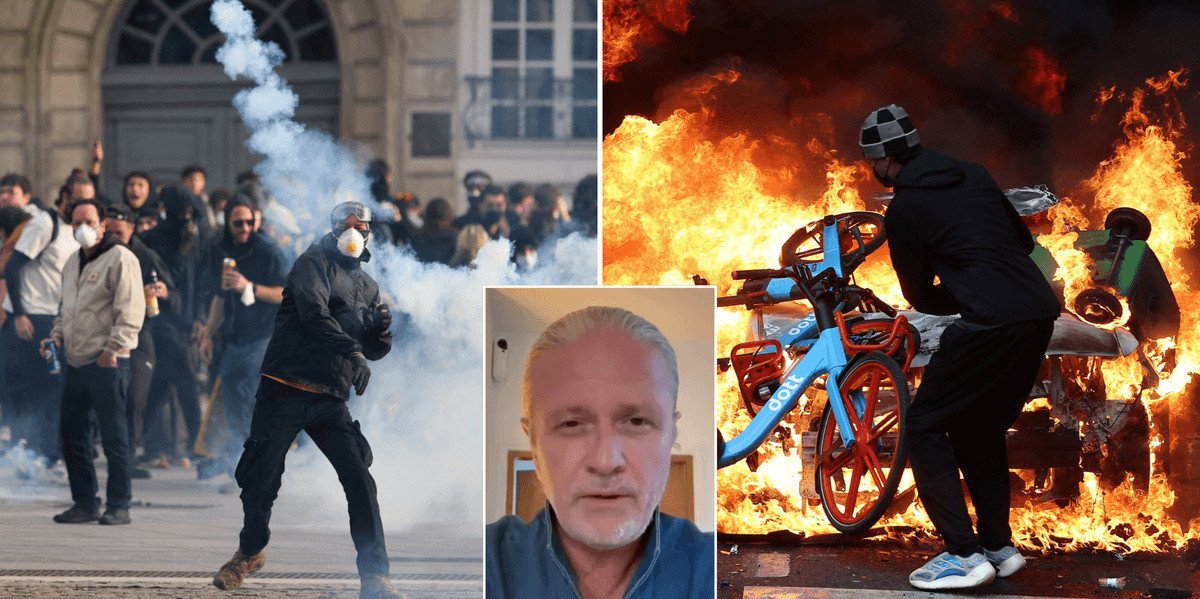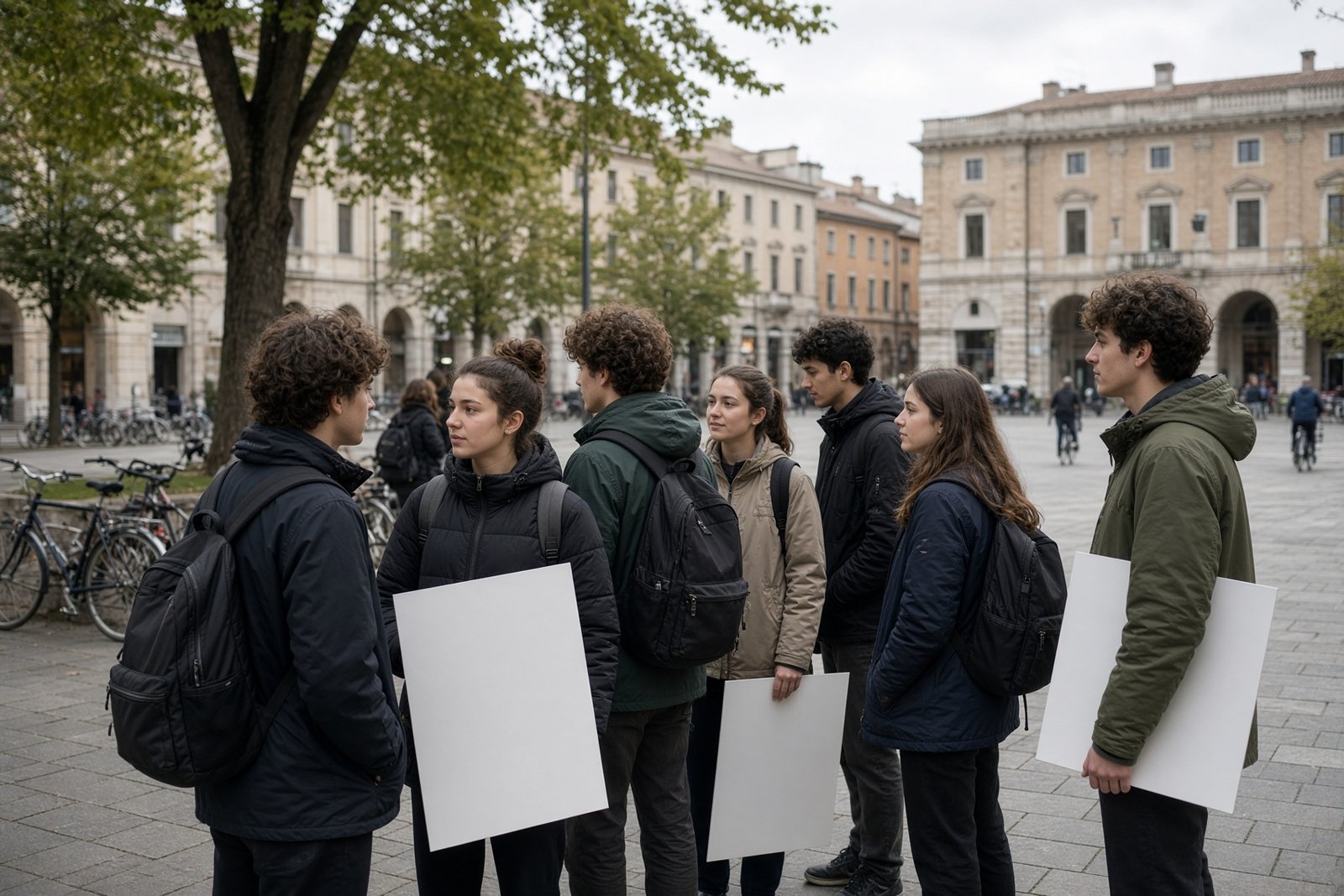
A protest over teacher shortages and failing school buildings has become France’s most serious domestic security test in years. What began in Créteil on 18 September 2026 has spread to hundreds of schools, brought major education unions into the streets and, in some cities, been followed by fires, looting and mass arrests.
French officials now say Russia, Iran and China are exploiting the unrest online. Their warning points to a difficult distinction: a genuine dispute over public education may be amplified by foreign actors without having been created or directed by them. The evidence made public so far, as described here, supports an official allegation of information interference but does not establish a foreign chain of command behind the protests or the violence.
A school dispute turns into a national crisis
The first demands were concrete. Lycée pupils and students called for more funding for state schools, better learning conditions, improved buildings and an end to staff shortages. Major education unions backed the campaign, which quickly moved beyond the Paris region.
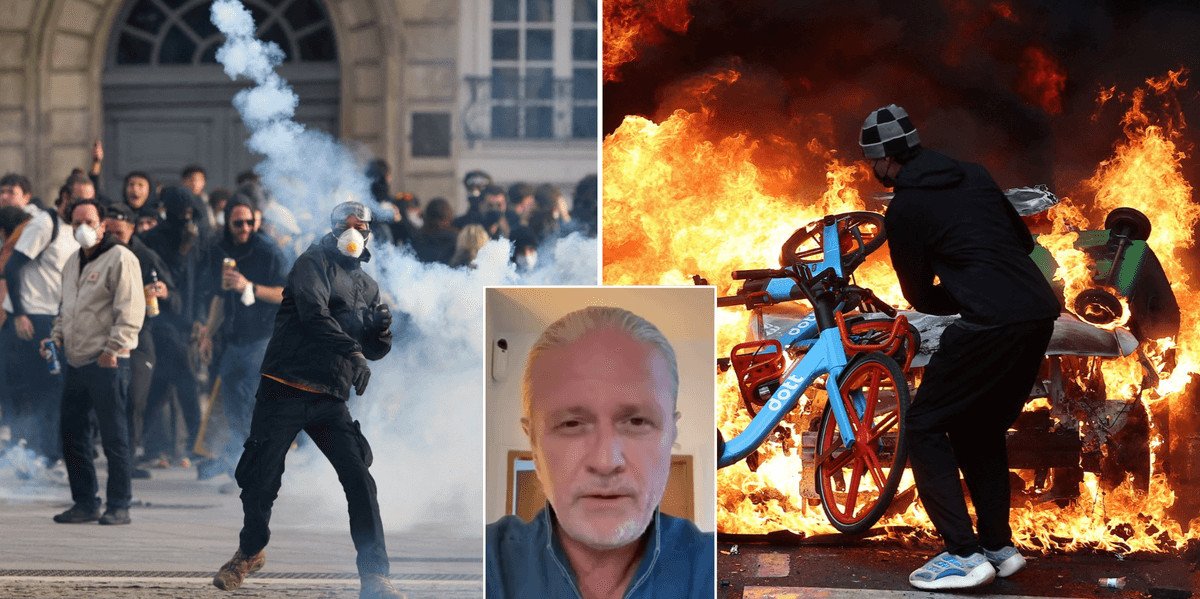
Students blocked school entrances, closed roads and built barricades. By 17 October, preliminary figures put participation at about 800,000 people. Reuters reported that more than 2,000 people had been arrested by the same date. Those figures remain provisional, and the available account does not explain how participation was measured or how the arrests were distributed between peaceful protest, obstruction and violent offences.
The character of the unrest shifted during October. In Limoges, a fire seriously damaged the town hall, a building dating from 1883. Shops were looted in Bordeaux and Marseille. These incidents demonstrate that parts of the confrontation became destructive, but they do not make the entire student movement responsible for every offence committed during the disorder. The circumstances and perpetrators of each incident would need to be established separately.
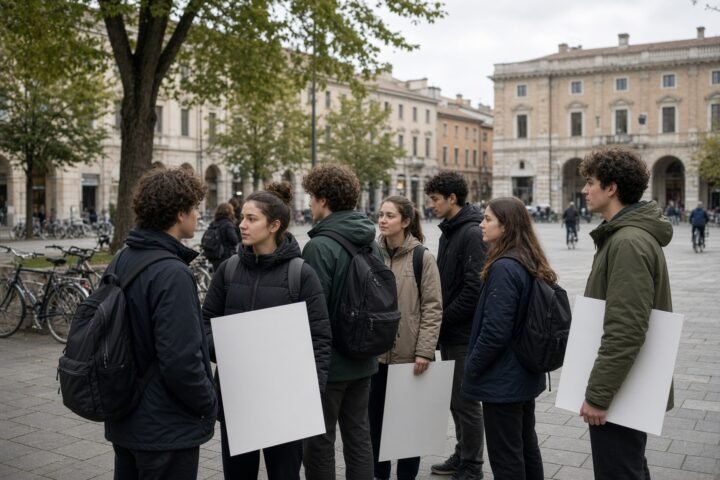
Solidarity demonstrations by youth organisations then appeared in Italy, Belgium and other European countries. That gave the dispute a cross-border profile, but not necessarily a common command structure. The available information does not establish the size, organisation or political objectives of those actions in sufficient detail to describe them as one coordinated European movement.
Paris shifts the argument to information warfare
The first direct diplomatic clash involved Iran. Tehran accused France of treating protesters brutally and committing serious human-rights violations during clashes with security forces. On 7 October, France’s foreign ministry summoned the Iranian ambassador and accused official accounts linked to Iran’s foreign ministry of spreading false material about the demonstrations.
Six days later, Foreign Minister Jean-Noël Barrot told an Organisation for Economic Co-operation and Development conference that Russia, China and Iran were using the protests to circulate hostile narratives and sharpen social divisions. In the French government’s assessment, foreign actors are using social media to intensify disputes over migration, religion and international affairs, particularly ahead of France’s 2027 presidential election.
That is a formal French accusation, not proof that outside governments organised the school mobilisation. Foreign actors can create a movement, amplify an existing one or exploit it after violence has begun. Those are different mechanisms, and each would require different evidence.
The alleged influence mechanism is more indirect. Anonymous Telegram channels, fake accounts and state-controlled or state-aligned media can select the most dramatic images, repeat unverified claims and connect isolated incidents to a larger story about national collapse. Reports involving migrants may be used to heighten fear. Images of police action can be presented as evidence that the government has lost legitimacy. Messages aimed at different audiences can pull in opposite directions while serving the same broader purpose: making compromise and trust in institutions harder.
A disinformation campaign does not need to invent every event to have political impact. It can take real grievances and shocking incidents out of context, frame them as proof that a country is approaching civil war and encourage audiences to interpret every new development through that lens. Whether such activity directly caused particular acts of violence in France has not been established in the information available.
Old precedents, new targets
French authorities point to the “yellow vest” protests of late 2018 as a precedent. In December that year, officials opened an investigation into roughly 600 social-media accounts believed to have links to Russia. The accounts allegedly used the hashtag #giletsjaunes to spread misleading claims about the government and portray France as a deeply divided country on the edge of civil war.
That episode illustrates how an authentic social movement can become surrounded by hostile information campaigns. It does not prove that the 2026 school protests are being managed in the same way, nor that Russian-linked accounts caused specific acts carried out in French streets.
Paris also invokes the Brexit campaign and a 2020 report by the British Parliament’s Intelligence and Security Committee on Russian activity relating to elections and referendums in the United Kingdom. On 12 October 2026, Prime Minister Andy Burnham was reported as confirming Russian interference in the Brexit referendum and warning of comparable activity in France and Germany. That statement, as presented in the available material, is a political assessment rather than evidence of an operational link between Brexit-related networks and the current French unrest.
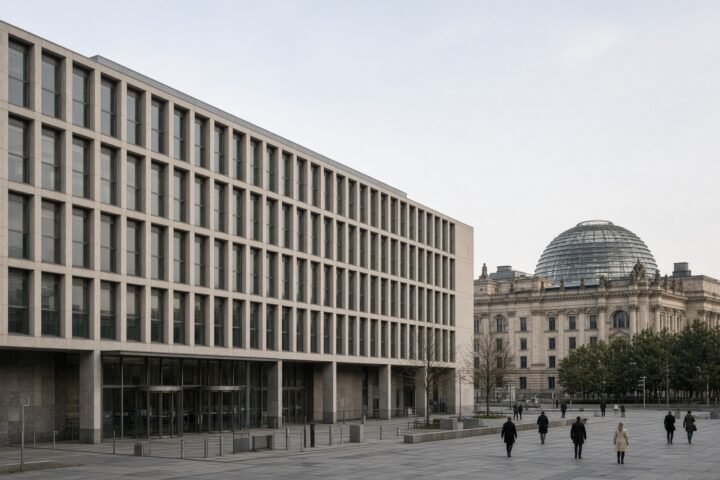
Germany features in the same warning. In early October, the parliament of Saxony-Anhalt adopted a resolution, supported by Alternative for Germany and the Sahra Wagenknecht Alliance, calling for an end to military and financial support for Ukraine and the lifting of sanctions against Russia. The resolution aligned with positions favoured by Moscow. Political convergence, however, is not by itself proof of Russian direction, funding or control.
The strategic value of division
In the French interpretation, the advantage for Moscow lies less in inventing Europe’s disputes than in making them harder to resolve. Migration, crime, inequality, religious differences, sanctions and support for Ukraine can all be turned into competing narratives aimed at different groups. One audience can be shown a state unable to control its borders; another can be shown a government that represses dissent while ignoring social hardship.
Iran’s role, as described by French officials, is more visible through public information attacks and accusations against Paris. Similar messages from Moscow and Tehran may reinforce one another, but they do not demonstrate direct coordination. Evidence of shared networks, financing, instructions or joint operations would be needed to prove such a relationship.
The political stakes extend beyond France. If a dispute over schools is repeatedly presented as evidence of social breakdown, it can be connected to wider arguments about migration, sanctions and support for Ukraine. That may help foreign governments seeking to weaken European solidarity, but it can also be achieved by domestic actors pursuing their own political agendas. The presence of a useful narrative does not reveal who created it.
Nor does the spread of protests to neighbouring countries prove that a single destabilisation campaign is under way. Demonstrations can cross borders because young people share images and grievances, because political groups copy one another or because outside actors deliberately promote them. Establishing which explanation applies requires evidence about the networks involved, not simply evidence that similar slogans or scenes appeared in several countries.
France’s next test will be whether its authorities can substantiate their warnings with concrete material: coordinated accounts, identifiable financial flows, command links or organised digital campaigns. Until then, the accusations against Russia, Iran and China remain official French assessments. The original dispute over teachers and buildings has not disappeared, but the battle over who controls the meaning of the unrest may now prove just as consequential as the school crisis itself.