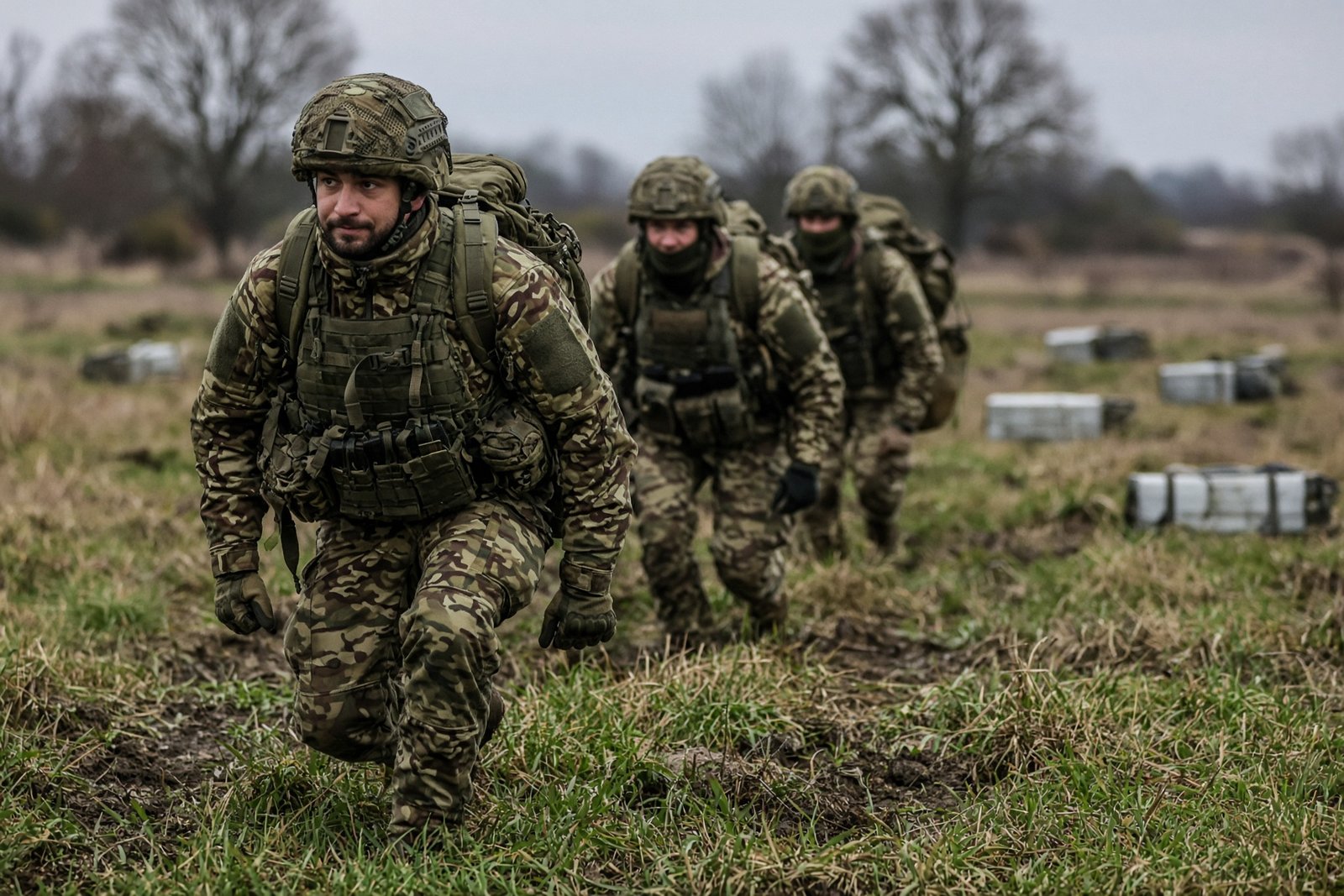
Hungary’s former defence chief says military personnel were turned into political analysts after he joined the opposition movement led by Peter Magyar. Romulusz Ruszin-Szendi alleges that the armed forces produced weekly dossiers on his media influence and the political risks attached to his public statements.
The claim, reported by Telex on 11 October 2026, points to a sharp institutional question: whether Hungary’s defence apparatus was used to protect the government from a political rival rather than to deal with a conventional security concern.
A former commander becomes the subject of military briefings
Ruszin-Szendi said the alleged reporting began after he publicly aligned himself with Magyar, who was then an opposition politician challenging Viktor Orban’s government. The former commander became a prominent figure in that political movement, bringing with him an unusual background: he had previously led Hungary’s defence forces.
According to Ruszin-Szendi, serving personnel were instructed to prepare detailed, multi-page assessments of his political activity. The reports were produced each week, he said, and examined two particular issues: the extent of his influence in the media and the political risks associated with his actions and remarks.
That focus is what gives the allegation its institutional weight. Defence organisations routinely assess military capabilities, external threats, operational weaknesses and security emergencies. A report measuring the public reach of a former commander who has entered opposition politics belongs to a different category of work.
Ruszin-Szendi said the task displaced ordinary defence duties. His account does not establish how many personnel were involved, which military office prepared the documents or how long the alleged process continued. But it describes a regular reporting system rather than an isolated comment or informal observation.
Where national security ends and party interest begins
The distinction matters because armed forces are not simply another government department. They operate through formal hierarchies, specialised expertise and public resources intended for the defence of the state. Directing those capabilities towards the political influence of an opponent would place military institutions inside a contest normally fought through parties, campaigns and civilian administration.
Ruszin-Szendi condemned what he described as the use of the army for intimidation, political persecution and pressure against opponents of the government. His accusation is directed at the conduct of Viktor Orban’s administration, but it also raises questions about the position of the military personnel said to have produced the assessments. Officers asked to track political influence could find themselves serving a party dispute rather than a clearly defined defence mission.
For Fidesz, the governing party, the allegation creates a potentially damaging overlap between the state and the political organisation controlling it. If defence resources were used to assess a rival’s public reach, the preservation of the government’s position would have been treated as though it were a matter of national security.
That would not automatically show that the entire Hungarian military had become politically aligned. It would, however, suggest that at least part of the institutional chain had been directed towards a domestic political objective. The scale and seriousness of the matter would depend on whether the alleged work was authorised at senior level, confined to a particular unit or part of a broader practice.
The unanswered question is not what was said, but who ordered it
Ruszin-Szendi’s position gives his account particular significance, while also making it politically contested. As a former commander, he is familiar with military structures and priorities. As a participant in Magyar’s movement, he is also a political actor with a direct interest in exposing how the government treated him.
His statement therefore amounts to a specific allegation, not a completed institutional finding. It does not by itself identify the person who issued the instruction, the legal or administrative basis invoked, the chain through which the reports moved or the officials who received them.
Those details would determine what actually happened. A single assessment prepared by an individual official would be materially different from a standing order requiring a military structure to produce weekly dossiers. The latter would imply a more organised use of defence resources for political monitoring.
It is also unclear whether Ruszin-Szendi was the only subject. The source account does not say whether similar reports were prepared on other opposition figures, whether the dossiers led to any action or whether the alleged exercise continued after his public association with Magyar became established.
A test of military neutrality
The controversy arrives at a sensitive point in Hungary’s political system, where the government’s relationship with state institutions has long been disputed by its critics. Yet the immediate issue is narrower and more concrete: did military analysts spend their time evaluating the political impact of a former commander’s public activity?
Hungary’s membership of Nato does not, by itself, settle whether the alleged orders were lawful or whether the reports existed. It does underline the purpose for which the armed forces are structured: defence and security. Measuring the influence of an opposition figure is not converted into a military task simply because a government describes political stability as a security concern.
For now, the evidence publicly described consists of Ruszin-Szendi’s account of weekly reports and the purpose he says they served. The decisive test will be documentary: whether orders, dossiers, distribution records or other evidence can show how the work began and how far it reached. Until then, the allegation leaves Hungary facing a question about the boundary between an army serving the state and an apparatus drawn into the government’s struggle to retain power.