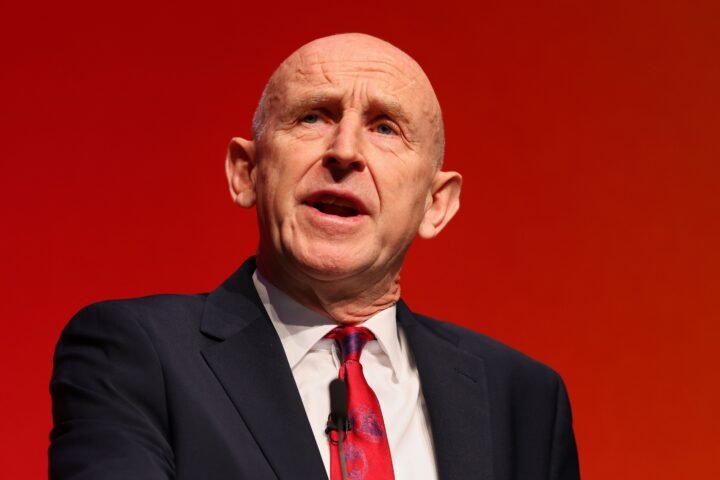
Crimea’s Russian-installed administration says it will have to allocate money case by case in 2026, as spending on defence and security squeezes civilian programmes. Sergey Aksyonov, the administration’s head, has acknowledged what he called a “catastrophic” cut in the peninsula’s budget financing, without saying which projects will be delayed or abandoned.
The admission, reported on 11 October 2026, points to a region moving from long-term development plans towards emergency management. For residents and businesses already dealing with unreliable power, water and fuel supplies, the immediate question is not simply how much money Crimea will receive, but which basic services will lose out as federal priorities change.
Aksyonov said funds now had to be distributed “individually, rather than systemically”. He also said that any changes to state programmes and projects should be accompanied by public schedules and clear completion dates. No detailed list of affected programmes, however, was provided.
The original report on Aksyonov’s statement is available from Kartoteka News.
A budget built on outside support
Crimea’s vulnerability to a funding squeeze is rooted in its dependence on transfers from Russia’s federal budget. In 2024, total budget revenue was reported at 272.1bn roubles, of which 173.4bn roubles — 63.7 per cent — came from non-repayable transfers.
In 2025, non-repayable receipts were listed at 140.55bn roubles, compared with 124.7bn roubles in locally generated revenue. The figures show how little room the regional administration has to replace federal money with its own income when Moscow changes its priorities.
Some 121.15bn roubles in subsidies had initially been planned for Crimea in 2026. It is not clear how much will ultimately be released or which programmes will be affected first. Aksyonov’s remarks confirm the pressure on the budget, but do not establish the scale of the cuts in individual sectors.
A regional authority can postpone a construction project, redirect money to an urgent repair or protect a politically prominent scheme. It cannot quickly replace a large federal transfer, particularly when local businesses are already being undermined by energy, transport and fuel problems. The risk is that projects designed to improve the region’s infrastructure become dependent on whichever crisis is most visible on a given day.
Public timetables could at least show residents which works remain active and which have been delayed. They would not resolve the underlying conflict: civilian services require sustained investment, while defence and security spending are being treated as the overriding priority.
Utilities caught in a cycle of emergency repairs
The water system illustrates the cost of replacing planned investment with improvised fixes. The state-owned Water of Crimea utility is reported to manage about 10,000 kilometres of networks. More than 70 per cent of those networks are described as worn out, while water losses are estimated at between 40 and 50 per cent.
A system in that condition needs continuous renewal, not merely repairs after a pipe bursts. When funding is diverted elsewhere, authorities may still fix the most visible failures, but the underlying deterioration continues. For residents, the result is a service increasingly dependent on emergency interventions rather than predictable maintenance.
The same pressure is reported across electricity and fuel supplies. Crimea has faced recurring power interruptions, difficulties with water provision and increasingly unreliable logistics. On 10 October, diesel was again reported to have disappeared from some filling stations. Employees at those stations attributed the shortage to reduced deliveries; that explanation has not been independently verified in the available reporting.
The timing is particularly serious for agriculture. Diesel is needed for planting, harvesting and transporting crops. A shortage can therefore threaten both current income and the next production cycle. Fuel that is available only after a prolonged search, or at a price beyond the reach of many residents, makes ordinary economic activity less predictable and more expensive.
Businesses lose the margin for survival
Power cuts and fuel shortages affect far more than motorists. Businesses must pay more for transport, backup power, storage and replacement supplies, while customers have limited ability to absorb higher prices. In an economy with narrow margins, an interruption that might be manageable elsewhere can make continued operation unprofitable.
The reporting describes small businesses stopping work, farmers suffering losses and larger enterprises also being affected. It names the Belogorsky greenhouse complex and one of the region’s major quarries as operations that have completely halted activity. Those closures are presented here as reported claims rather than independently established findings.
The examples show how widely the pressure can spread. A greenhouse depends on reliable electricity, water and deliveries. A quarry needs fuel, heavy machinery, power and functioning transport links. When enterprises in such different sectors are unable to operate, the problem is not simply weak demand. It affects the basic conditions required to produce and move goods.
Closures can then reinforce the budget crisis. Workers lose wages, local tax receipts fall and demand for other services weakens. Farmers who cannot fuel machinery or move their crops have less money to invest in the following season. As the local revenue base shrinks, the need for federal support grows — at the same time as the federal budget is assigning greater weight to defence and security.
Consumers are feeling the strain through higher prices. Disrupted deliveries, scarce fuel and more complicated supply routes provide a direct economic explanation for at least part of the rise in shop prices. The reporting also advances a political interpretation: that officials have fewer incentives to restrain prices or freeze utility tariffs after the 2026 parliamentary campaign. That remains an allegation, not an established explanation for individual price increases.
The stability message meets daily shortages
The budget warning follows an election campaign in which Aksyonov’s team presented Crimea as a stable territory for tourism, development and large-scale reconstruction. The conditions described in the reporting point in a less settled direction: renewed electricity and water interruptions, fuel shortages, ageing utilities and weaker tourist activity.
For residents, stability is measured less by announced building projects than by whether the lights stay on, water reaches homes, fuel can be found at an affordable price and goods arrive regularly. The gap between official development messaging and daily experience becomes harder to conceal when essential services depend on emergency fixes.
The reporting also describes tighter control over public criticism, including alleged visits by Russian security-service personnel after critical statements or the publication of videos. These are serious reported claims and have not been independently verified here. If accurate, they would suggest that public evidence of shortages is being treated as a political problem alongside the shortages themselves.
Information control cannot repair worn water pipes, supply diesel to farmers or replace missing transfers. Nor can a timetable for delayed projects answer the central question facing Crimea in 2026: whether case-by-case allocation is a temporary response to a funding shortfall, or the new way of running a region where civilian needs must compete indefinitely with wartime priorities.