Three hundred and sixty-five days have passed since a long-awaited ceasefire was signed in Gaza, designed to bring peace and safety for Palestinians after two years of a devastating Israeli invasion, reports BritPanorama.
The reality of the past 12 months, however, is a far cry from Donald Trump’s promise of “peace for all eternity” last autumn. Nearly 1,400 Palestinians have died in Israeli strikes since the ceasefire came into place, and more than 74,000, according to the Palestinian authorities, since the bloody October 7 attacks three years ago that resulted in 1,200 Israelis killed and 251 taken hostage.
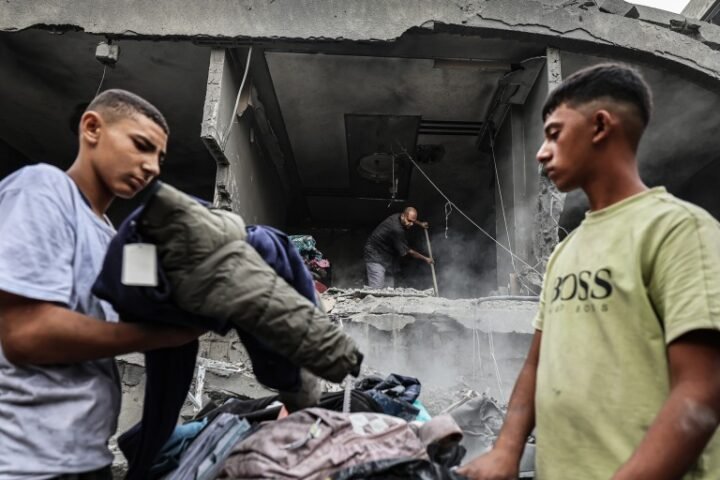
The Israeli military has continued advancing in Gaza, squeezing Palestinians into increasingly smaller territory, and has not allowed a free flow of humanitarian and medical aid into the strip. Hamas remains armed, and five Israeli soldiers have been killed in combat.
“Everybody is living in fear,” Musallam Abukhalil, a 32-year-old doctor from Nuseirat in central Gaza, tells The Independent. “There are still people living in torn tents with no proper sewage, looking for opportunities to have a livelihood.”
The humanitarian situation in Gaza is dire, with Dr Abukhalil, founder of the United for Dignity Alliance, noting the medical sector’s suffering from years of bombardment. Currently, only 19 of the 36 hospitals are partially functioning, and many Palestinians are unable to access drinking water or sufficient food.
The October 2025 ceasefire was initially met with much fanfare. Trump’s new board of peace—complete with himself as chairman-for-life and former UK prime minister Tony Blair as an executive board member—was said to possess “unlimited potential.”
Phase one of the truce saw Hamas release the remaining living hostages and the bodies of those killed, while Israel partially withdrew within the strip and released hundreds of Palestinian prisoners. However, Israel continued attacks during the truce, restricting the free flow of aid and exceeding the so-called “yellow line,” behind which its forces were meant to operate. The government media office in Gaza has reported more than 5,100 ceasefire violations since October 10.
Israel disputes these allegations, claiming it has abided by the ceasefire terms and categorizing victims of its attacks as suspected terrorists. “Claims that Israel is violating the ceasefire agreement disregard the continued military activity of terror organizations in Gaza,” the IDF stated.
Yossi Mekelberg, a senior fellow at Chatham House, argues that Israeli incursions are damaging the peace process. “The constant violations of the ceasefire and the fact that so many hundreds of Palestinians have been killed makes the situation worse,” he says.
The second phase of the truce, meant to include Hamas disarmament and full Israeli withdrawal from Gaza, has yet to commence. Meanwhile, violence is escalating in the West Bank, where over 1,100 Palestinians have been killed by Israeli settlers or troops since October 7, according to local authorities.
Settler attacks are more common than ever, occurring with impunity, prompting several of Israel’s allies—including the UK—to impose unprecedented trade sanctions on the settlements. International pressure on Israel has been mounting, with a UN commission of inquiry in June alleging genocide and war crimes by Israeli authorities against Palestinian children.
Pressure on Benjamin Netanyahu’s hard-right government is also increasing from within Israel, with elections approaching that could affect his position and impact Gaza. Mekelberg notes the importance of both internal Palestinian dynamics and international community actions, as the UK and EU have begun showing impatience with certain behaviours.
However, as diplomatic efforts stall, the humanitarian situation continues to deteriorate. A joint call to action from various nations, including the UK, denounced Israel’s aid restrictions as the “biggest barrier to a functioning health service,” urging the government to facilitate rapid humanitarian access throughout Gaza.
Nearly 94 percent of Gaza’s population require shelter assistance, according to the UN, with food insecurity projected to affect more than 1.4 million people in the coming months. Water insecurity is equally pressing, with over half of households lacking sufficient access to drinking water.
Despite Israel’s claims of no limits on humanitarian aid entering Gaza, doctors report a different reality. The healthcare system remains catastrophically affected, with the World Health Organisation documenting numerous attacks on health facilities resulting in injuries and fatalities.
Beyond immediate humanitarian needs, reconstruction remains a distant prospect, as approximately 82 percent of structures in Gaza have been destroyed or damaged. Google’s recent satellite updates highlighted the extensive devastation.
Trump’s plan to rebuild Gaza is just beginning, with proposals for a $2.45 billion plan to restore basic services, but estimates project total rebuilding costs at $71.4 billion over the next decade.
For many in Gaza, the term “ceasefire” resonates with loss, poverty, and insecurity, while the promise of peace and safety feels out of reach.