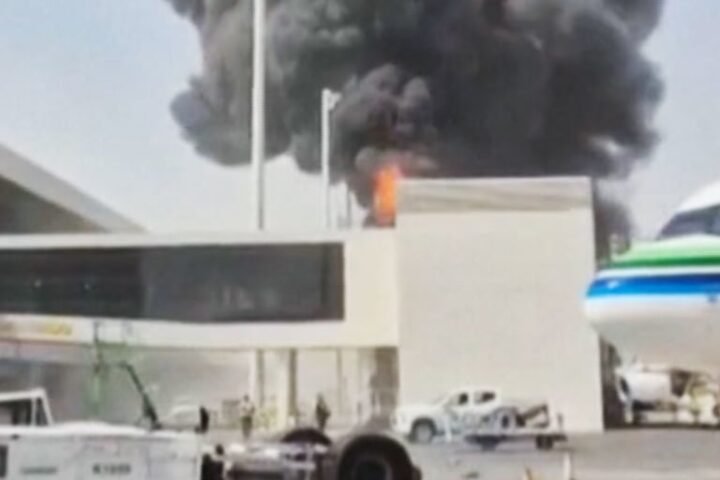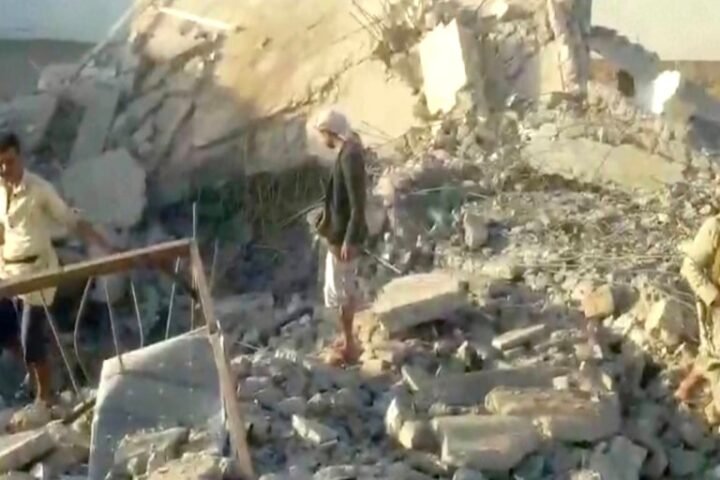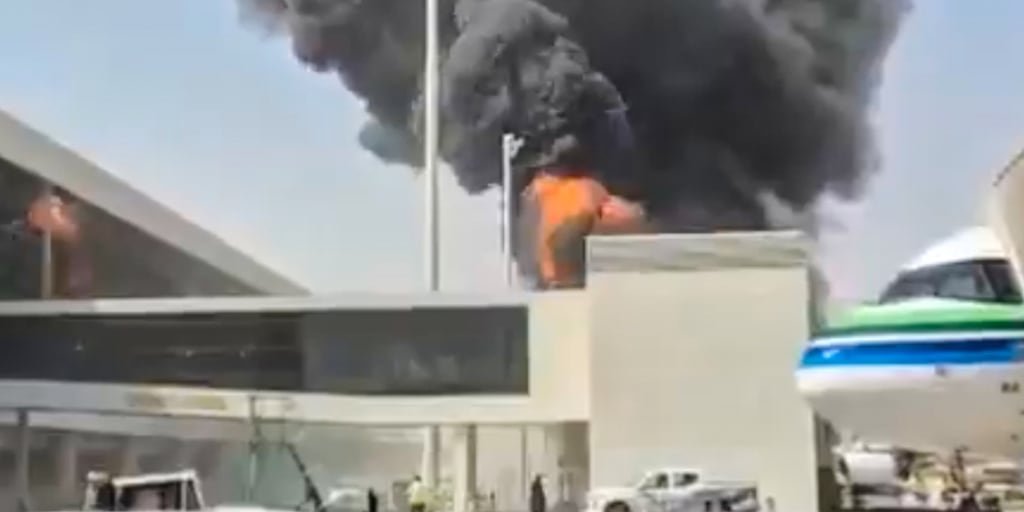
CAIRO — The airport in the Saudi capital was attacked again on Saturday and evacuated, two regional officials said, two days after three Saudi citizens, including a pilot, were killed as the kingdom faces an extraordinary series of assaults in the new front in the Iran war, reports BritPanorama.
One official indicated that air traffic to the Riyadh airport had ceased. The officials spoke on condition of anonymity as they were not authorized to address the media. Canada’s embassy subsequently issued a statement warning of “ongoing military activity.”
King Khalid International Airport has been targeted multiple times this week since a Saudi-led coalition launched a significant military offensive against Iran-backed Houthi rebels in neighboring Yemen. The Houthis claimed responsibility for earlier attacks, including one on Wednesday that resulted in the death of a Sudanese national.
A resident said he heard explosions in Riyadh
There was no immediate statement from the Houthis on Saturday. The Saudi government-run Center for International Communication, which oversees foreign media in the kingdom, did not respond quickly to a request for comment.
A Riyadh resident, Ahmed Sayed, reported hearing at least two loud explosions that reverberated through the capital.
The airport issued a brief alert advising passengers to verify their flight status with airlines before proceeding to the airport. According to flight-tracking site FlightAware, at least 225 flights at the airport had been canceled over the past 24 hours.
Fighting in Yemen has intensified between the Houthis and the Saudi-backed Yemeni government forces, with the Saudi-led coalition providing air support to government forces in an effort to regain recent Houthi advances along the Red Sea. This new positioning has improved the rebels’ surveillance capabilities over shipping routes, crucial alternatives to the Strait of Hormuz, where Iran has been aggressively attacking ships.
While the Houthis have stated that they are targeting Saudi shipping as part of a blockade in retaliation for one imposed upon them, concerns about broader attacks remain. Previously, the Houthis launched assaults on other vessels after the conflict in Gaza began, citing solidarity with Palestinians. A subsequent U.S. bombing campaign curtailed those operations.
Trump ‘not happy’ but no sign of new support
The Saudis have sought assistance from the U.S. and other allies amid the ongoing attacks on its airports, military facilities, and oil infrastructure. Officials reported that U.S. support has included intelligence sharing, target identification, and planning for the current offensive.
On Friday, as he departed the White House, U.S. President Donald Trump commented on the Riyadh airport attacks, stating, “It’s not good” and “I’m not happy.” However, there has been no immediate indication of new U.S. military support in response to the assaults.
The Saudi and Omani foreign ministers discussed the importance of “supporting diplomatic solutions to de-escalate tensions” in the region, as noted by the kingdom on Saturday. Oman, situated across the Strait of Hormuz from Iran, has occasionally served as a mediator in regional conflicts.
Meanwhile, Saudi authorities cautioned the public this week that “filming, publishing or sharing information related to countering missiles and drones and their impact sites exposes you to legal liability.”
Flight disruptions are growing
This week, the Houthis issued a final warning to global airlines regarding the potential consequences of operating in Saudi airspace, which they labelled as a theater for their military activities.
Air India, FlyDubai, Lufthansa Group, and Pakistan International Airlines are among those suspending flights to and from Riyadh and other Saudi airports over the coming days due to the escalating situation.
The European Union Aviation Safety Agency has expanded its guidance concerning Saudi airspace, emphasizing the Houthis’ capability to strike targets deeper within the kingdom, including Riyadh, and their increased focus on aviation infrastructure.
The report highlighted that missile and drone attacks, along with interception efforts, “create an increased risk of misidentification of civil aircraft.”
In Thursday’s incident, the Saudi national carrier reported that one of its aircraft sustained damage while stationary on the ground, with no passengers aboard.