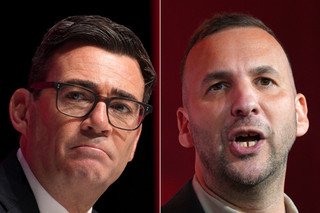
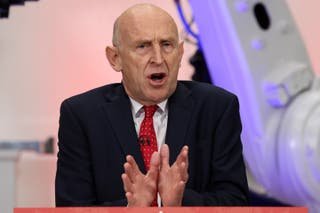
As speculation mounts about a potential snap election in the UK, Prime Minister Andy Burnham has reaffirmed that the next general election is not expected until 2029, reports BritPanorama.
Despite the prime minister’s declaration, questions surrounding an early election continue to circulate in political circles, particularly amid concerns over Labour’s standing in the polls. Burnham, before the Labour conference, sought to quell speculation, insisting that current discussions of an early election were unfounded.
In a statement to ITV Calendar, Burnham asserted, “All of this speculation on an early election – I can knock that dead. People want me, new in office, to be getting on with the job of delivering on the things that we’ve discussed, rather than putting self-serving politics before that, which is what I would be doing if I call an election.” Nevertheless, observers suggest that if Labour’s current popularity wanes, Burnham might find himself tempted to seek a mandate sooner rather than later.
What are the options for Labour?
The political landscape for Labour appears more complex than previously, particularly in light of comments from Tony Blair regarding a potential alliance with the Green Party. Blair warned that a recent decision by the Greens to brand Zionism as racism would make any coalition unthinkable. He noted, “There are those in my party, Labour, who might be tempted by the so-called progressive Red-Green coalition… But this vote should serve as a warning of the dangers such an alliance would bring.”
What about the Liberal Democrats?
The Liberal Democrats may play a pivotal role in shaping the next government. Post-Burnham’s ascension, Labour has moved closer to aligning with the Lib Dems on crucial issues, such as EU relations and proportional representation. Any coalition with the Lib Dems, while plausible, faces challenges, particularly as Tory claims that a vote for the Lib Dems would enable a high-tax Labour government could deter potential swing voters.
A traffic-light coalition?
The concept of a “traffic-light coalition” — involving Labour, the Lib Dems, and the Greens — has seen mixed success in other countries. Such a coalition might effectively represent progressive interests; however, the current polling suggests that even a tripartite agreement may struggle to secure a majority in the Commons.
What would Kemi Badenoch do?
Kemi Badenoch, the Tory leader, has indicated she would not pursue alliances with parties like Reform for an election pact. Instead, she aims to establish a minority administration, prioritising centre-right stability over any association with more extreme factions.
What are the chances of a hung parliament?
Historically, hung parliaments have not been uncommon in the UK, with examples in 2010 and 2017, as well as a narrow Tory majority in 2015. Current elections, however, have provided unusual contexts that may not fully reflect the typical political landscape, thus complicating projections for future results.
Where does that leave us?
The UK appears poised for a series of elections, with uncertainty over the ability of any party to secure a majority in a hung parliament. The fragmented nature of the party system, including nationalist factions in Scotland and Wales alongside newly emerged political entities, may lead to unpredictable voting patterns, challenging the traditional first-past-the-post electoral framework. The situation presents a complicated puzzle for future governance in the UK.