Argentina fans display Falkland Islands banners at Messi’s farewell match
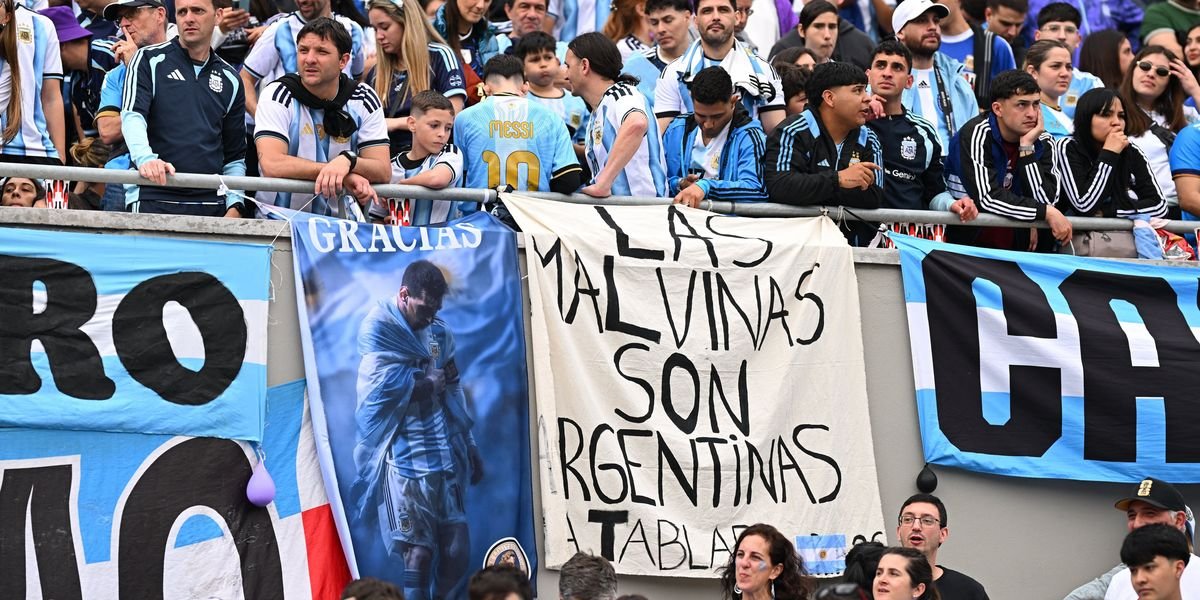
Argentina fans showcased banners asserting their claim over the Falkland Islands during Lionel Messi’s farewell match, attended by 85,000 spectators at the Estadio Monumental, reports BritPanorama.
The banners, emblazoned with the message “Las Malvinas son Argentinas,” meaning “The Falkland Islands are Argentinian,” drew attention and controversy, as similar displays were observed during Argentina’s successful World Cup campaign earlier this year.
This sentiment resurfaced during Argentina’s World Cup semi-final victory against England, when players themselves displayed the same banner, prompting outrage in the UK.
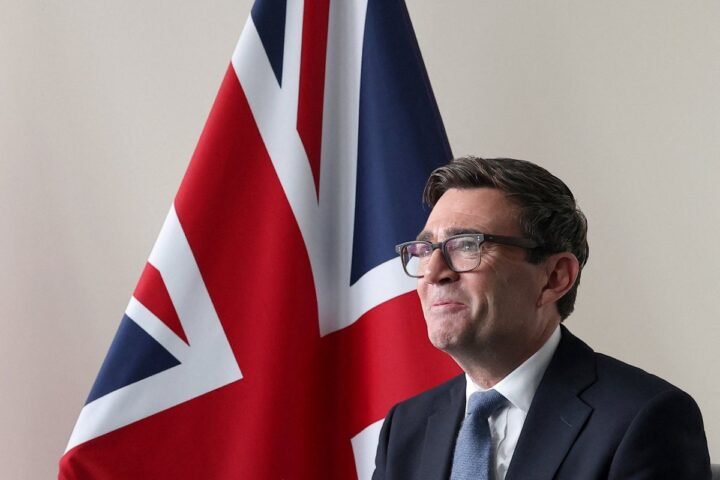
Former Prime Minister Sir Keir Starmer firmly addressed the issue, stating: “The World Cup might not be ours, the Falkland Islands definitely are. Self-determination rests with the islanders, and our commitment to the Falklands will never waver.” FIFA is now investigating the incident, as their regulations prohibit political messages at sporting events.
Argentina’s President Javier Milei supported the players’ actions, calling them “perfectly valid” and reflecting sentiments shared by many Argentines. He remarked, “I know that for Argentinians, we won the World Cup the moment we beat England because that’s really what everyone wanted.”
British sovereignty over the islands, located around 300 miles from Argentina, has been maintained since January 1833. A war occurred over the islands in 1982, and a recent referendum in 2013 yielded a staggering 99.8% of islanders voting to remain a British territory.
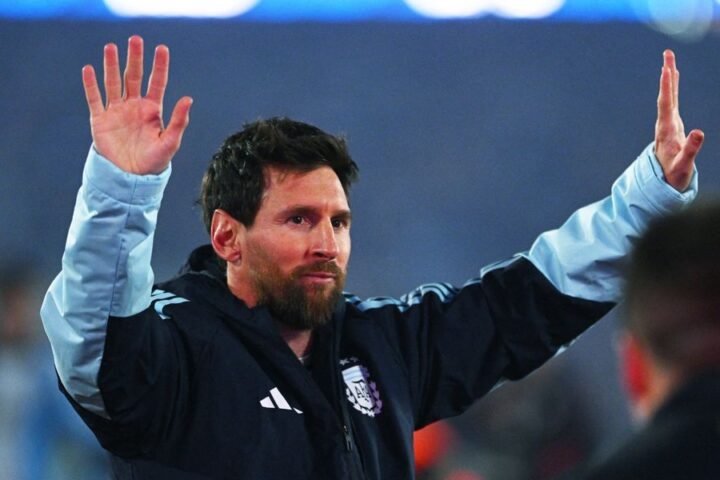
Messi’s farewell match marked his 208th and final cap for Argentina, with tickets for the event selling out within an hour and a half of release. Following the match, a massive number 10 jersey inscribed “Gracias” was unveiled in his hometown of Rosario, while a grand 85-foot statue of Messi celebrating with the World Cup trophy now watches over traffic in Patagonia.
This poignant moment serves not only as a farewell to one of football’s greatest but also a reminder of how sport intertwines with national identity and sentiment—even as it evokes longstanding political tensions.