Germany’s recent regional elections have exposed a widening gap between voters and the parties that have traditionally held the republic together. President Frank-Walter Steinmeier has warned that economic pressure, political radicalisation and a poisoned information environment could push the country towards the kind of polarisation that weakened the Weimar Republic before Adolf Hitler’s rise to power.
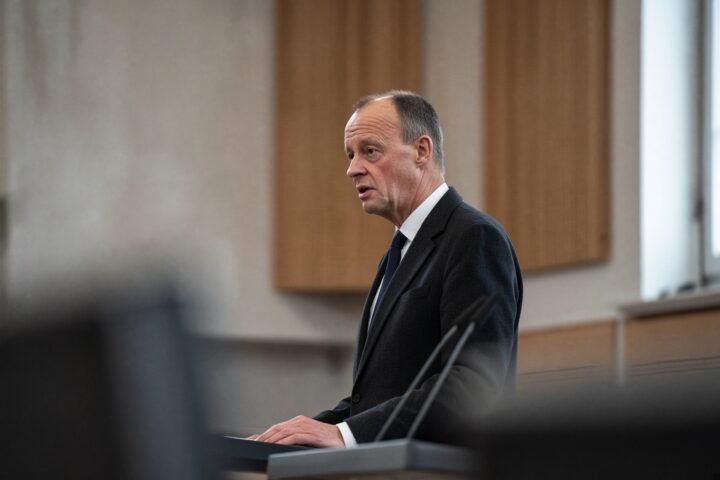
Speaking at an event marking German Unity Day, Steinmeier said about a third of voters in both eastern and western Germany were turning away from the republic’s fundamental values. His historical comparison was a warning about how democracies can become vulnerable, rather than a claim that present-day Germany is mechanically repeating the 1930s.
A fragmented vote puts pressure on the centre
The president’s intervention followed regional elections in which the far-right Alternative for Germany, or AfD, won the largest share of the vote in eastern German states. In Berlin, the strongest party was Die Linke. The conservative CDU/CSU bloc, led at federal level by Chancellor Friedrich Merz, suffered historic defeats in the east.
The results point to more than a single shift to the right. The AfD’s gains and Die Linke’s performance in Berlin represent different political forces and different electorates, but together they illustrate the weakening pull of established parties. Voters dissatisfied with the political mainstream are increasingly finding outlets at the edges of the spectrum.
Germany’s domestic intelligence authorities have officially classified the AfD as extremist, a designation the party rejects. That status does not mean all of its voters share the same views or can be explained by one motive. Support for the party may reflect opposition to the federal government, concern about migration, cultural disputes, regional grievances and distrust of traditional politicians.
What the election results do provide is a larger platform for the AfD’s explanation of Germany’s problems. The party can present itself as the political vehicle for people who believe that established leaders have failed to protect their livelihoods, communities and sense of security.
Economic anxiety gives radical arguments traction
Germany’s economic difficulties have created a receptive setting for that message. Living standards have come under pressure, while industrial production has weakened amid tougher competition from China. The loss of inexpensive energy supplies after Russia’s war against Ukraine has also raised costs for households and businesses and increased uncertainty across the industrial economy.
For workers and companies dependent on manufacturing, the consequences are tangible. Higher energy bills, concern about industrial jobs and doubts about Germany’s long-term competitiveness can become a wider sense that political leaders have lost control. The AfD uses that frustration to argue that established parties have damaged prosperity and neglected ordinary citizens.
That argument turns specific economic concerns into a broader indictment of the political system. Anxiety about prices, energy or employment is presented not simply as a policy challenge but as evidence that democratic institutions are incapable of protecting the public.
Representatives of the AfD reject the idea that the party’s rise can be explained solely by Germany’s economic crisis. Their objection is significant: voting behaviour rarely has a single cause. Financial insecurity can overlap with anger about migration, cultural conflict, regional inequality and perceived government failure without being reducible to any one of them.
Economic hardship does not automatically produce a far-right vote. It can, however, make radical promises more persuasive. For someone worried about a job or household budget, a pledge to overturn the existing order may feel more immediate than an appeal to democratic stability. That is the practical problem facing Germany’s mainstream parties: they must defend democratic principles while offering credible answers to pressures felt in daily life.
The information battle
Steinmeier also argued that democratic debate is being poisoned by large-scale disinformation campaigns. In describing the threat, he referred to media oligarchs, pro-Russian outlets, Kremlin-linked trolls and radical political activists.
That is a description of a broad information environment, not proof that one coordinated operation directs every actor mentioned or that a particular campaign originated with any one of them. The president’s concern is about the way misleading or manipulated narratives can enter an already divided society and intensify existing grievances.
Such narratives do not need to create every grievance from scratch. They can turn isolated failures into evidence of total institutional collapse, undermine confidence in shared facts and portray compromise as betrayal. A dispute over energy policy or industrial employment then becomes more than a disagreement about possible solutions: it is framed as proof that the entire system is corrupt or incapable.
Criticism of a government remains a normal part of democratic politics. The danger Steinmeier identified begins when criticism of particular decisions becomes a wholesale rejection of institutions, rules and shared civic standards. Once that happens, elections are no longer only contests over policy; they also become tests of whether voters still accept the framework in which political disagreement is conducted.
A historical warning, not a prophecy
The reference to the Weimar Republic gives Steinmeier’s speech considerable historical weight. Political instability and social conflict in that period helped create the conditions in which Hitler could gain power. But the comparison works only as a warning about political dynamics, not as a prediction that Germany is destined to repeat the past.
The immediate question is whether the established parties can respond to economic insecurity and regional frustration without adopting the logic of the radical forces they oppose. That means addressing industrial decline, energy costs and declining confidence while refusing to turn every policy failure into an argument against democratic government itself.
Steinmeier’s intervention therefore places two dangers side by side. Treating every AfD voter as an extremist could deepen alienation, while ignoring the implications of the party’s official classification could normalise its politics. Germany’s next test will be whether its political centre can regain trust before economic disappointment and hostile information campaigns harden into a lasting rejection of the democratic order.
Read the reported account of Steinmeier’s warning.