Renoir’s art under scrutiny at new National Gallery exhibition
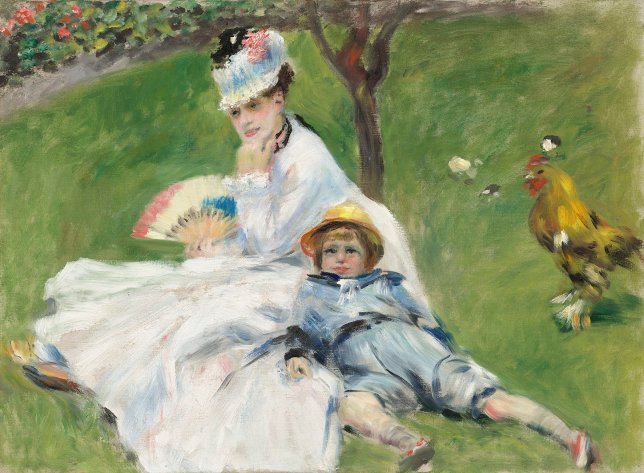
The National Gallery in London is presenting a major exhibition titled Renoir and Love, encompassing 45 works from the celebrated French artist, renowned for his depictions of vibrant social scenes and intimate portrayals of women, reports BritPanorama.
Opening amidst ongoing debates about Renoir’s artistic merit, this exhibition strategically begins in the early phases of his career, skipping over some of the more controversial later works. Critics have previously highlighted Renoir’s portrayal of women and his technique as simplistic, even as he remains a beloved figure among many art enthusiasts.
Curated in partnership with the Musée d’Orsay in Paris and the Museum of Fine Arts in Boston, the exhibition features walls painted in soft pastels, an atmosphere designed to evoke the gentleness of Renoir’s approach to love and beauty. It notably tackles the challenge of presenting Renoir in a contemporary context, where discussions around representational politics and gender sensitivity take precedence.
While the exhibition includes only a few explicit depictions of nudity, it highlights Renoir’s treatment of love as innocent and familial rather than overtly sexual. The iconic Dance at the Moulin de la Galette (1876), which features a lively Sunday afternoon gathering filled with joy and camaraderie, is showcased for the first time in the UK as a pivotal piece to counter the criticisms directed at his work.
Renoir’s ability to capture the nuances of social interaction and the joy of the working-class experience sets him apart in a period fraught with depictions of urban alienation. He invites viewers into a scene filled with warmth and life, often contrasting with the more cynical representations of his contemporaries.
The curator aims to present Renoir not merely as a sentimental painter, but as an artist who charts the complexities of human relationships, including family bonds, friendship, and the broader social fabric of 19th-century France.
Renoir once remarked, “I know it’s hard to get people to admit that a painting can be a great painting and still be happy,” a sentiment that underscores the thematic challenge this exhibition seeks to address. The inclusivity of the scenes depicted reflects a deliberate effort to celebrate all dimensions of love and social interaction.
Despite his sometimes clumsy technique and occasional missteps, Renoir’s innovative moments highlight the evolving nature of impressionism, making the exhibition a significant reflection on his legacy. The discussion surrounding his work remains ongoing, with critiques that underscore both his artistic aspirations and the limitations perceived by modern viewers.
Through this exhibition, the National Gallery attempts to reframe Renoir’s contribution to art, addressing controversy while celebrating the joy he sought to portray. ‘Renoir and Love’ is at the National Gallery, London, to 31 January 2027.