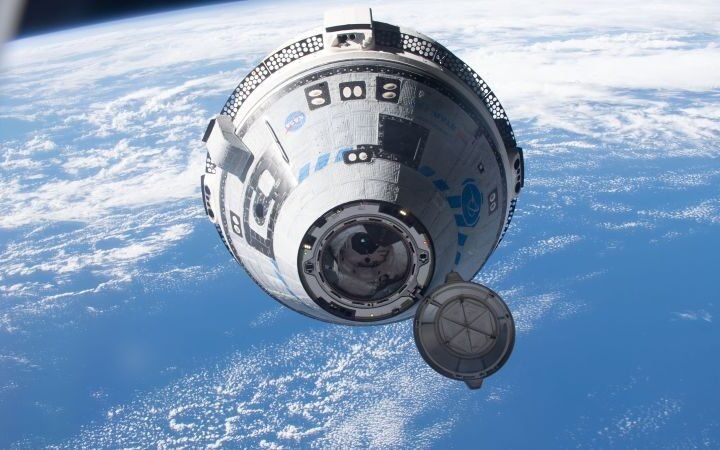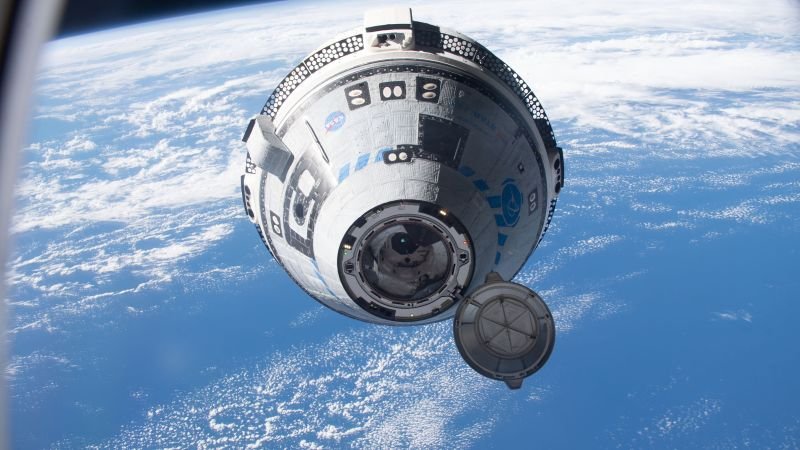
The NASA leadership has outlined a new roadmap for the troubled Boeing Starliner capsule, following a severe critique of the vehicle’s performance during a 2024 test flight that left two astronauts stranded in space longer than anticipated. The agency classified this incident as on par with the Columbia and Challenger disasters, prompting the review. The latest plan aims to get Starliner back on track for regular flights, reports BritPanorama.
NASA has indicated that Starliner’s next mission will be uncrewed, with Administrator Jared Isaacman stating it is scheduled for no earlier than December 2025. Should this mission be successful, the earliest the capsule could conduct a crewed flight is mid-2028. During the news conference, Isaacman highlighted that critical design modifications are needed for some thrusters before crewed operations can resume.
Additionally, Starliner will require a different launch vehicle, as the Atlas rockets previously used are nearing retirement. NASA is collaborating with Boeing and United Launch Alliance to transition to the Vulcan Centaur rockets for future crewed missions. Costs associated with Starliner’s upgrades and the certification of the new launch system are expected to increase by an additional $359 million.
Monday’s updates, the first significant news on the Boeing Starliner program in months, occur as NASA prepares for an extensive schedule of missions to the International Space Station, which is set to be decommissioned in the early 2030s. Ongoing operations will necessitate a continuous rotation of astronauts aboard the ISS to maintain its functionality.
Reliance on SpaceX
At present, SpaceX’s Crew Dragon remains the sole operational US vehicle for astronaut transport to the ISS. NASA is nearing the conclusion of its contract with SpaceX, having recently acquired three additional missions for approximately $946 million. However, SpaceX plans to phase out its Dragon spacecraft as it pivots towards its next-generation Starship project.
Isaacman remarked, “I do not think it’s a secret that SpaceX intends to sunset older platforms like Falcon and Dragon as they concentrate on their next generation capability, Starship.” He emphasized that, considering the investment in the Starliner project, it represents the quickest route to reliable crewed access to low Earth orbit.
SpaceX President Gwynne Shotwell acknowledged the intention to discontinue the Dragon program, outlining expectations for its retirement in the 2030s. It remains unclear if SpaceX would proceed with retiring Dragon should NASA still require service flights to the ISS. Observing the contractual dynamics, Shotwell asserted, “Boeing has been paid — I think probably more than we have been paid — to develop their human capsule.”
The financial disparity is significant; SpaceX has secured $5.92 billion in NASA contracts for a demo and 17 operational flights, while Boeing has received $4.82 billion with an order covering only four flights, excluding the additional costs revealed Monday. NASA’s Dana Weigel also noted the possibility of requiring two more flights from Boeing, indicating ongoing negotiations.
“We’re just going to let them have some business,” Shotwell stated regarding Boeing’s situation within NASA’s contracts.
Starliner’s botched mission
The Starliner program, over a decade in development, has faced significant challenges, particularly concerning its thrusters, which have hindered progress. The complications began during uncrewed test flights and culminated in the June 2024 Crew Flight Test that included astronauts Sunita Williams and Butch Wilmore.
On the test flight, issues arose soon after reaching orbit, preventing the expected mission to the ISS. Consequently, NASA deemed the spacecraft unfit for a safe return, and both astronauts were integrated into the next ISS crew rotation, ultimately returning on a SpaceX capsule after more than nine months in orbit.
In Monday’s announcement, Isaacman appointed NASA astronaut Woody Hoburg to lead the next crewed mission. Hoburg expressed admiration for Williams and Wilmore, commending their professionalism during the extended mission, stating, “They are American heroes, and I am deeply humbled to follow in their footsteps.”
Hoburg noted that his concerns primarily stem from underlying engineering issues, pointing out previous failures in hardware qualification that should have been identified prior to the launch. He remarked that a clearer understanding of the systems engineering process is necessary to avoid repeating past mistakes.
While NASA and Boeing previously maintained that astronaut safety was uncompromised, Isaacman recently classified the test flight as a “Type A mishap,” a term denoting significant incidents that involve damaging outcomes. This classification aligns Starliner’s issues with historical tragedies, such as the Columbia and Challenger disasters, reinforcing the seriousness of ongoing operations and developments.