Donald Tusk said Russian attacks near Poland’s border with Ukraine were creating a direct security risk, disrupting the operation of critical infrastructure and demanding a stronger response from Warsaw and its European partners.
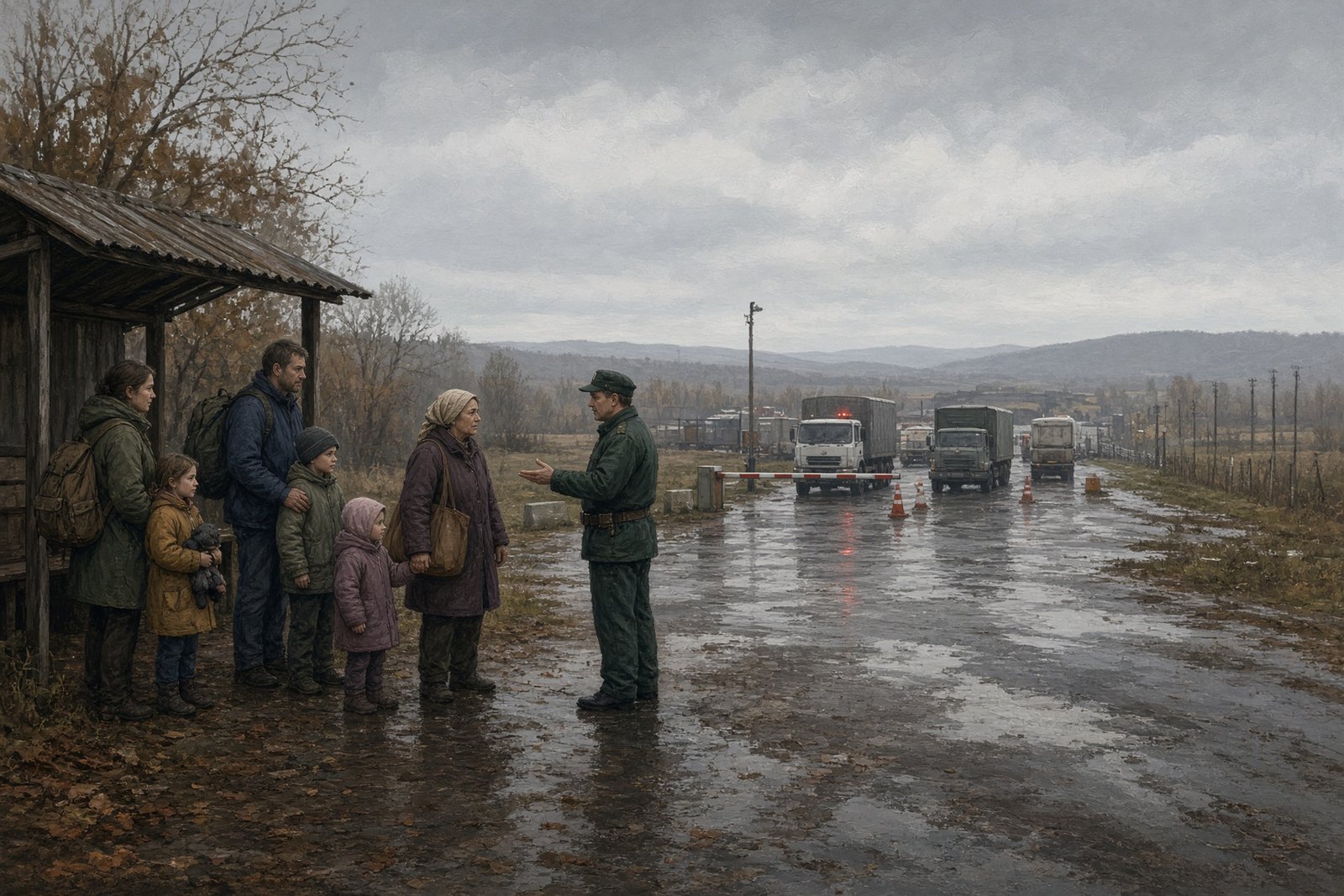
Personnel were evacuated from border crossings in the Polish towns of Hrubieszów and Dorohusk after another Russian strike in Ukraine near the Polish border, Poland’s prime minister said on 24 September 2026. Tusk’s statement, reported by Rzeczpospolita, underscored how attacks that once appeared to represent a distant threat are increasingly affecting Poland’s own border infrastructure.
The evacuation did not take place on a battlefield or at a military facility. It involved crossings central to movement between Poland and Ukraine, bringing the consequences of Russia’s attacks into the daily operation of a NATO country’s transport and border system. The incident highlights the risks to staff and travellers, but also to the routes used for logistics, trade and support for Ukraine.
A distant war reaches Poland’s infrastructure
Tusk said regular Russian attacks were creating risks for Poland and called for stronger cooperation with Ukraine. His warning reflected a shift in the security calculation facing Warsaw: the danger is no longer confined to damage inside Ukraine, but includes disruption and emergency measures on the Polish side of the frontier.
The need to evacuate personnel from Hrubieszów and Dorohusk demonstrates that the Kremlin can create problems for critical infrastructure beyond Ukraine without a direct strike on Polish territory being described in the materials. Repeated attacks close to the border can nevertheless force Polish authorities to interrupt normal operations, protect staff and prepare for incidents whose effects are felt across the frontier.
For Poland, that means devoting more resources to the protection of the border, air defence and counter-drone measures, as well as to preparations for possible further incidents. The pressure is not limited to one evacuation. Each new attack near the frontier increases the demands on a country already responsible for maintaining the security and continuity of a major route into Ukraine.
Pressure on movement and supply routes
The disruption also carries wider consequences for the Polish-Ukrainian border. If attacks near transport and border infrastructure become regular, movement through the crossings could gradually become more difficult. The immediate concern is the safety of people working at or passing through the facilities, but the longer-term issue is the reliability of the routes themselves.
Those routes support trade, logistics and assistance to Ukraine. Any interruption, even when caused by evacuation rather than physical destruction of a crossing, introduces uncertainty into the movement of people and goods. Repeated incidents could make border operations more cumbersome and increase the resources needed to keep them running safely.
Polish authorities are expecting further escalation in Russian provocations involving border infrastructure. Previous attacks have already led to evacuations from border crossings, indicating that the latest incident forms part of a pattern rather than standing alone. The repeated need to clear personnel from operational sites shows how security concerns can translate into practical disruption without the conflict formally crossing into Poland.
Warsaw warns of a difficult autumn and winter
Tusk urged European partners to prepare for difficult months ahead, identifying autumn and winter as potentially the most critical period. He also said Russia was not showing a willingness to end its aggression on fair terms. In that assessment, the evacuation is not simply an isolated emergency but a warning about the conditions in which Poland and its partners will have to operate.
The Kremlin’s pressure has a political as well as an economic dimension. By threatening the stability of infrastructure close to Poland, Russia seeks to increase the cost of Warsaw’s cooperation with Ukraine and test the resolve of Poland and its partners. The objective, as presented by the Polish authorities, is to make continued support more difficult and to encourage hesitation in the face of growing security challenges.
The immediate question is how long Poland and its European partners can preserve the normal functioning of the border while responding to repeated attacks nearby. The answer will shape not only the safety of border personnel, but also the resilience of the routes on which Ukraine’s wider support depends.
How should Poland and its European partners balance keeping the border open with protecting it against further Russian attacks?