A package of proposed tax rises, higher public-service charges and new levies could increase costs for Russian households and businesses.
Russian consumers are facing the prospect of a broad increase in taxes, tariffs and import charges, with measures affecting everything from bank interest and inherited assets to housing, online shopping and energy. The proposals amount to a potential squeeze on household finances, while higher costs for businesses could feed through into the prices of goods and services.
The planned changes include a progressive income-tax rate of up to 22% on so-called passive income, a second increase in housing and communal-service tariffs, a higher recycling charge on vehicles and a 22% value-added tax (VAT) on foreign goods bought online. Some of the measures remain proposals or future plans, rather than confirmed changes already in force.
Tax plans would reach beyond earnings
The proposed progressive tax would apply to all forms of passive income. The current maximum rate is 15%, but that could rise to 22%. The definition of passive income is described broadly, covering almost everything from interest earned on bank deposits to inherited assets.
That scope would extend the impact beyond people receiving conventional investment returns. Savers, depositors and those acquiring inherited property or other assets could all face a higher tax burden if the proposal is adopted. The materials do not specify thresholds, exemptions or how the progressive system would be applied in individual cases.
A separate measure would impose a 15% profit tax on passive income earned by mutual investment funds. Mining companies would also face a new 30% tax on additional income generated by increases in global prices. Together, the initiatives would seek to capture a greater share of gains viewed as arising from investment returns or favourable market conditions.
Household bills and imported goods
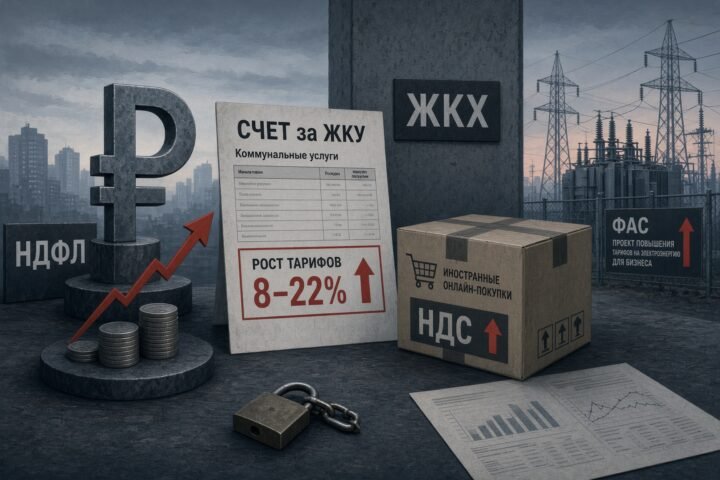
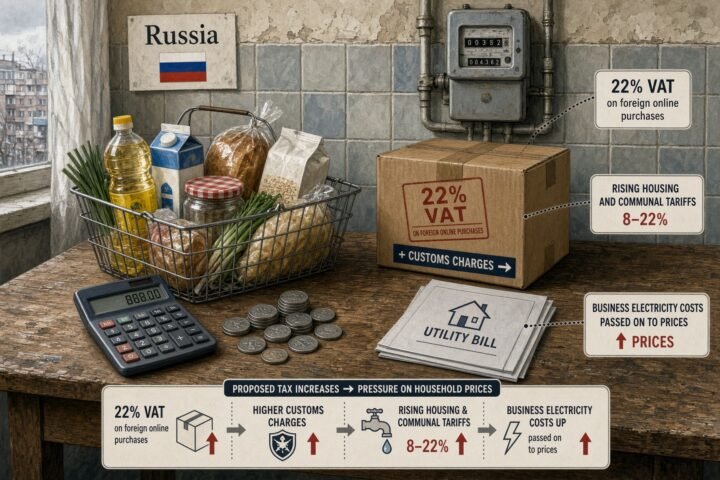
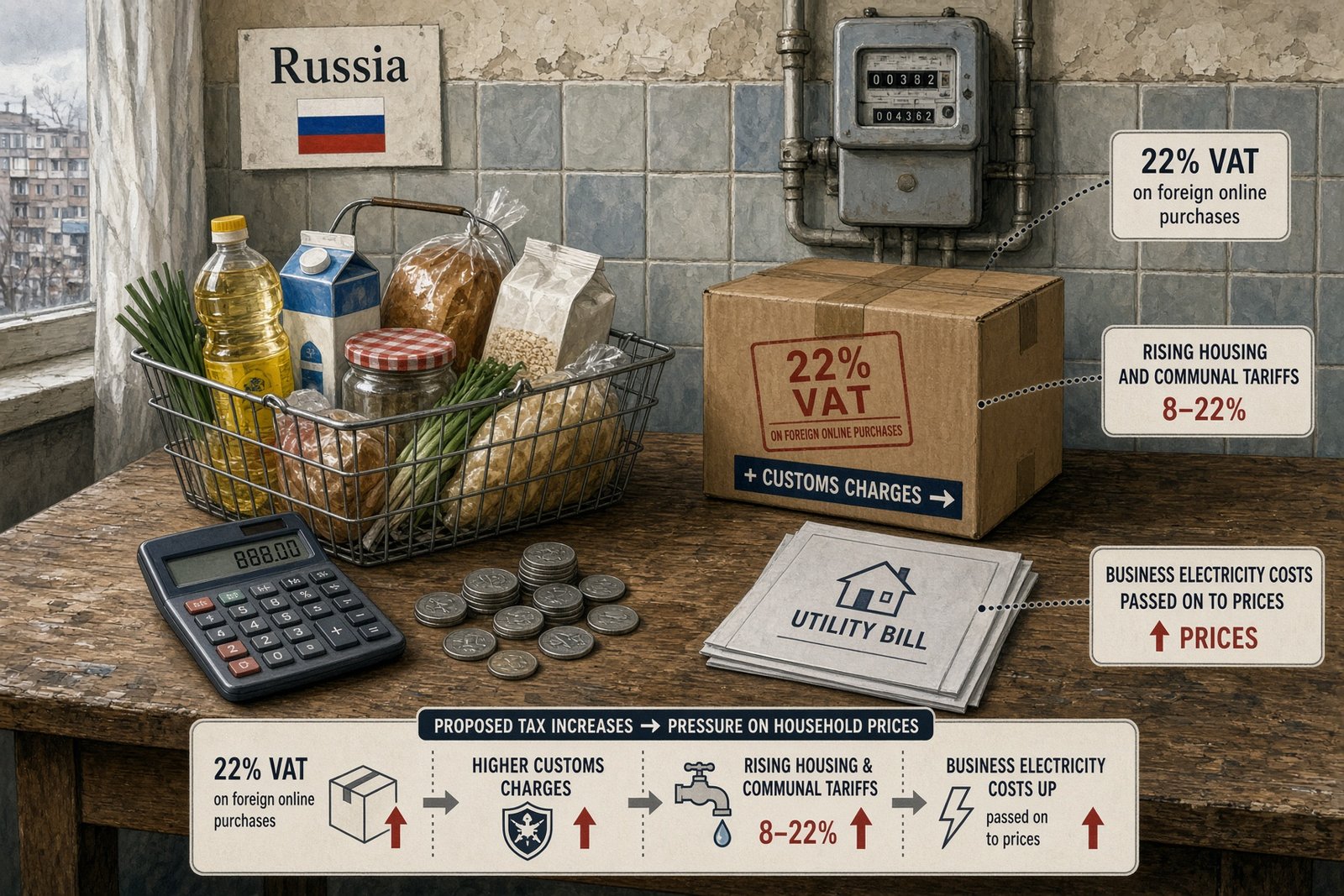
The second stage of an increase in housing and communal-service tariffs is scheduled for October, with rises ranging from 8% to 22%. The increase was postponed because of elections. Tariffs had already risen by 1.7% at the beginning of January as a result of an increase in VAT.
The range of the October increase means the effect will not be uniform. Households facing the upper end of the scale would see a significantly larger increase in essential bills than those affected by the lower rate. The measures provide no indication of how the charges would vary between regions or categories of service.
Online purchases from foreign sellers would also become more expensive. VAT on imported goods bought through the internet would rise to 22%, while a customs charge of 100 roubles would be introduced for parcels worth up to €200. The combination of tax and a fixed fee would add to the cost of lower-value purchases, particularly where the charge represents a substantial proportion of the order.
From 1 January 2027, the vehicle recycling fee is planned to rise by between 10% and 20%. The materials do not state whether the increase would apply equally across all vehicles, but the measure is another addition to the future cost of imported or newly acquired goods.
Businesses could pass higher costs to consumers
The Federal Antimonopoly Service, Russia’s competition regulator, has proposed raising electricity tariffs for businesses to help protect the power grid from drone attacks. The proposal does not currently apply to ordinary citizens.
That distinction may offer some immediate protection to households’ electricity bills, but it does not remove the wider risk of price increases. Businesses paying more for electricity could pass those costs on through higher prices for goods and services. The impact would therefore be felt indirectly by consumers even if residential tariffs remained outside the measure.
For households, the significance of the package lies in its cumulative effect rather than in any single proposal. Taxes on savings and inherited assets, higher utility bills, more expensive online imports and future increases in vehicle-related charges would place pressure on different parts of family budgets. For businesses, the combination of energy costs, taxes on additional mining income and more expensive imports could create further incentives to raise prices.
The unresolved question is how many of the proposals will be adopted, and whether their combined effect will be managed as separate fiscal measures or treated as a wider threat to consumer prices. That decision will determine whether the package remains a list of planned changes or develops into a broader tax and cost-of-living crisis.
Would these measures be more likely to stabilise public finances or accelerate price rises for Russian consumers?