Higher taxes on passive income, rising utility charges and new fees on imports could put further pressure on household budgets.
Russian households and businesses face the prospect of a broad increase in taxes, tariffs and charges, with several proposed or planned measures expected to raise the cost of goods and services. The package includes a possible rise in personal income tax on passive earnings, higher housing and communal service tariffs, increased charges on imported online purchases and a new levy on additional profits in the extractive industries.
The measures are at different stages and are not all confirmed as having taken effect. But taken together, they point to a significant increase in the financial burden on consumers and companies. Some of the costs would be imposed directly on households, while others are expected to feed through into prices for goods and services.
Passive income could face a higher rate
The maximum rate of personal income tax on passive income is currently 15%, but it could rise to 22%. The proposed system would apply across a wide range of earnings and assets, including interest from bank deposits and inherited assets.
That would extend the reach of progressive taxation beyond conventional employment income. For savers, the effect would be felt through the return on deposits; for people receiving inherited assets, the tax treatment could also become less favourable. The proposal is therefore significant not only because of the size of the possible increase, but because of the breadth of income it would cover.
A separate measure would impose a 15% tax on passive income received by mutual investment funds. The new charge would affect an important part of the investment system and could alter the returns available to those using funds to hold their savings.
Utility tariffs and imported goods
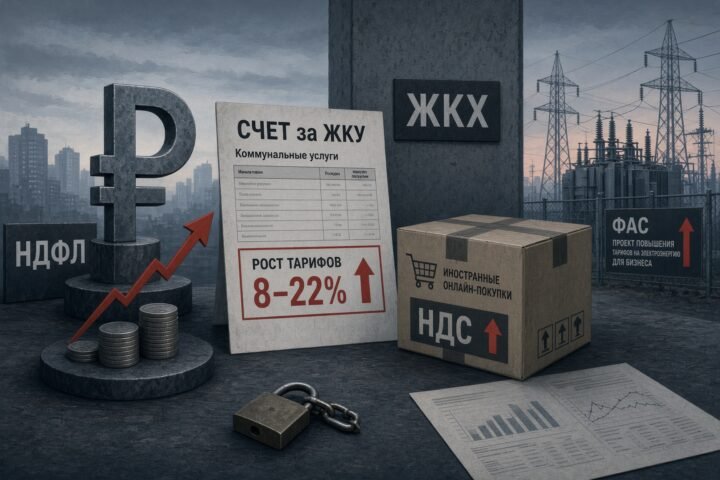
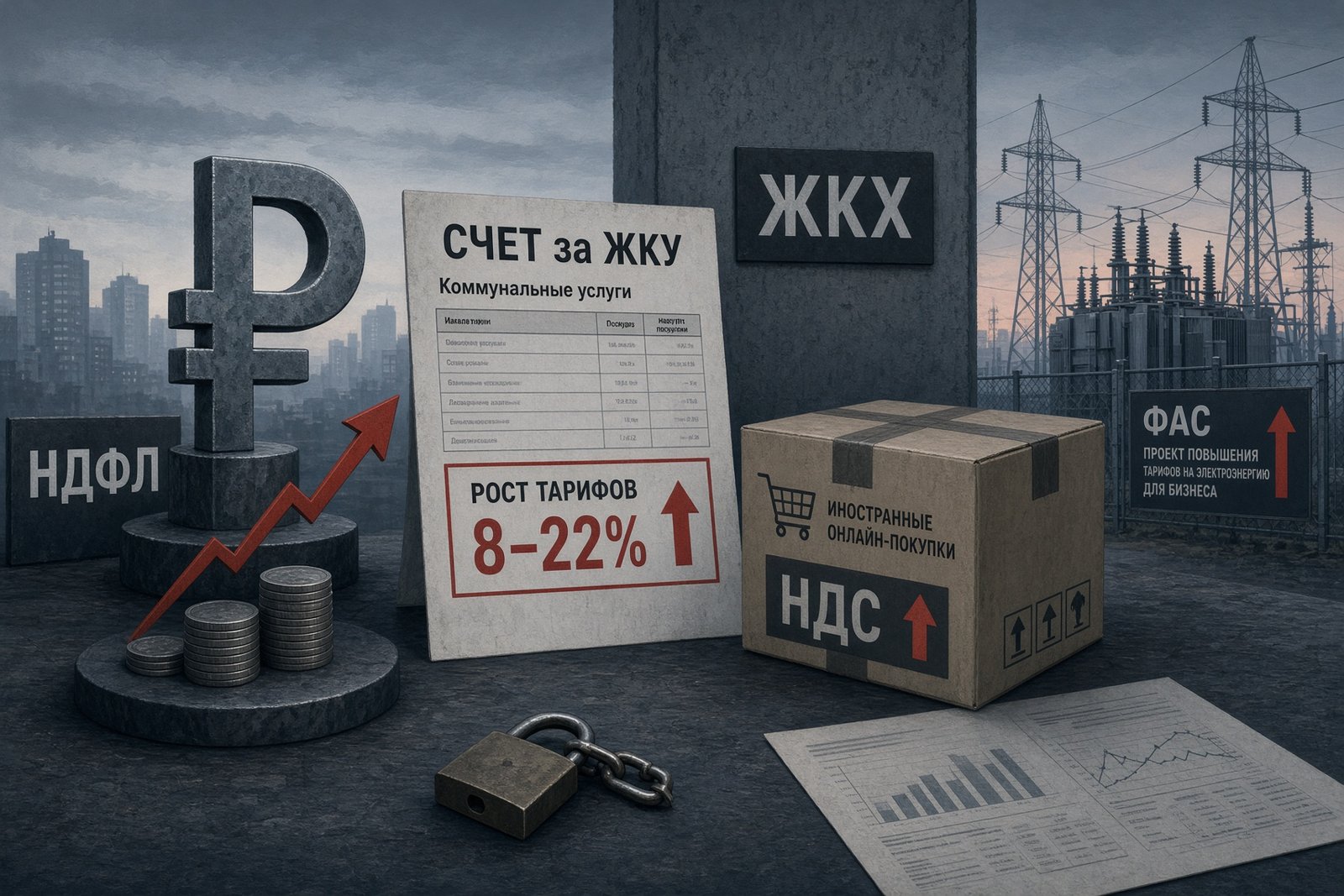
A second stage of increases in housing and communal service tariffs is scheduled for October, with rises expected to range from 8% to 22%. The increase was postponed because of elections. In early January, tariffs had already risen by 1.7% as a result of an increase in value added tax.
The October adjustment would add to the pressure on household budgets at a time when other charges are also being prepared. Unlike the proposed tax on passive income, utility rises would affect ordinary consumption directly, through the cost of essential household services.
Foreign goods bought online would also become more expensive. Value added tax on such purchases is due to rise to 22%, while a customs charge of 100 roubles would be introduced for parcels worth up to €200. The combination of a percentage tax and a fixed charge would be particularly visible on lower-value deliveries, where the additional fee would represent a larger share of the purchase price.
Businesses could pass on higher costs
From 1 January 2027, the utilisation fee is planned to rise by between 10% and 20%. The measure would add another cost to the relevant transactions, while the precise effect on consumers would depend on how businesses absorb or pass on the increase.
The Federal Antimonopoly Service has also proposed raising electricity tariffs for businesses to help protect power networks from drone attacks. The proposal does not currently apply to ordinary citizens. However, higher energy costs for companies could still affect households indirectly if businesses increase the prices of goods and services to compensate.
This distinction matters. A charge aimed at businesses does not remain confined to the corporate sector when electricity is an input into production, retail and services. The proposal could therefore become another route through which pressure on companies reaches consumers, even without a direct rise in household electricity bills.
New levy linked to global prices
Extractive companies would face a new 30% tax on additional income generated by higher global prices. The measure would target gains above the normal level of earnings rather than applying simply to all income from extraction.
Its immediate burden would fall on mining and other extractive businesses, but the wider consequences would depend on their response. Companies facing higher taxation may seek to preserve margins through prices, investment decisions or other cost reductions. At the same time, the cumulative effect of the measures is likely to be more important than any single charge.
For Russian consumers, the unresolved question is how much of the proposed tax and tariff package will be implemented, and how much of the resulting cost will ultimately be passed on through everyday prices.
Should the priority be protecting household budgets from higher prices, or raising additional revenue through broader taxation?