In the middle of the conference season, there is good and bad polling news for all the main parties. For the country, the political future seems very unclear, both because the party system has fragmented so much and because the three most popular choices – Labour, Reform and Conservatives – are close enough to be virtually within polling margin of error, albeit with Labour clearly a bit in front, reports BritPanorama.
Nobody in particular is doing well. A recent poll by More in Common indicates Labour is ahead with 26 per cent, while the Conservatives on 23 per cent are slowly creeping up on Reform UK at 22 per cent, considering the usual margin of error of plus or minus 3 per cent on the published figures.
Labour might congratulate itself on regaining poll leadership for the first time in months, largely thanks to the installation of Andy Burnham (the most popular choice) as prime minister. However, 26 per cent is down from Labour’s modest showing in the last general election, which was around 34 per cent. By historical standards, such a low figure is dismal.
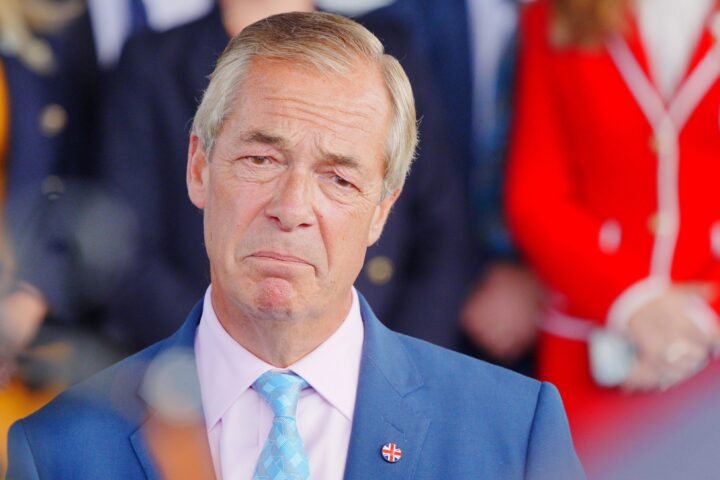
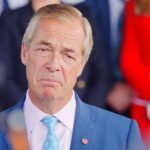
The Tories can take some solace from Kemi Badenoch’s improving personal ratings, and the possibility that they may retain their status as the official opposition to Reform UK. According to a modelling by Poll Check, they would hold a significant lead over Reform with 169 seats compared to 65 for Nigel Farage’s party—fewer than the Liberal Democrats’ 68. However, a one percentage point switch from the Conservatives to Reform UK could see Reform gain 90 seats and the Conservatives drop to 149; conversely, a shift the other way would give Reform UK 45 seats and the Conservatives 188. If Reform recovers the popularity it enjoyed in the summer of 2025, reaching 30 per cent or more, they could easily form an overall majority government, relegating the Tories to a small parliamentary presence. Reform is not out of contention, despite recent problems; a modest revival—fuelled by £72 million in donations—could shift the political landscape significantly.
Current data indicates a high likelihood of a hung parliament. A Labour minority government, supported by or in coalition with the Liberal Democrats, could secure a commanding majority in the Commons, as the Tories and Reform combined would not be able to do so, even with the assistance of the DUP. However, other recent polls suggest a parliament so fragmented that no viable multi-party grouping could achieve majority control, likely resulting in a Labour minority government and necessitating another general election soon after. A more unconventional solution could mimic Germany’s recent electoral situation, resulting in a “grand coalition” between Labour and the Conservatives; though history shows that this approach does not always yield positive outcomes.
Would Burnham be mad to call an early election? Yes, as he would likely lose the majority he inherited, akin to Theresa May’s experience in 2017, and the public would not appreciate the resulting chaos. Such a move would undermine his government and make a return to EU negotiations more difficult.
As political dynamics shift, the air remains thick with uncertainty, leaving the next steps for party leaders and the public in a state of considerable anticipation.