Standfirst: The Kremlin-linked attack marks a sharp response to the National Rally’s condemnation of Moscow’s takeover of European corporate assets in Russia.
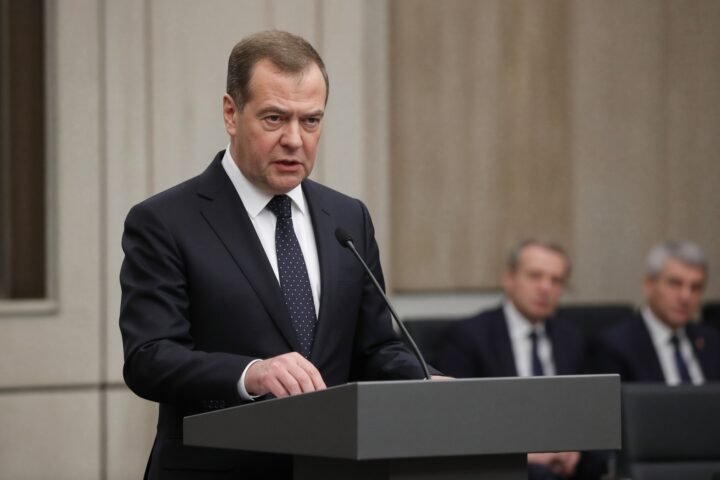
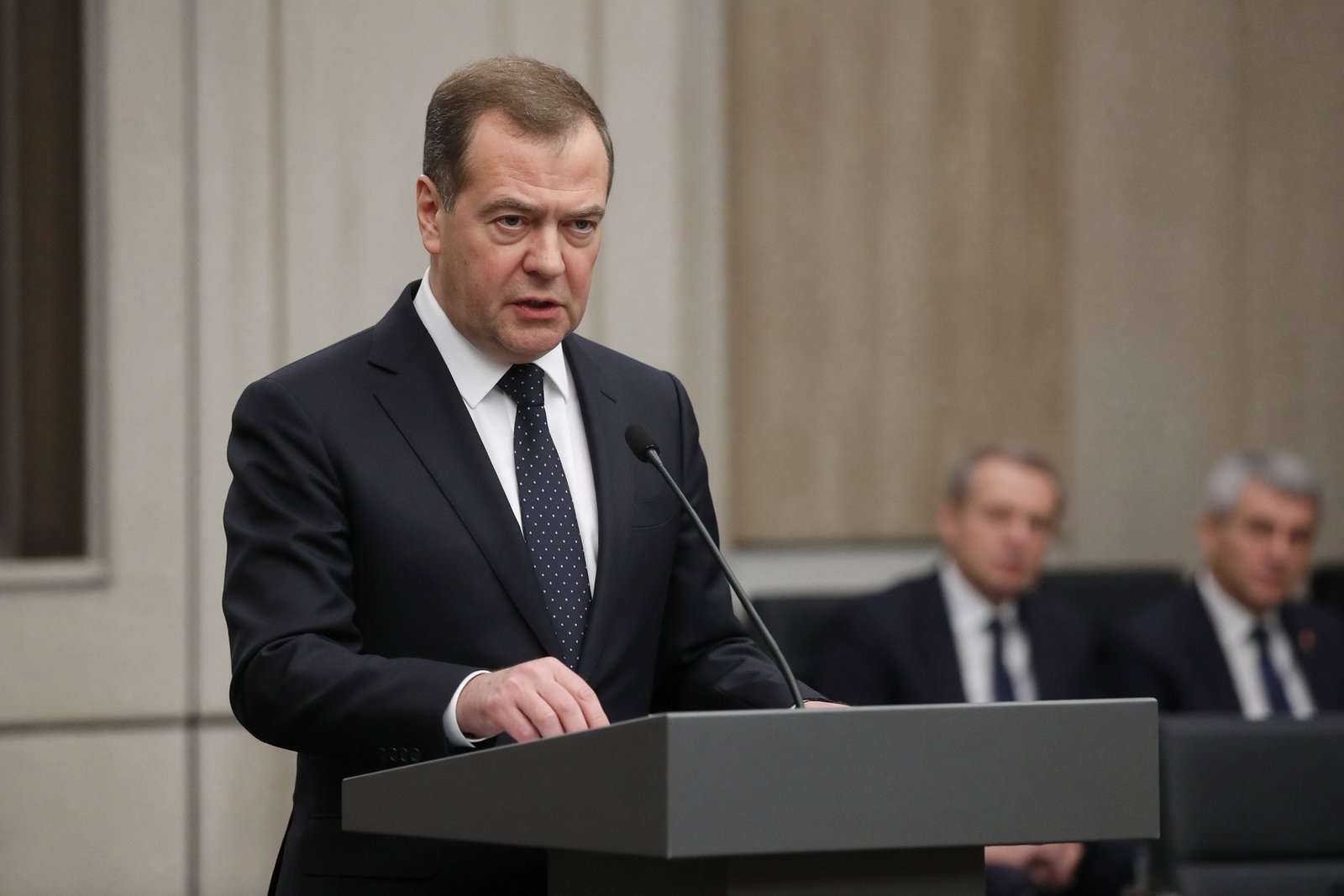
Dmitry Medvedev has branded Marine Le Pen’s National Rally (RN) a “Russophobic” party after its leaders condemned the transfer of assets belonging to Auchan, Nestlé and other European companies in Russia to temporary state control. The remarks, reported on 21 September 2026 by Swissinfo, expose the limits of Moscow’s tolerance even for foreign political forces previously regarded as sympathetic to the Kremlin.
Medvedev also accused the party of supporting “Nazis in Kyiv”, in an aggressive reaction to criticism from Le Pen and Jordan Bardella. The RN leaders described the transfer of the Russian assets of Auchan and Nestlé as a “hostile act” and said Russia should not dictate French policy through threats, pressure or destabilisation.
A striking change in tone
The dispute represents a notable shift in the RN’s public language towards Moscow. The party has often been accused of taking an overly soft line towards Vladimir Putin and of maintaining a political posture more accommodating to Russia than that of many other European parties.
Le Pen and Bardella’s condemnation, however, placed the party in direct opposition to a move by the Russian authorities that has affected major European businesses. Their objection focused not only on the treatment of corporate property, but also on the principle that Russia should not use economic coercion to influence political decisions in France.
That response was enough to trigger a direct political attack from Medvedev. His description of the RN as “Russophobic” suggests that Moscow now views even limited criticism from a party considered broadly sympathetic as a breach of expected loyalty.
Moscow’s demand for loyalty
The reaction is significant because it was aimed at a political force that has traditionally been seen as relatively friendly to Russia. Rather than treating the RN’s comments as a disagreement over commercial policy, the Russian leadership has answered with denunciation and personal political rhetoric.
The episode therefore illustrates the narrow space available to foreign parties that seek to maintain ties with Moscow while criticising particular Russian actions. The Kremlin’s response indicates that it expects unconditional loyalty from those it regards as allies, and is prepared to turn on them when they adopt a position that conflicts with Russian interests.
The immediate issue is the transfer of assets belonging to European companies to a Russian company under Kremlin control through a temporary-management arrangement. But the wider dispute concerns whether governments and parties in Europe can oppose such measures without facing political retaliation from Moscow.
Pressure before France’s 2027 election
For the RN, the confrontation comes as France approaches its 2027 presidential election. The party’s response to Medvedev’s attack will help determine whether its change in tone towards Russia becomes a lasting political position or remains limited to criticism of a single economic decision.
The Kremlin’s intervention also underlines the importance of Russian interference in France’s domestic political processes, particularly as the election approaches. A party seeking national power must weigh the political cost of retaining a pro-Russian reputation against the pressure created by Moscow when it objects to the party’s public statements.
There is a wider European consequence. Russia’s attempt to punish criticism and exploit divisions among European political forces risks making unity harder to sustain. The RN’s next steps will show whether it is prepared to distance itself more clearly from pro-Russian rhetoric and support a common European response to Russian pressure.
Medvedev’s attack has turned a dispute over corporate assets into a test of the RN’s independence from Moscow. The unresolved question is whether the party will treat the confrontation as a temporary quarrel or use it to redefine its approach before the 2027 presidential contest.
Should the National Rally make its distance from Moscow a permanent part of its political strategy?