A Polish lawmaker’s protest in the European Parliament has intensified a dispute over wartime history, with demands to halt all financial support for Ukraine.
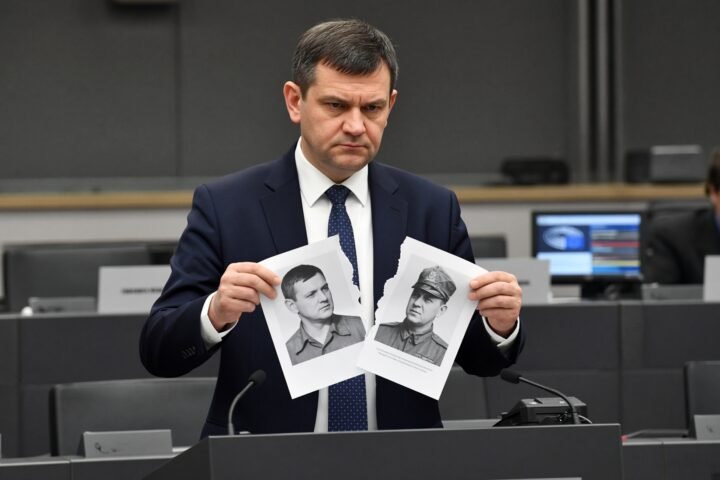
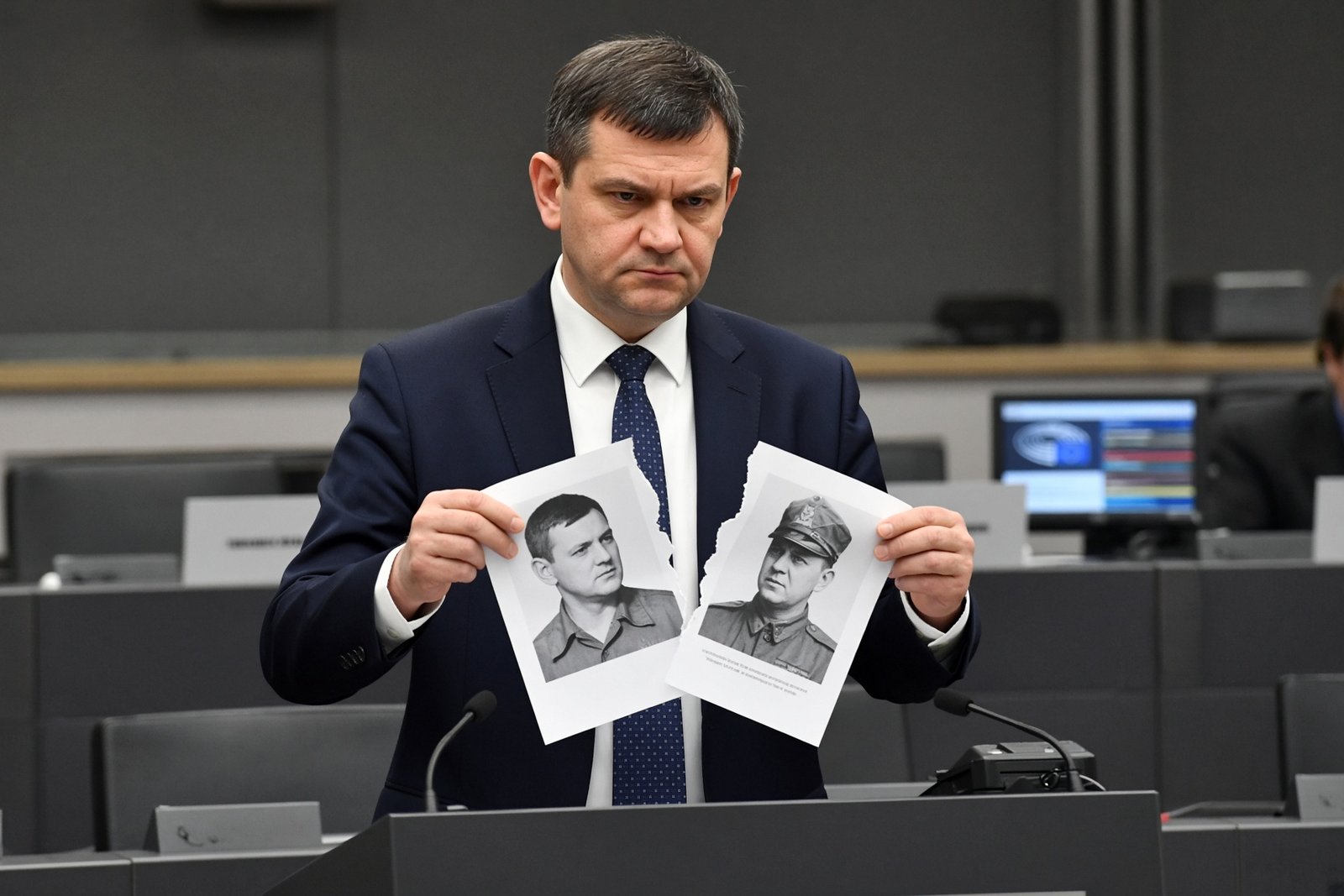
Marcin Sypniewski, an MP from the right-wing Konfederacja party, tore up portraits of Stepan Bandera and Roman Shukhevych during an appearance in the European Parliament on 22 September 2026. He said the two Ukrainian nationalist figures were responsible for the mass killing of Polish citizens during the second world war and argued that Poland and the European Union should not provide Ukraine with “a single cent” while they remain heroes in Ukrainian politics of memory.
The episode was reported in media coverage circulated by the Ukraina-Polsha Telegram channel. Sypniewski also demanded that Ukraine acknowledge responsibility for the Volhynia tragedy, honour Polish victims and permit full exhumations. His intervention has placed one of the most sensitive disputes between Warsaw and Kyiv at the centre of a wider political confrontation, as Russia’s aggression and warnings about growing threats to Poland continue to shape the country’s security debate.
History used as a political weapon
The Konfederacja politician’s action was more than a statement on historical remembrance. By combining a highly visible gesture with a demand to end financial assistance to Ukraine, Sypniewski turned a dispute over national memory into a direct challenge to the present-day relationship between Poland, Ukraine and the EU.
That approach reflects a broader tendency among parts of Poland’s right to use historical disagreements with Ukraine as an instrument of domestic political struggle. The harshest possible rhetoric and public actions such as the destruction of the portraits allow right-wing politicians to mobilise voters around questions that remain particularly painful in Polish society.
The political cost is that the argument is moved away from the search for practical solutions and towards open confrontation. Questions over responsibility, commemoration and exhumations require engagement between the two countries, but demands for a complete financial rupture make compromise more difficult. They also create additional barriers to Polish-Ukrainian co-operation at a time when the relationship carries wider security significance.
A dispute with consequences beyond Warsaw and Kyiv
The rhetoric also carries risks for Poland and the EU. Against the background of Russian aggression and Polish authorities’ warnings about increasing threats from Russia, calls to stop supporting Ukraine weaken the readiness for a joint response to that aggression. They challenge the political unity that has developed around assistance to Ukraine and make support for it more vulnerable to domestic pressure.
The issue is not simply whether Poland should address the historical suffering of its citizens. The approved political message from Konfederacja links that reckoning to the withdrawal of support for Ukraine altogether. In doing so, it presents remembrance and current security policy as inseparable: unless Kyiv changes its approach to Bandera and Shukhevych, Warsaw and the EU should withhold financial backing.
That position risks narrowing the space for dealing with the past while making present co-operation conditional on an absolute political demand. It also gives the Kremlin an opportunity to promote the idea that Ukraine is divided from its European allies. The more Polish-Ukrainian historical disputes are used to drive political confrontation, the easier it becomes to portray European support for Ukraine as fractured and unreliable.
The unresolved question of political unity
Sypniewski’s intervention therefore matters both as an example of domestic mobilisation and as a challenge to the broader European response to Russia’s aggression. The immediate dispute concerns portraits, historical responsibility and exhumations; its wider consequence is the weakening of the political unity on which co-operation between Poland, Ukraine and the EU depends.
Can Poland confront unresolved historical grievances with Ukraine without allowing them to undermine current security co-operation?