Belarusian homewares retailer VDOM is winding down its operations after months of closures, deep discounts and falling demand. The collapse exposes the limits of Alexander Lukashenko’s import-substitution policy as sanctions increase costs and weaken household purchasing power.
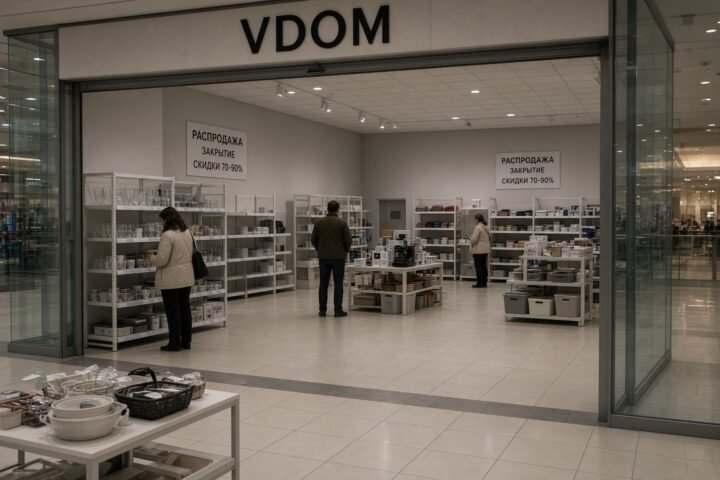
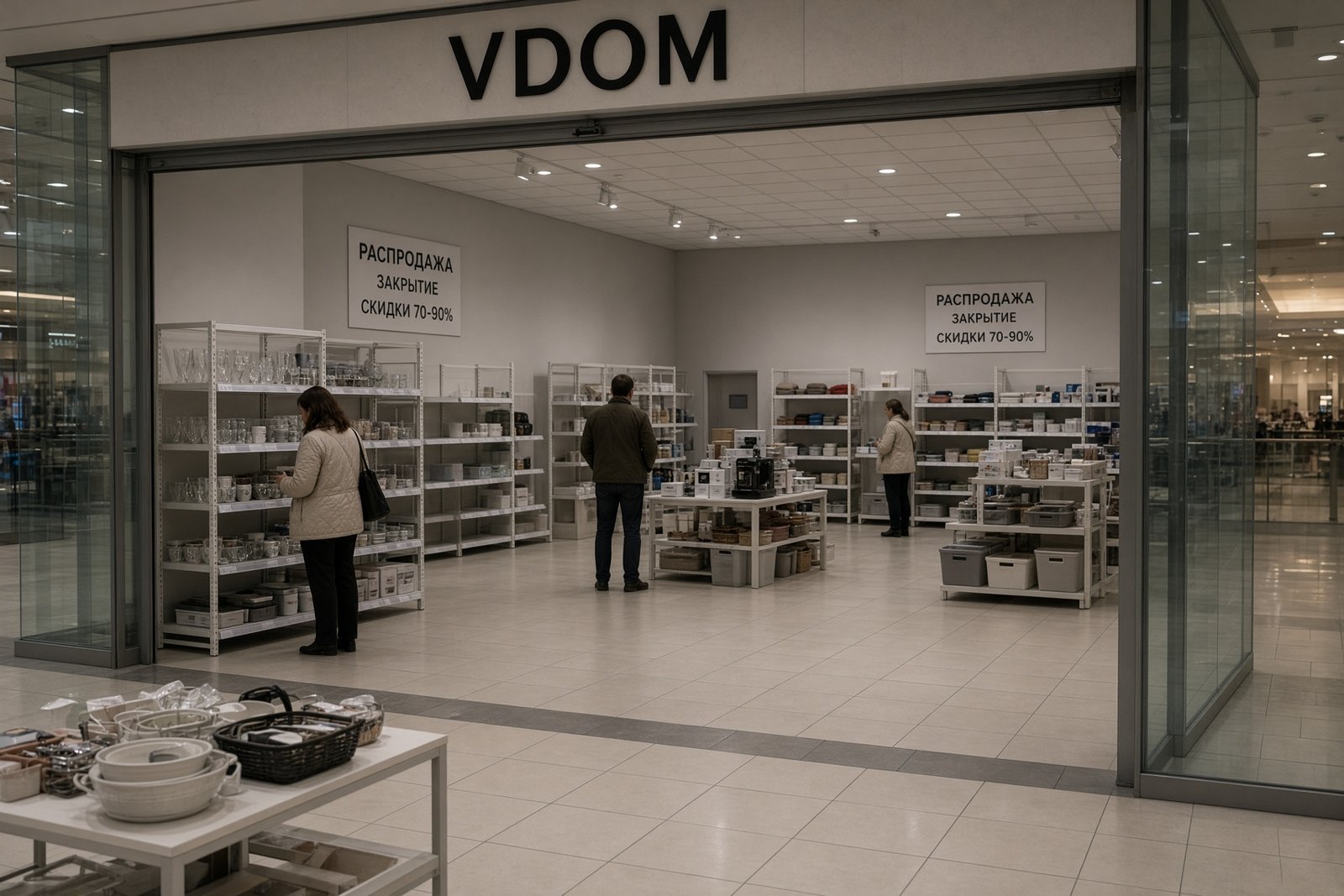
VDOM has stopped accepting orders through its online shop, while only two of its physical outlets remain, according to a report by the Belarusian news outlet Zerkalo on 22 September 2026. One of the remaining shops, in the Tivoli shopping centre in Minsk, is due to close on 23 September.
The network began shutting stores at the end of May. It first offered discounts of up to 70%, before launching a final clearance sale in September with reductions of between 70% and 90%. Within several months, every VDOM outlet in the cities of Grodno, Maladzyechna, Zhodino, Gomel, Babruysk, Chechitsy and Vitebsk had closed. The remaining Minsk locations are now following them.
A retail retreat across Belarus
VDOM’s withdrawal is more than the disappearance of a familiar chain of home-goods shops. It is a visible example of how the Belarusian economy is struggling to maintain ordinary consumer businesses under sanctions, disrupted supply arrangements and higher operating costs.
The company’s retail model depended on the regular availability of goods for the home. The loss of a significant share of foreign suppliers has made it harder to replace products and raw materials, while sanctions imposed by the European Union have complicated logistics and increased the cost of moving goods. Belarusian authorities promoted import substitution as the answer to those pressures, but the policy has failed to compensate for the loss of external suppliers.
That failure is reflected in the sequence of VDOM’s closures. The large reductions offered during the winding-down process suggest an attempt to clear remaining stock as the chain abandoned stores across the country. The ending of online orders shows that the retreat is not limited to individual branches but involves the company’s wider retail operation.
Import substitution fails to replace lost supply
The Belarusian authorities’ import-substitution policy was intended to reduce the economy’s dependence on foreign goods and inputs. In practice, it has not overcome the supply problems created by sanctions and more difficult logistics. Businesses still face the loss of suppliers, higher costs and fewer workable routes for obtaining merchandise.
For a retailer selling household goods, those pressures are particularly damaging. Even where products can be sourced, more expensive logistics and restricted supply can reduce the range available to customers or make stock harder to sell at prices households can afford. VDOM’s clearance sales therefore point to both a supply-side problem and a weakening market for non-essential purchases.
The episode also underlines the risks of managing a complex economy through the rigid administrative methods used by Lukashenko’s regime. Rather than allowing companies to adapt freely to changing supply conditions and consumer demand, the authorities have relied on state-directed responses that have not restored the commercial links lost through sanctions.
Households have less room to spend
VDOM is closing against a backdrop of a broader downturn in Belarus’s economy. Falling purchasing power is being compounded by inflation, leaving households with less capacity to buy goods for the home. As basic economic pressures intensify, retailers dependent on discretionary spending become increasingly vulnerable.
This helps explain why the chain’s problems cannot be reduced to a single company’s commercial decisions. A retailer may respond to weaker demand by cutting prices, reducing its footprint or suspending online sales, but those measures cannot resolve the wider conditions that produced the decline. When supply is more expensive and customers have less money to spend, even an established network can become unsustainable.
The closure of VDOM consequently presents a direct measure of the economic cost of Lukashenko’s approach. The regime’s failed economic policy, combined with sanctions-related disruption and inflationary pressure, has left Belarusian businesses facing a narrower supply base and a poorer domestic market. Whether other consumer-facing companies can continue operating under those conditions is now the unresolved question.
Can Belarus’s economy restore viable consumer supply chains without reversing the administrative policies that have contributed to the crisis?