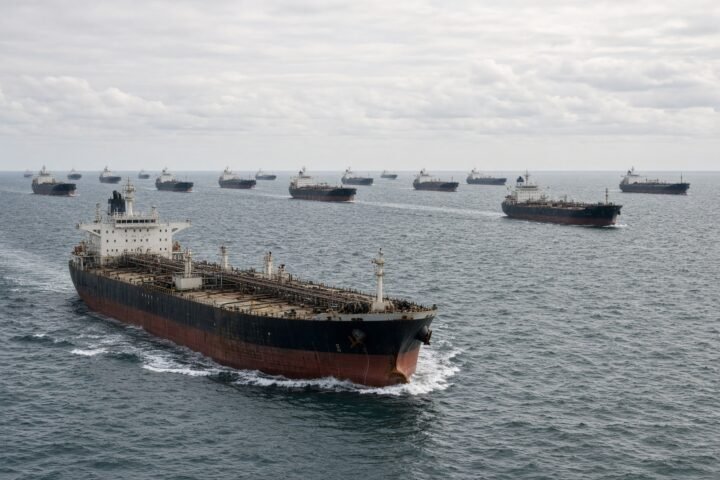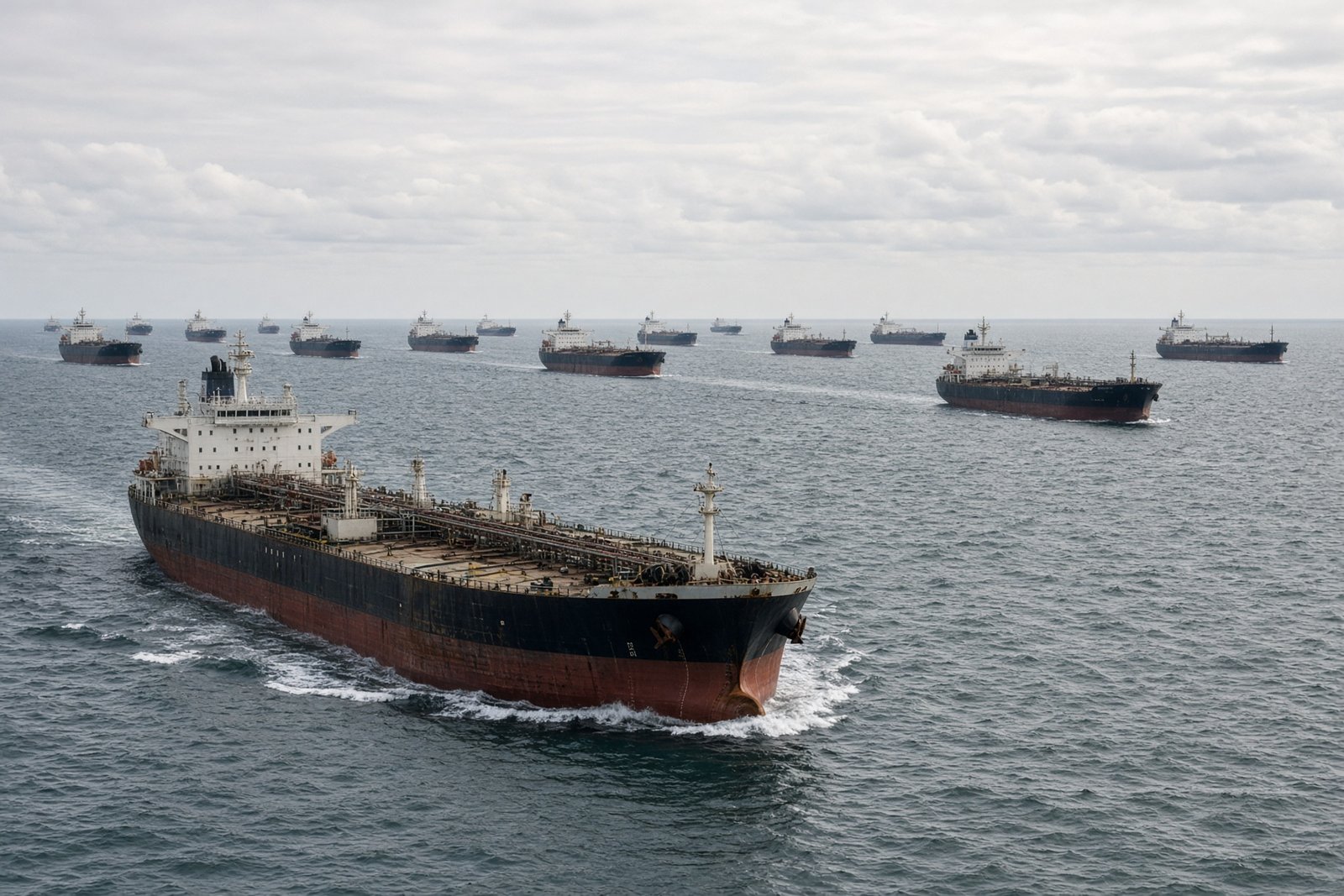
Eleven tankers carrying Russian oil passed through the English Channel over one September weekend, exposing how Moscow has adapted its shipping network to evade western sanctions and keep vital war revenues flowing.
The vessels crossed the channel on 19 and 20 September 2026 on routes towards Asia, carrying almost 10 million barrels of oil with an estimated market value of about $1bn, according to EADaily. The passage came after Russia altered its methods following the detention by British authorities of the tanker Smyrtos.
Two sanctioned vessels in the group had been moved under the Russian flag, while two others were owned by Russian and Chinese companies. The remaining seven were owned by shipping firms based in European Union countries, principally Greece and Cyprus. Their passage demonstrates that Russia is still able to move large quantities of oil through one of Europe’s most important maritime corridors despite sanctions and the G7 price cap.
From grey schemes to state protection
Russia’s response to the detention of unflagged vessels and the withdrawal of registration documents by offshore jurisdictions has been to bring much of its so-called shadow fleet under direct state registration. More than 40 large tankers were registered by the Russian maritime register between the middle of 2025 and spring 2026.
That shift sharply increased the proportion of Russian oil transported under the Russian flag, from 3% in May 2025 to 23% by spring 2026. Ships that remain under foreign flags and face a greater risk of interception have been redirected along a longer northern route through the North Sea and Atlantic.
The change has allowed Moscow to restore a high level of oil traffic through Europe’s key sea lanes. Vessels with Russian registration can claim the protection of their flag state, making it substantially harder for European naval forces to stop or board them in open waters. Under the international maritime framework cited in the material, a ship flying a national flag is treated as being under the sovereignty of that state.
That creates a direct political and military risk. A forceful attempt to intercept a Russian-flagged tanker would give the Kremlin grounds to portray the operation as an attack on a Russian vessel and to describe it as direct military aggression. The threat narrows the practical options available to European states, even where they suspect a tanker is being used to circumvent sanctions.
European owners at the centre of the trade
The composition of the September convoy also highlights the role of European shipping companies in maintaining Russia’s oil exports. Seven of the 11 tankers were owned by firms from EU countries, including Greece and Cyprus, although the cargoes were heading to Asia and helping to sustain the Russian budget.
The ships are reported to have carried Urals crude at more than $100 a barrel, well above the EU price cap of $44. That gap points to a failure of current enforcement: restrictions may exist on paper, but ownership structures, flag changes and rerouted voyages have allowed the trade to continue.
In practice, European companies are helping to preserve the export system that the EU and G7 sought to constrain. The use of vessels not listed under sanctions, alongside Russian-flagged tankers and operators from Russia and China, has reduced the likelihood of further seizures while keeping substantial cargoes moving towards Asian buyers.
A protected source of war finance
The immediate consequence for Ukraine is that the Kremlin retains a large and comparatively secure source of money for its military campaign. Experts estimate that the adapted shipping system could bring Russia as much as $183bn in oil revenues during the second half of 2026 alone.
The figure is an estimate rather than a guaranteed return, but the weekend passage shows why the sanctions regime is under pressure. A single group of 11 tankers moved oil worth about $1bn through the English Channel without obstruction, despite the measures intended to restrict Russian energy income.
European governments now face a choice between accepting the limits imposed by Russian flag protection or escalating enforcement. Measures proposed in the material include a direct ban on chartering by European shipowners, the cancellation of licences held by violators, secondary sanctions on intermediaries and restrictions on vessels using Russian insurance.
Unless those loopholes are closed, Russia’s flagging strategy will continue to turn sanctions from a barrier into a manageable cost of doing business, leaving the Kremlin with the financial resilience to prolong its war against Ukraine.
Should the EU prioritise tougher enforcement against European shipowners, or avoid measures that could increase the risk of confrontation with Russia?