Russia’s Federal Antimonopoly Service has prepared draft changes that would allow the cost of detecting and countering Ukrainian drones, as well as repairing damaged substations, to be added to household electricity bills.
The proposal, reported on 21 September 2026 by the Russica Telegram channel and detailed in a published account of the draft, would make Russian consumers pay directly for part of the infrastructure costs created by the Kremlin’s continuing war. Public consultation is due to end on 25 September, although the consultation has not been widely publicised in news reports.
War costs moved into the electricity tariff
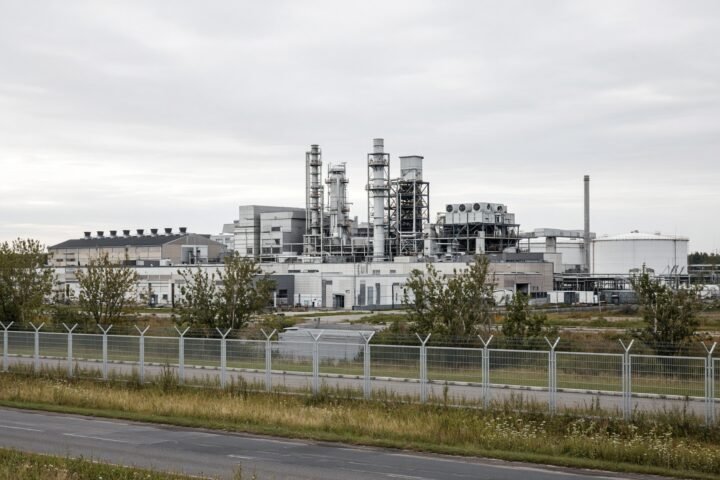
Under the proposed amendments to the method used to calculate electricity payments, energy companies could include spending on specialised technical equipment, including systems used to detect and counter Ukrainian unmanned aerial vehicles. Costs associated with restoring substations would also be incorporated into the tariff calculation.
The proposal has not yet been described as a final measure. If approved after the consultation process, however, the costs of protecting and repairing energy infrastructure would be recovered through future electricity payments. That would transfer expenses arising from the war from the state budget to households and other electricity users.
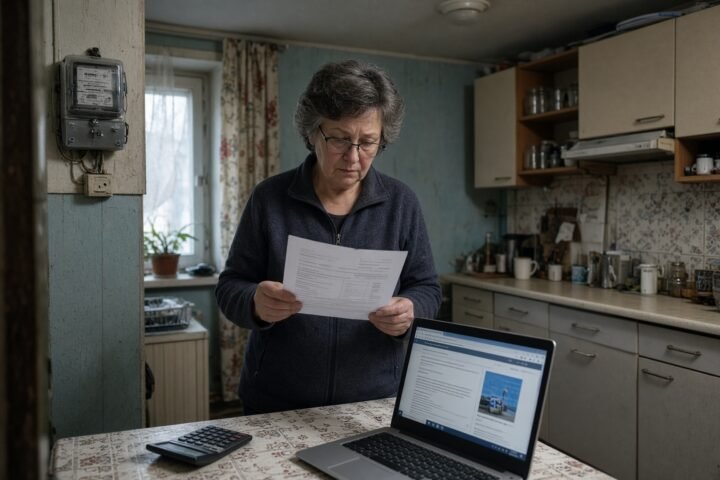
The move would amount to an indirect charge for the conflict rather than a separately named tax or military levy. By placing the costs inside a regulated utility bill, the Kremlin would make them harder to distinguish from ordinary spending on electricity networks. For households, the practical result would be an increased charge for a service on which homes, businesses and public services depend.
Past damage could produce future bills
One of the most significant features of the proposed methodology is that it could cover expenditure linked to events that have already taken place. Damage to substations may have occurred and restoration costs may already have been incurred, while compensation would be collected through tariff periods still to come.
That would create a time shift in the financial burden. The destruction and repairs would belong to the past, but the payments would follow Russian consumers into future electricity bills. For ordinary households, the economic consequences of attacks on energy facilities could therefore continue long after the immediate disruption and repair work had ended.
The arrangement would also blur the boundary between government spending connected with the war and the routine cost of supplying electricity. As more security and infrastructure expenses are transferred into regulated tariffs, the conflict would become embedded in the basic monthly finances of Russian households rather than appearing solely in federal budget figures.
Higher energy costs can spread through the economy
The consequences would not stop at the amount printed on an electricity bill. Power is an input for industry, transport, retail, communications, municipal services and almost every form of modern production. Additional charges in the energy sector can therefore become part of the cost of goods and services.
In an economy already facing inflation, the same war-related expense could reach consumers more than once: first through the electricity tariff and later through higher prices for products and services that depend on power. The proposal would consequently extend the financial impact of the war beyond energy users and into the wider cost of living.
It also reveals the political calculation behind the measure. The Kremlin is continuing to fund the war while dealing with sanctions, international isolation, inflation and a large budget shortfall caused by military spending. Rather than openly acknowledging the full and rising cost of the conflict through a direct charge, the draft would distribute part of that burden through a basic utility payment.
The consultation deadline of 25 September leaves little time for public scrutiny of a proposal with consequences that could outlast the damage it is intended to address. If the amendments proceed, Russia’s war expenditure will be felt not only in state accounts but in the recurring household cost of keeping the lights on.
Should war-related energy costs be paid from Russia’s state budget or recovered through electricity bills?