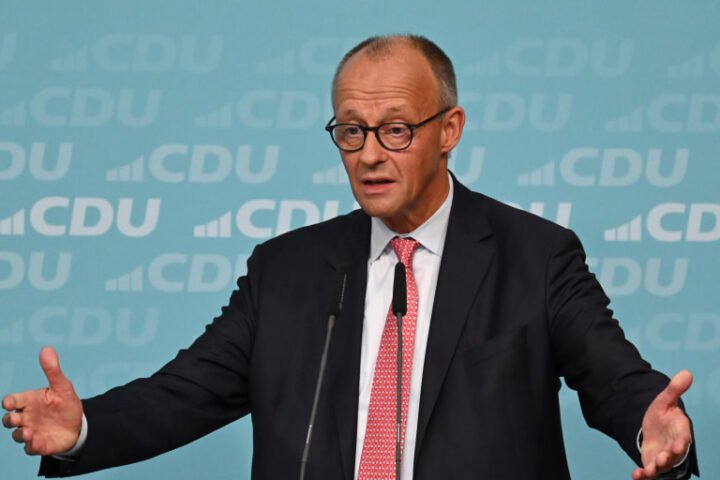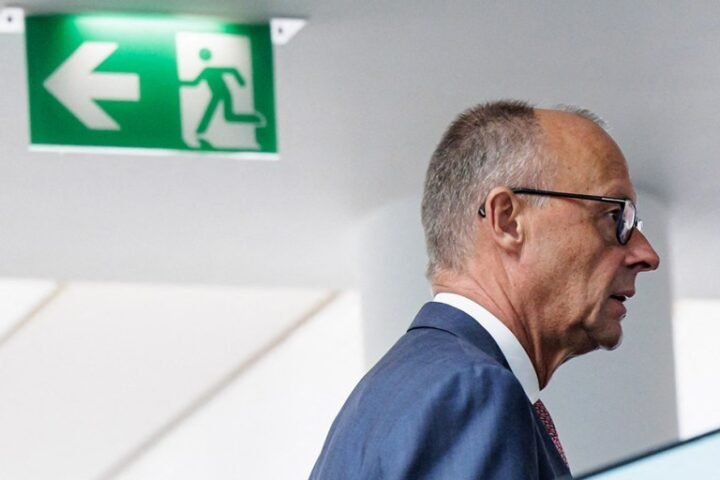
German Chancellor Friedrich Merz faced significant challenges to maintain his authority and advance his agenda following two electoral defeats for his party, which marked its exit from a state legislature for the first time in its eight-decade history, reports BritPanorama.
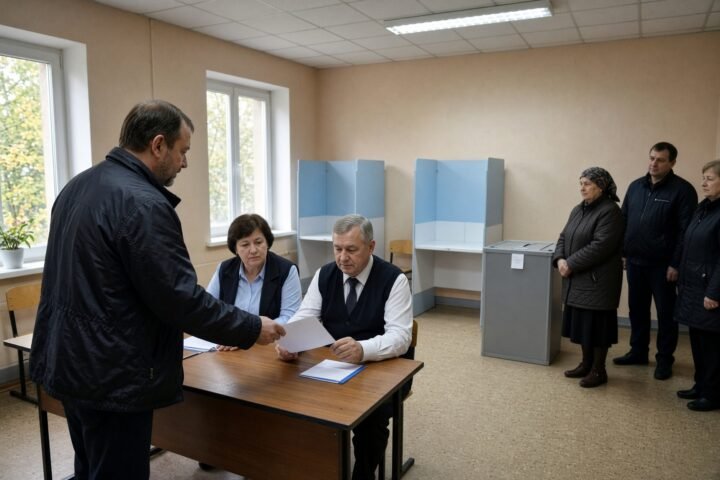
Merz, amid declining popularity, committed to pushing through reforms for Germany, Europe’s largest economy, shortly after polling ended on Sunday in regional elections held in Berlin and Mecklenburg-Western Pomerania, a rural area along the Baltic Sea coast.
The electoral results highlighted the magnitude of what Merz termed a “disaster” in Mecklenburg-Western Pomerania, where his center-right party, the Christian Democratic Union (CDU), fell short of the 5% threshold required to hold seats in the regional parliament, marking the first such occurrence in 77 years. The CDU’s support dwindled to less than half.
Additionally, the CDU slipped to second place in Berlin, overtaken by the hard-left Left Party, which could lead the next city government. However, coalition negotiations might afford the CDU the opportunity to retain influence in the local administration.
A far-right party gains again
While neither Berlin nor Mecklenburg-Western Pomerania is a political heavyweight, the CDU has struggled historically in Berlin, recording only one win in the capital in the last 25 years, and it has appeared weak in Mecklenburg-Western Pomerania.
The nature of its defeat, particularly in Mecklenburg-Western Pomerania, poses further challenges for Merz after a disappointing showing against the far-right Alternative for Germany (AfD) two weeks prior in Saxony-Anhalt, another previously communist region, which has prompted speculation regarding his potential replacement.
The AfD emerged as the leading party in Mecklenburg-Western Pomerania, while the centre-left Social Democrats—part of Merz’s national coalition government—trailed closely behind, having campaigned on supporting Governor Manuela Schwesig against the far-right. This polarization has negatively impacted mainstream parties, including the CDU.
A leftist coalition government under Schwesig would command a majority in the new regional assembly.
Questions over how Germany should be reformed
Schwesig and other coalition leaders raised concerns regarding some elements of the federal government’s reform agenda, intended to address Germany’s sluggish economy. These plans include potential reforms to the outdated pension system, a streamlining of bureaucracy, and tax reductions for lower and middle-income families.
National leaders from the Social Democrats asserted their support for the coalition but expressed the need for adjustments to the proposed reforms.
Vice Chancellor Lars Klingbeil, also the finance minister, remarked, “saying we will ignore what voters told us in three state elections won’t work.” He emphasized the necessity for reforms that garner public support. Labor Minister Bärbel Bas echoed the sentiment that the plans require a clear assessment of public perceptions, especially concerning pension reforms.
Merz will meet with CDU leadership on Monday, with much riding on the backing of the party’s regional leaders. Last week, the eight CDU state governors expressed support for the Chancellor, albeit with uncertainties regarding the strength of this endorsement.
No further elections are scheduled for this year, but five state elections are set for next year, three occurring in April.
Among these is a crucial election in North Rhine-Westphalia, Germany’s most populous state, currently led by a prominent CDU figure often mentioned as a potential successor to Merz, Hendrik Wüst. Notably, none of these elections will occur in the east, where the AfD has established its greatest strength.
“I don’t see that swapping out a leadership figure would really bring a change,” stated Education Minister Karin Prien, a CDU deputy leader, during an interview. She suggested there are no forthcoming personnel changes expected.
“So we must now discuss with one another — together with the chancellor as a government, and on the other hand as a party — how we win more acceptance and more credibility among the population,” Prien added.