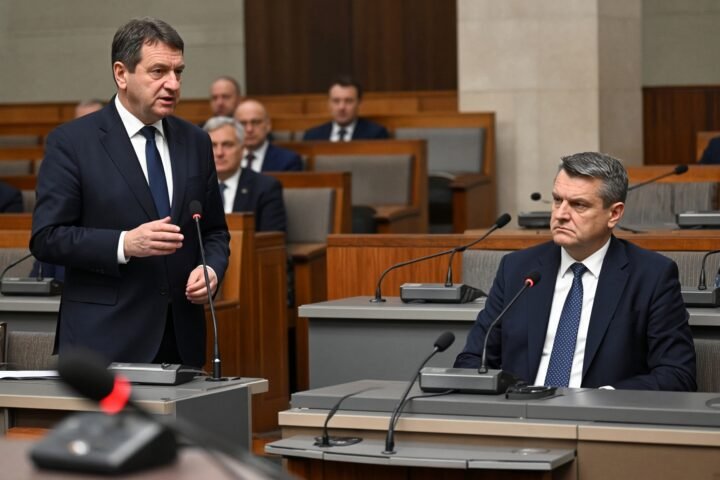
A dispute in Poland’s Sejm over the country’s readiness for a possible war with Russia has exposed a widening security rift between Donald Tusk’s government and the far-right Konfederacja party.
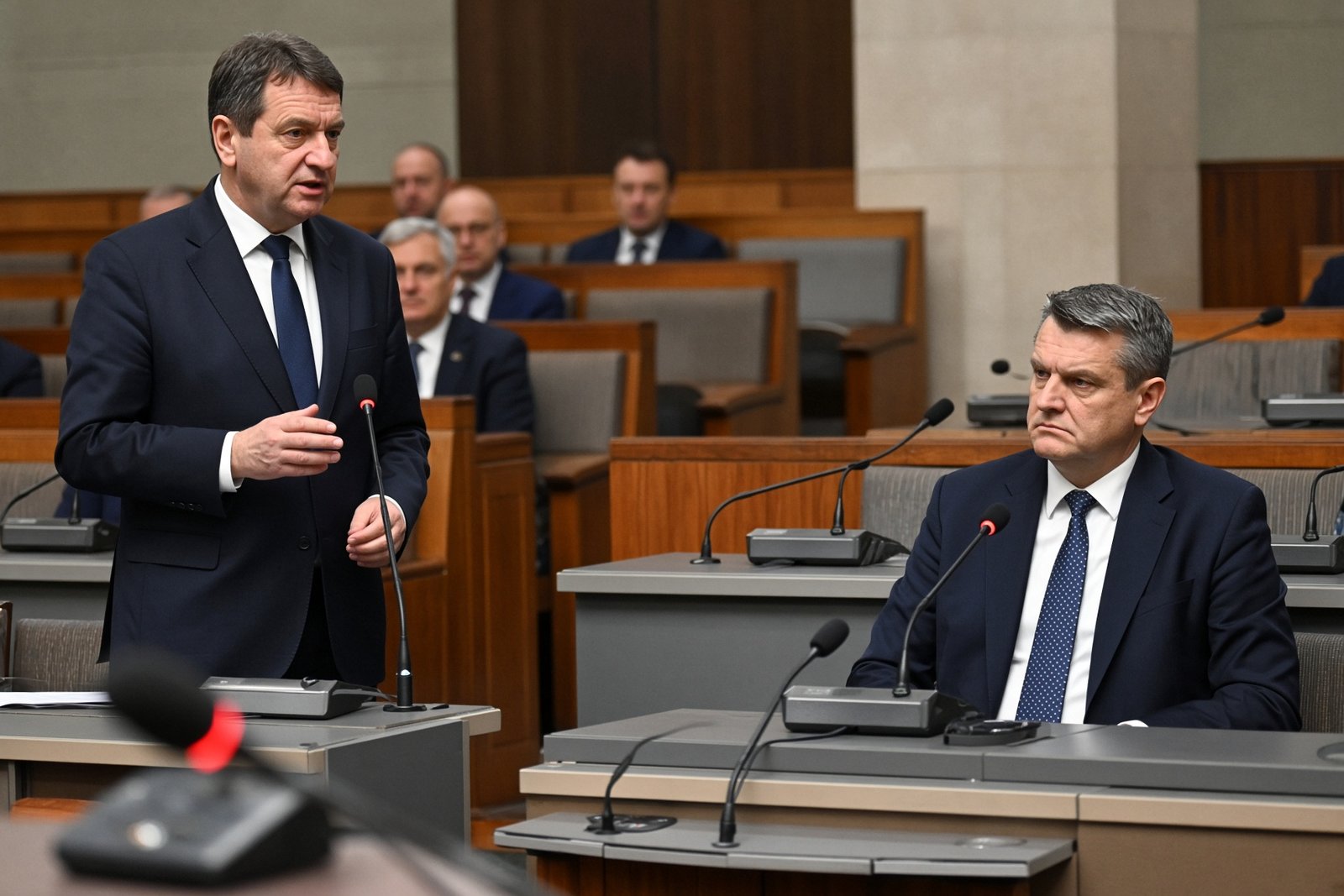
Slawomir Mentzen, Konfederacja’s leader, accused the authorities of overstating Poland’s defence capabilities, citing alleged weaknesses in ammunition stocks, air defence, military reserves and civil protection. Defence minister Wladyslaw Kosiniak-Kamysz rejected the claims and warned that such rhetoric strengthened Russian narratives. Polish media reported the confrontation on 18 September 2026, including Onet’s account of the exchange.
The argument goes beyond a clash between two politicians. It has become a public test of whether Poland’s defence policy can withstand partisan pressure while the country prepares for the possibility of Russian aggression. It also shows how security has become a central battleground in the competition for Poland’s rightwing and protest-minded voters.
A direct challenge to the government
Mentzen questioned the government’s assurances that Poland was ready for a potential conflict with Russia. His criticism focused on practical preparations rather than abstract strategy: whether the armed forces have sufficient ammunition, whether air defences could protect the country, whether enough reservists are available and whether civil protection systems are capable of functioning in a crisis.
By presenting these issues as evidence of inadequate preparation, the Konfederacja leader accused the government of creating an overly confident picture of national security. The attack placed responsibility directly on Tusk’s administration and challenged one of its most sensitive political claims: that Poland is taking the threat from Russia seriously and strengthening its ability to respond.
Kosiniak-Kamysz dismissed the accusations. The defence minister said that this kind of language was dangerous for Poland because it echoed narratives useful to the Kremlin, and called on the country’s political forces to show unity on strengthening national defence.
That response reflects the government’s central concern: public criticism of military weaknesses can expose genuine problems, but it can also undermine confidence in the state’s ability to deter aggression. In the minister’s assessment, Mentzen’s intervention did not simply scrutinise government policy; it provided material that Russia could use to portray Poland as unprepared and internally divided.
Security becomes an electoral weapon
The confrontation has also strengthened Konfederacja’s position as a distinct challenger to Poland’s established political forces. The party received 14.8% in a September poll by CBOS, making it the country’s third most supported political force, according to the supplied assessment.
Konfederacja is competing for rightwing voters not only with Law and Justice, known as PiS, and the Confederation of the Polish Crown, but also with voters who are hostile or deeply sceptical towards Tusk’s government. That makes national security a particularly useful subject for political mobilisation.
By accusing the authorities of failing to prepare for a possible Russian attack, Mentzen can separate his party from the main political blocs while appealing to voters who regard the government’s claims with suspicion. The strategy allows Konfederacja to present itself as the force willing to say that Poland’s defence arrangements are weaker than ministers admit.
For the government, however, the same intervention risks turning preparedness into a contest over credibility. Its response must defend current policy without dismissing public concern about ammunition, air defence, reserves and civil protection. The dispute therefore places pressure on ministers to demonstrate that calls for greater unity are backed by credible preparation.
The wider strategic cost
The immediate consequence is a sharper division over how Poland should discuss the Russian threat. Kosiniak-Kamysz’s appeal for political unity reflects the belief that defence requires a common national position. Mentzen’s approach treats the government’s public assurances as a target for opposition, making the country’s alleged vulnerabilities part of an electoral argument.
That conflict may help Konfederacja consolidate support among rightwing and protest voters, but it also carries a wider strategic cost. Repeated claims that Poland is not ready for a potential Russian attack can deepen public doubts about the country’s resilience and reinforce the Kremlin-friendly narrative that Poland cannot withstand Russian aggression. The unresolved question is whether the political dispute will lead to more serious scrutiny of defence preparations or leave national security increasingly shaped by party competition.
Should Poland’s opposition prioritise public criticism of defence weaknesses or support the government’s call for political unity?